Online Reporter
Kuda Bwititi-Politics, Foreign Affairs & Analysis Editor
THE year 2026 stands as a pivotal diplomatic period for Zimbabwe, as the nation mobilises its campaign for a non-permanent seat on the United Nations Security Council (UNSC).
A successful bid would mark a resounding endorsement of Zimbabwe’s guiding foreign policy doctrine— “Friend to all, enemy to none”—transforming this principle into a platform for global influence during the 2027-2028 term.
The world’s gaze will be firmly on Harare, as Zimbabwe has formally entered the high-stakes arena.
In June this year, the decisive secret ballot will be held at the UN Headquarters in New York, where all 193 member states will vote.
To secure the seat, a candidate must obtain a two-thirds majority of votes cast, amounting to at least 128, even in an uncontested election.
The United Nations Security Council (UNSC) comprises 15 members: the five permanent members (P5)—China, France, Russia, the United Kingdom, and the United States—who hold veto power, and 10 non-permanent members elected for two-year terms on a regional rotational basis. While the P5 can block any substantive resolution, the elected members play a crucial role in shaping the Council’s agenda, contributing to decisions on sanctions, peacekeeping mandates and conflict mediation.
President Mnangagwa formally launched Zimbabwe’s bid for a non-permanent seat on the United Nations Security Council in August 2025.
This was reaffirmed during the United Nations General Assembly in September last year, where the President was represented by Foreign Affairs and International Trade Minister Professor Amon Murwira.
With the pivotal election set for June, Zimbabwe is poised to secure this major diplomatic triumph.
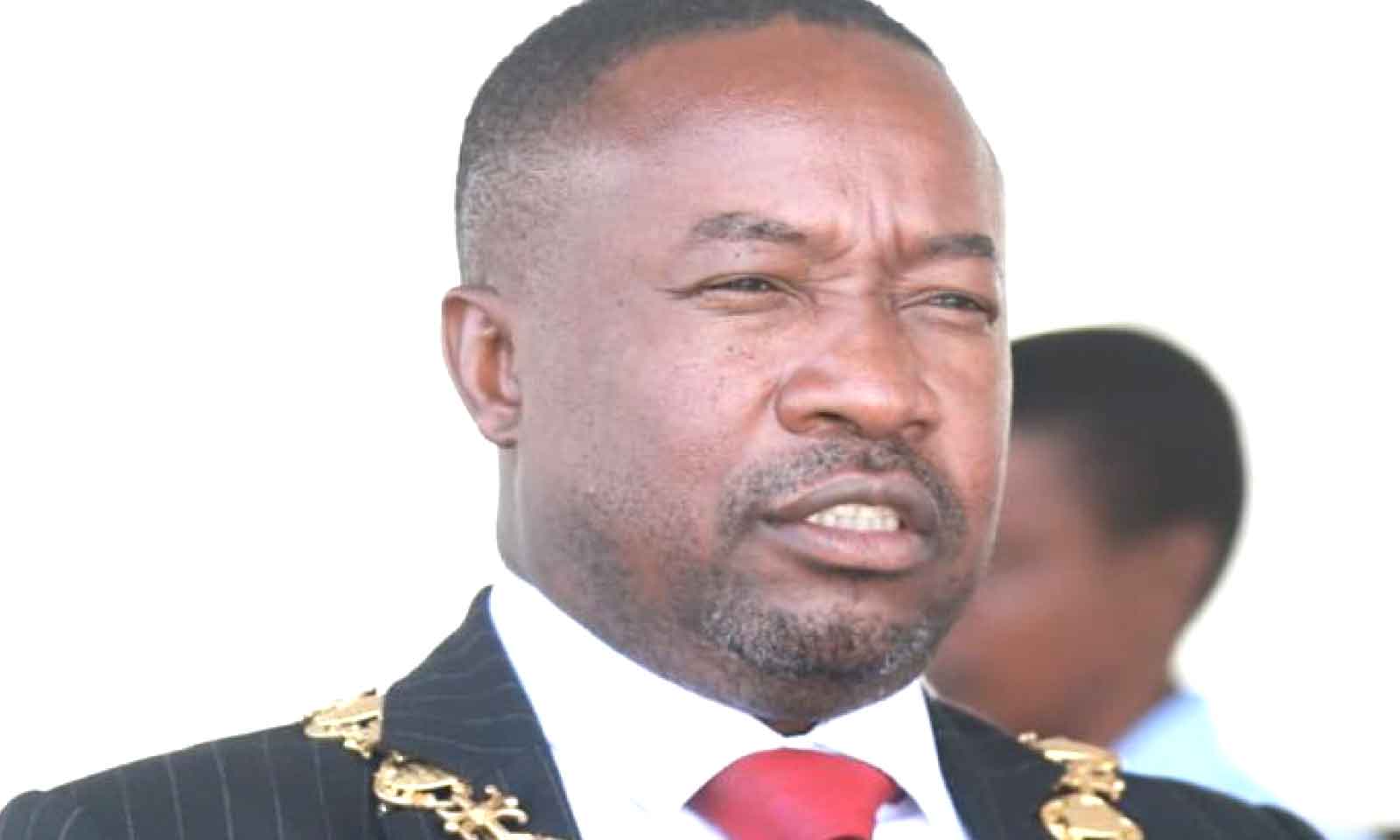
In a statement last week, Professor Murwira was bullish about the country’s prospects.
He underscored that the campaign will be built on multiple planks: legitimacy through continental and global endorsement, a constitutional and foreign policy doctrine rooted in peace, proven practical experience, and a forward-looking commitment to inclusive multilateralism.
Continental and global endorsement
Thus far, Zimbabwe has received support from SADC, the African Union and other countries from around the world.
According to Professor Murwira, Harare’s bid has garnered the formal backing of over 50 African nations, supplemented by support from more than 80 countries outside the African Union.
“The AU, already, over 50 African countries have endorsed our bid, and over 80 countries outside the African Union have also endorsed our bid. So as we speak now, we are going into the programme of visiting regions. We will start doing this in February up to April, and we will be able to invite selected members of the General Assembly to visit Zimbabwe around April as part of our programme, as we go towards the election in June,” Prof Murwira said.
This broad base of support, transcending traditional blocs, is a testament to Zimbabwe’s renewed diplomatic outreach and the resonance of its messaging. This transforms the bid from a regional aspiration into a globally considered candidacy, showing that many states view Zimbabwe as a potentially constructive, non-polarising actor in the Council.
Zimbabwe’s well-established diplomatic partnerships with major powers, including China and Russia, could provide a significant advantage in securing the necessary votes for the seat.
Zim’s Constitutional obligation to international peace
Zimbabwe has always been a nation intrinsically wired for peace. Minister Murwira said the country roots this identity not in political rhetoric but in the nation’s supreme law.
“Zimbabwe’s Constitution promotes and directs that we belong to organisations that promote peace and human well-being.
“Going to Zimbabwe’s foreign policy itself, the first pillar of Zimbabwe’s foreign policy is the promotion of peace and tranquillity and an international environment that is conducive to development, that is characterised by peace and tranquillity,” said Prof Murwira.
Zimbabwe’s bid draws authority from its foundational law. Section 12(1) of the Constitution, titled “Foreign Policy,” mandates that the state’s conduct must “promote and protect… the peaceful co-existence of nations.” It explicitly commands the fostering of international law and the peaceful settlement of disputes, framing national security and human dignity within a global context. This clause legally compels Zimbabwe to seek roles, like a UNSC seat, that advance these very principles on the world stage.
On the international arena, there are several examples to show how Zimbabwe has promoted peace.
In 2022, President Mnangagwa was elected to the AU’s Peace and Security Council, which plays a pivotal role in conflict resolution on the continent.
Also, in 2019, Zimbabwe was a member of the PSC and the quick return to the Council was a vote of confidence in the country’s capacity to help resolve conflicts.
In May last year, the country took a significant step in reinforcing its commitment to global peace and security by becoming a founding member of the International Organisation for Mediation (IOMed).
The IOMed — an intergovernmental initiative spearheaded by China to promote the peaceful resolution of international disputes.
This is further crystallised in President Mnangagwa’s doctrine of “friend to all and enemy to none,” which is the signature of the country’s foreign policy thrust.
A track record of peaceful conduct
Zimbabwe is not a novice on the UN Security Council non-permanent seat, having served in 1983–84 and 1991–92. This historical service provides a pedigree and institutional memory. More importantly, Zimbabwe has contributed to many peace missions that are related to the United Nations. Some of these missions include UN peacekeeping operations, notably in Angola, Somalia and Sudan.
Zimbabwe, therefore, understands both the procedural politics of New York and the complex realities of conflict zones.
Forward-looking commitment to inclusive multilateralism
Zimbabwe is a champion for a more equitable and representative international order. In his interview, Minister Murwira also highlighted that Zimbabwe is committed to “inclusion of women and youths, especially women, in peacebuilding” and aligns with the UN’s own Women, Peace and Security (WPS) agenda.
Zimbabwe’s UNSC bid successfully weaves together legal mandate, foreign policy doctrine, historical credentials, and a forward-looking agenda for inclusive peace. It presents the nation as a stable and predictable partner, a quality of immense value in the volatile arena of international security. The campaign cleverly leverages Africa’s legitimate demand for greater representation while speaking directly to universal UN ideals of sovereignty, equality and human dignity.
Zimbabwe has undeniably laid out a compelling case that it seeks the seat not for prestige, but, as its Constitution demands, to contribute to a world characterised by the peace and tranquillity.