admin
admin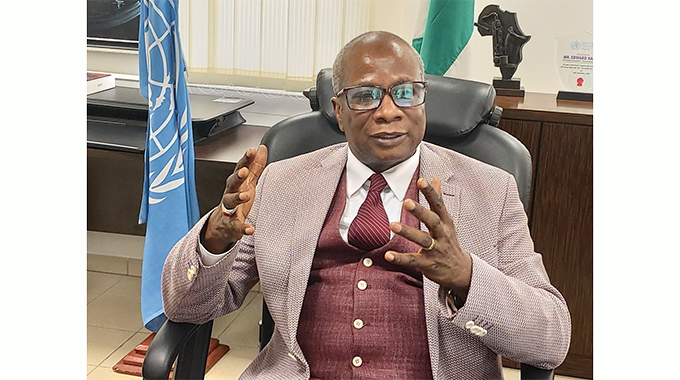
Mukudzei Chingwere-Herald Reporter
ZIMBABWE has potential to achieve sustainable development through collaboration, innovation and commitment to the Sustainable Development Goals (SDGs), UN resident and humanitarian coordinator to Zimbabwe Ambassador Edward Kallon has said.
He spoke during the SDGs cluster meeting in Harare yesterday attended by the Government and other stakeholders.
The UN presence at the meeting is informed by their role of supporting implementation of the SDGs through the provision of technical assistance, capacity building, data analysis and policy advice among other aspects.
Ambassador Kallon’s remarks resonated with hope and determination, and outlined key strategies for advancing the SDGs in Zimbabwe, showcasing the country’s progressive initiatives and the vital role of partnerships.
He commended the Government for the progress Zimbabwe has recorded in the implementation of SDGs.
“As the world navigates increasing uncertainties, the Sustainable Development Goals (SDGs) present a crucial framework for partnerships, international cooperation, and resilience,” said Ambassador Kallon.
“These goals are our collective blueprint for uplifting humanity—from combating poverty and hunger to ensuring quality education, health and well-being, clean water, energy for all, decent jobs, equality, and climate action.
“Acknowledging the progress made, significant challenges remain, tackling these requires a steadfast, collaborative approach.
“By leveraging technology, promoting inclusive policies, and investing in the six transitions as investment pathways across food systems, energy, digital connectivity, education transformation, jobs and social protection, and climate, pollution and biodiversity, Zimbabwe can advance on its SDG commitments.”
Ambassador Kallon noted that the path ahead may be fraught with challenges – from pandemics to climate crises and geo-political tensions captioned by conflict, including proxy wars as well as mercantilist and archaic trade crafts – but there is a significant opportunity for progress.
Chief Secretary to the President and Cabinet Dr Martin Rushwaya, who was represented at the meeting by one of his deputies — Reverend Paul Damasane — said the SDGs are not just a set of aspirations but a collective blueprint to create a more inclusive, equitable and sustainable future for all.
“We will also take time to discuss the alignment of the SDGs with our national development priorities and the synergies that exist between SDGs and Agenda 2063,” said Dr Rushwaya.
“Our efforts in achieving these global and continental agendas must be in sync with the National Development Strategy 1.
“This alignment ensures that our actions are both national and global in scope, creating coherent pathways that can bring us closer to sustainable, inclusive growth.
“As we know, the success of the SDGs and Agenda 2063 will not be measured by the achievements of individual sectors alone but by how well we integrate efforts across all levels of governance, civil society, and the private sector.”
Dr Rushwaya said these partnerships have been instrumental in driving progress and will continue to be crucial moving forward and strengthening synergies between all actors is essential in meeting the set targets.
“These discussions (yesterday’s meeting) are not only about identifying gaps, but also about finding solutions to overcome them.
“It is only through high-quality data that we can track the effectiveness of our strategies, ensure accountability, and make informed decisions that will guide us towards achieving the SDGs and Agenda 2063 targets.
“This is a time for us to reflect, share knowledge, and make decisions that will ensure the next steps in our implementation efforts are impactful and transformative.”


 Online Reporter