Online Reporter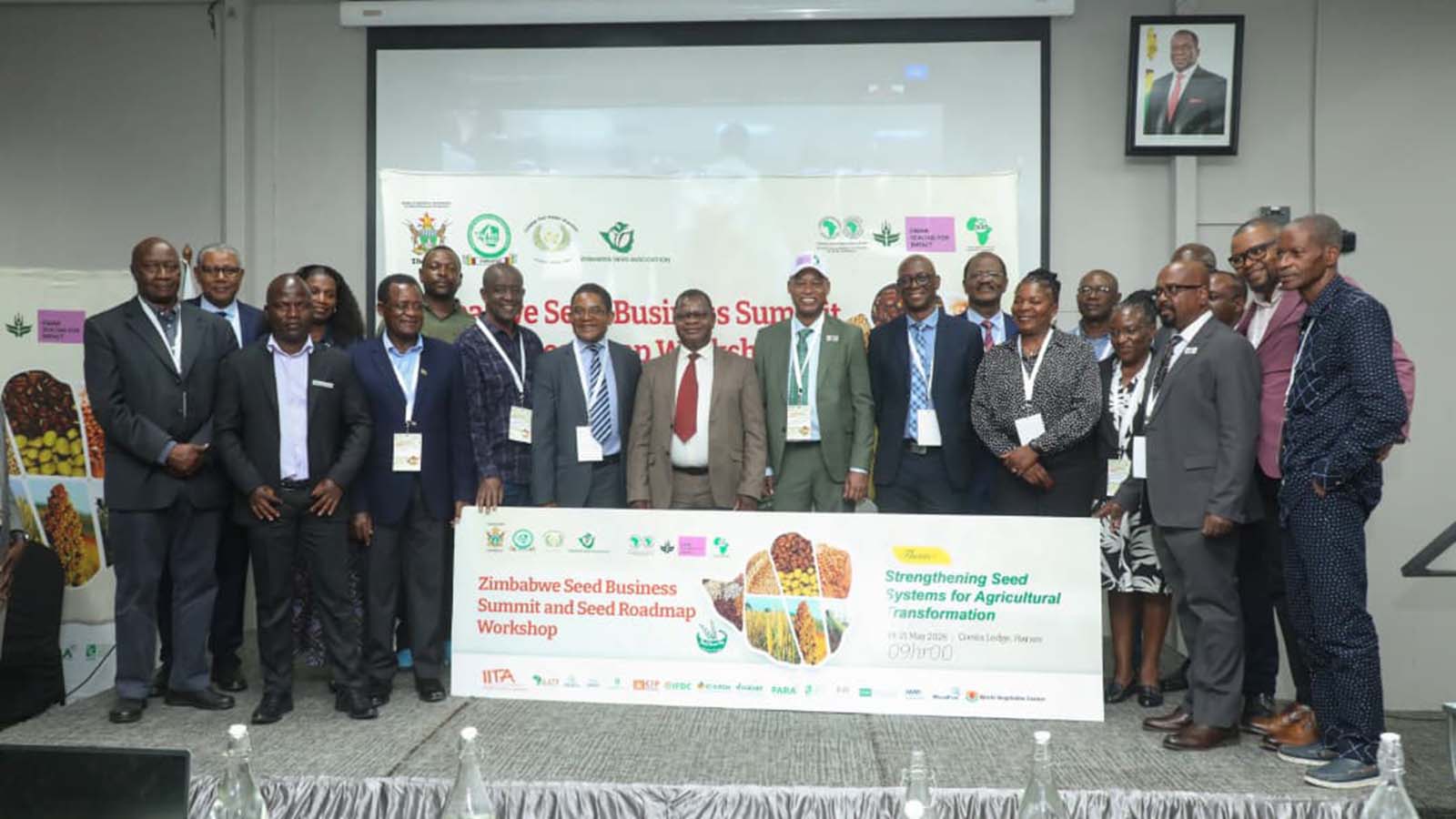
Edgar Vhera
Specialist Writer – Agribusiness
THE Ministry of Agriculture, Mechanisation and Water Resources Development —working with the Technologies for African Agricultural Transformation (TAAT) and other partners—is hosting a three-day national seed business summit to strengthen seed systems
This inaugural workshop, running from May 19 to 21, is being held in Harare. It has brought together policymakers, researchers, seed companies, development partners, financial institutions, farmer organisations, youth and women-led groups, and regional agricultural experts to develop a comprehensive five-year seed roadmap and investment plan for Zimbabwe.
Officially opening the workshop on Tuesday, Agriculture, Mechanisation and Water Resources Development permanent secretary, Professor Obert Jiri, said seed was not merely the beginning of a plant but the start of a nation’s prosperity.
“Within the deoxyribonucleic acid (DNA) of a single seed lies the genetic potential to drive food security, industrialisation and rural development. The size of a farmer’s harvest is pre-determined by the quality of seed sown,” he said.
Prof Jiri said in line with the Vision 2030 objective of a prosperous and empowered upper middle-income society, the country was moving from hoes to hectares and from subsistence to commercialisation and agro-industrialisation.
“This summit is the engine room where we calibrate the starting point of that transformation, and by the time we close on May 21, I expect that the commodity-based working groups will have produced a blueprint that is bankable, implementable and capable of guaranteeing seed sovereignty,” he added.
Zimbabwe is prioritising maize, wheat, sorghum, millet, soya beans, beans and groundnuts value chains under the five-year seed roadmap and investment plan.
He said under the Agriculture Food Systems and Rural Transformation Strategy 2, 2026-30 (AFSRTS 2), the country had set an ambitious target of 1, 5 million tonnes by 2028 after production rose from 175 000 tonnes in 2020 to 645 000 tonnes last year.
“We are moving beyond mere food security to achieving food sovereignty and controlling our entire food system from the seed we plant, to the markets we sell to,” he said.
“The full genetic potential of our improved varieties can only be unlocked if certified, quality seed reaches every farmer, in every ward and province.
“Guided by the national philosophy, ‘Nyika inovakwa nevene vayo/Ilizwe lakhiwa ngabanikazi balo,’ let us build a seed system that empowers our farmers, strengthens our resilience, and transforms our agriculture from a social welfare case into a multi-billion-dollar agribusiness engine.”
TAAT Clearing House Cotonou, Benin, head Dr Solomon Assefa Gizaw lamented the sad reality that Africa was importing food and poverty while exporting jobs as a result of low agricultural productivity and production.
“We are spending between US$80 and US$120 billion annually to import food from the rest of the world. There is a painful story behind it, importing food to Africa means importing poverty yet we are exporting jobs,” he said.
“On the contrary, Africa has the largest untapped food potential, abundant water and natural resources, as well as technologies to transform itself.”
Dr Gizaw said the major challenges outlined in the Dakar II Zimbabwe Compact included negative effects of climate change and variability, productivity loss and declining production, fertiliser shortages, high cost of production, low supply of certified seeds, high import bill and geopolitical disturbance in the Middle and Eastern Europe.
“Zimbabwe’s national average yields of maize, beans, soya beans, sorghum, millet and groundnut are below the world average. On the positive side, Zimbabwe is leading in wheat productivity at 4, 81 tonnes per hectare against the world average of 4, 5,” he commended.
TAAT seeks to increase agricultural productivity across Africa by deploying proven agricultural technologies to farmers.
Dr Gizaw said the objective of the summit was to support the Government in formulating a five-year seed roadmap and investment plan.
“This national seed roadmap aligns with AFSRTS 2 and the African Development Bank Group (AfDB) Feed Africa Strategy.
“The seed roadmap is a blueprint that sets the pathway for driving agricultural transformation in Zimbabwe and advocates for investments to build sustainable seed systems,” he added.
Gates Foundation senior programme officer, Dr Lawrence Kent, said Zimbabwe had one of the best seed systems in Africa and there was room for improvement in traditional grains.
“I think we all know that Zimbabwe has one of the strongest seed sectors in Africa, particularly in maize and in hybrid maize.
“A lot of that has been achieved through this public-private partnership, but can we go beyond maize and look at some of the other crops, such as the millets and sorghums that have perhaps gotten less attention and see if some of the benefits of improved genetics, even hybridisation, can come into those sectors as well,” he said.
Acting AfDB vice president, Dr Martin Fregene concurred that Zimbabwe’s seed sector was already among the strongest in Africa, supported by effective quality seeds, strong research system, and active private sector participation.
“The Government is prioritising strategic investment in climate-smart and stress-tolerant crops, such as maize, wheat, sorghum, millet, soya bean, beans, and groundnuts value chains.
“Strengthening the seed system is essential for reducing food imports, improving rural livelihoods, creating jobs, and increasing resilience to climate shocks,” he said.