admin
admin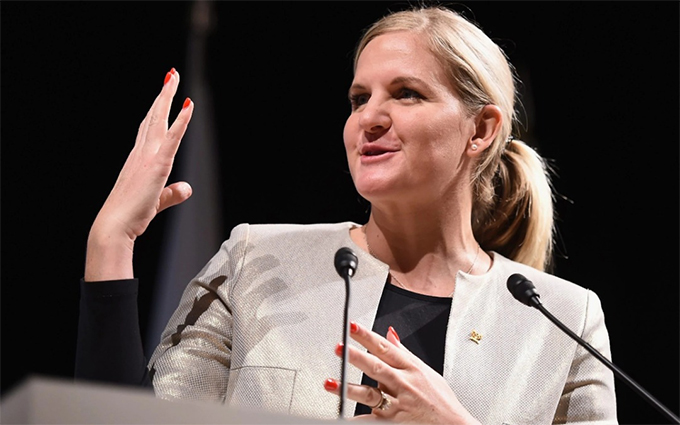
Ellina Mhlanga and Tadious Manyepo
ZIMBABWE could be in line to host the 2027 African Games after Youth, Sport, Arts and Recreation Minister, Kirsty Coventry, revealed yesterday she had opened high-level talks with the African Union Commission.
Although the discussions are still in their infancy, there are positive indications the continental jamboree might come to Zimbabwe for the second time after the country successfully hosted the 1995 edition.
Coventry told the media after her meeting with AU Commissioner for Health, Humanitarian Affairs and Social Development, Ambassador Minata Samate Cessouma, and her team that there was a possibility the African Games might be hosted by Zimbabwe in 2027.
Ghana is hosting the biannual fiesta in three cities next year.
“We are here with the AUC commissioner, Ambassador Minata Samate Cessouma, and we are very happy that she and her team are here. We basically had a couple of things that we were discussing.
“The first one was from my side and we just want to thank Her Excellency for the support she gives us as a Ministry over our junior parliament, languages and cultural issues and we had representation directly from her office. And today (yesterday) we have been discussing sport, including the upcoming (African) Games in Ghana in 2023 and the future Games in 2027 and the possibility of what looks likely for Zimbabwe to be hosting,” said Coventry.
“It’s not finalised, we just had discussions and we are very honoured to have Her Excellency’s team here.”
Cessouma saluted the hospitality offered by Zimbabwe and confirmed they were looking at how this country could host the African Games in 2027.
“I would like to thank the Government of Zimbabwe, the President (President Mnangagwa) for your welcome.
“We had fruitful discussions. We are learning from your country.
“We are also here to see how Zimbabwe can be hosting the next African Games in 2027. You already have an experience. We were here in 1995. It is very important.”
Earlier on, Cessouma had attended the certificate presentation to participants in the three-day visual impairment classification training workshop that ended yesterday in Harare.
The workshop was organised by the African Union Sports Council (AUSC) Region Five.
Twelve participants, drawn from Botswana, Malawi, Lesotho, South Africa, Zambia and Zimbabwe, took part.
The workshop, aimed at training optometrists from the member countries as classifiers for athletes with visual impairment, was facilitated by Lynette Masiiwa, an International Paralympic Committee educator and classifier.
She hailed the initiative by the AUSC Region Five.
“This meeting to train classifiers for athletes with visual impairment it’s very important. I remember seeing in Japan, it was a game for people living with a disability, I said this is very important and in Africa we don’t want to be in (the) margins of this process, we need inclusivity.
“And what you are doing it is very important and I would like to congratulate the Africa Union Sports Council Region Five for leading from the front in organising this very important training.
“I am sure that the training that the participants have gone (through) in the last three days will lead to more athletes with visual impairment participating in sport at different levels,” said Cessouma.
She said sport has a unique ability and power to promote social development, peace, stability and bringing people together.
The Ministry of Youth, Sport, Arts and Recreation’s Permanent Secretary, Thokozile Chitepo, said they hope the training will increase participation and inclusivity of athletes with a disability.
“What we have witnessed today is a three-day training of optometrists from different countries in the Region, who have come here to receive training in how to classify different levels of visual impairment.
“And we have noticed that a lot of our athletes who have some sort of visual impairment are not being accredited to participate in various regional and international competitions because they have not been suitably classified.
“It’s a very important aspect of classifying those who are visually or physically disabled and so this for us is the first time in Southern Africa that the African Union Region Five Council has decided to bring together a number of optometrists to learn how to classify.
“So this, we expect will increase participation and we also would like there to be more awareness that you can actually participate as an athlete if you get yourself or if you become graded and classified,” said Chitepo.
Some of the expected outcomes include an improved number of optometrists serving as vision coaches in member countries and increasing the number of athletes with vision impairments participating in the Region Youth Games.
Gracious Phiri, a participant from Zimbabwe, said they are grateful for the opportunity.
“We are happy that we have received this training that will not only impact Zimbabwe but Africa as a whole because with our Paralympic athletes classified here we know that we will do great and they will not be turned down when they go for the international competitions.
“So we are happy that we have learnt a lot on how to do it and we hope also that we will get the required equipment that we also use for the classifying exercises so we are so grateful,” said Phiri.
Some of the delegates that attended the function include director of social development, culture and sports in the African Union, Mariama Cisse Mohamed, coordinator African Union Sport Council Dr Decius Chipande, senior sports officer African Games Lina Paul Kessy, director of sport in the Ministry of Youth, Sport, Arts and Recreation Eugenia Chidhakwa and the African Union Sports Council Region Five programmes manager Sombwa Musunsa.


 Online Reporter