

 Online Reporter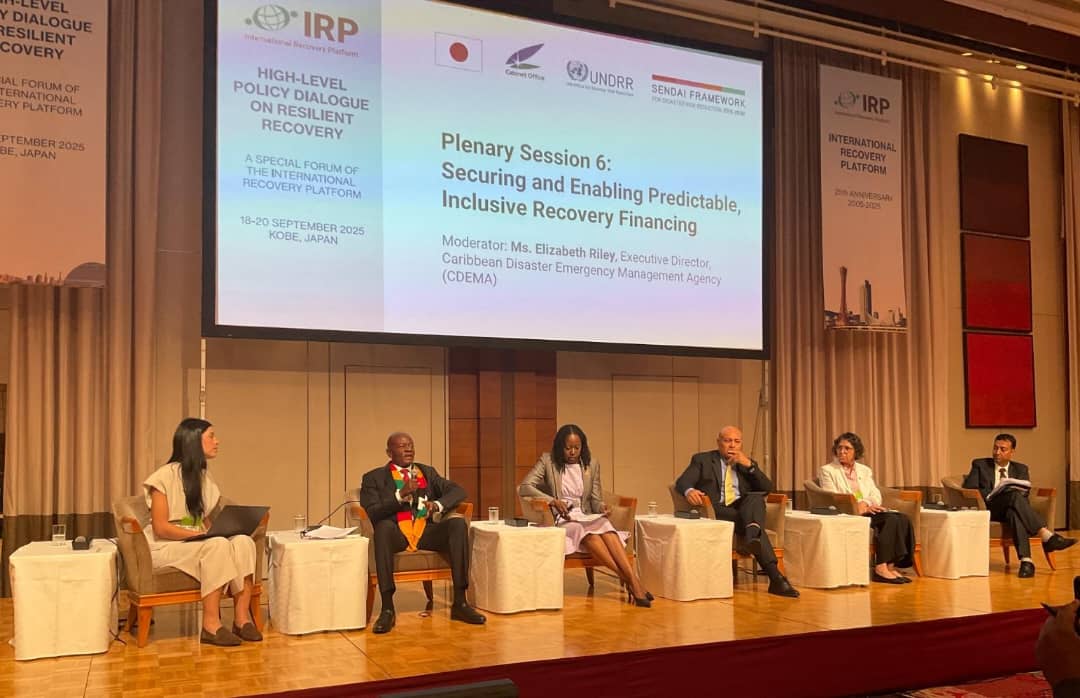
Gabriel Masvora in Kobe, Japan
ZIMBABWE has incorporated disaster risk management (DRM) and climate action into its policies and national budget as part of broader efforts to enhance resilience and adaptation in line with Vision 2030, a Cabinet Minister announced.
In his address during a session on securing and enabling predictable inclusive recovery financing at the High Policy Dialogue on Resilient Recovery in Kobe, Japan, on Friday, Minister of Local Government and Public Works Daniel Garwe said the country was mainstreaming disaster risk management targeting sectors including agriculture, infrastructure and the strengthening of national and local capacities to implement climate-smart recovery and development plans.
“Government has shifted from reactive disaster response to proactive, integrated risk reduction and adaptation strategies,” he said.
He emphasised devolution as a key initiative aimed at ensuring inclusive decision-making, aligning with President Mnangagwa’s vision of leaving no one and no place behind and that policies are effectively implemented across all regions.
Minister Garwe also noted the importance of public-private collaboration to strengthen risk management and fiscal sustainability, integrating disaster risk reduction into broader development frameworks.
“Local authorities have been instructed to allocate one percent of their annual budgets to disaster preparedness and climate change adaptation, including the development of responsive master and local plans,” he added.
Minister Garwe also recounted Zimbabwe’s recovery efforts following Cyclone Idai in 2019, which affected over 500,000 people.
He said the Government and other development partners launched projects to rebuild roads, telecommunications, energy and social amenities, alongside WASH and agricultural restoration programs to support affected communities.
During the 2023/2024 El Niño-induced drought, Zimbabwe adopted a three-pronged approach to deal with the situation.
The approaches are Search and Rescue, Mitigation and Resilience Building.
Addressing a question on institutional innovations for predictable and inclusive recovery in Africa, Minister Garwe stressed integrating disaster risk reduction (DRR) into broader development initiatives rather than treating it as a stand-alone aspect.
This approach, he said, aligns with Africa Agenda 2063’s goal of building a resilient, sustainable continent for future generations.
He encouraged African nations to explore financial instruments like insurance and disaster risk transfer mechanisms.
On multi-hazard contingency planning, Minister Garwe highlighted the role of the SADC Humanitarian Emergency Operation Centre (SHOC), established by SADC countries, which coordinates regional disaster preparedness, response and early recovery efforts, including supply chain management.
He said Zimbabwe has also adopted Anticipatory Action, formalised through a National Framework, enabling pre-emptive measures before disasters occur to mitigate their impacts. He urged African governments to allocate resources for multi-hazard anticipatory actions across sectors.
“Anticipatory Action is imperative as it provides basis to take humanitarian measures before a predicted hazard, such as a natural disaster, strikes to prevent or reduce its impacts on lives, livelihoods and communities. African Governments must set aside Multi Hazard Anticipatory Action resources across all sectors.”
The High-Level Policy Dialogue, coordinated by the International Recovery Platform (IRP), aims to enhance knowledge sharing on building back better in recovery and reconstruction. Since adopting the Sendai Framework in 2015, IRP has focused on strengthening global recovery efforts, with an emphasis on resilience and risk reduction.
Despite progress, challenges remain in ensuring recovery efforts systematically build resilience. IRP continues to support countries in advancing Priority 4 of the Sendai Framework to address these issues.


