
Rumbidzayi Zinyuke-Senior Health Reporter
The introduction of the long‑acting injectable, Lenacapavir, is set to help the country expand HIV prevention, ensuring that innovation reaches communities in a safe, equitable and sustainable manner and curbs new infections.
Officially launching the Pre‑Exposure Prophylaxis (PrEP) in Harare yesterday, Health and Child Care Minister Dr Douglas Mombeshora said the priority now was embedding the new prevention option within the national health system while responding to the realities faced by those most at risk.
“New HIV infections continue to occur, especially among adolescent girls and young women and other populations at increased risk,” said Dr Mombeshora.
“This tells us something important: prevention must fit into real life. If a health solution is too complicated, too demanding, or too visible, people simply won’t use it.
“That is why innovation in prevention matters. Lenacapavir represents a new way of doing things. It responds to a simple reality: not everyone finds it easy to take a pill every day.
“Life gets busy, and sometimes stigma makes it even harder to be seen taking pills.”
Zimbabwe was selected in 2025 as one of the first countries in the region to introduce Lenacapavir under a global early access programme, and the first batch of nearly 2 000 doses arrived last month.
The rollout, which began earlier this month, is being implemented in phases, with 46 500 people across 12 high‑burden districts expected to receive the drug.
It is targeting adolescent girls and young women, sex workers, men who have sex with men, and pregnant and breastfeeding women.
“Lenacapavir is given only twice a year. That means fewer clinic visits and more privacy. Importantly, it does not replace other HIV prevention options such as abstinence, faithfulness, consistent condom use, oral PrEP and other injectables — it adds to them. Choice remains central to our policy,” Dr Mombeshora said.
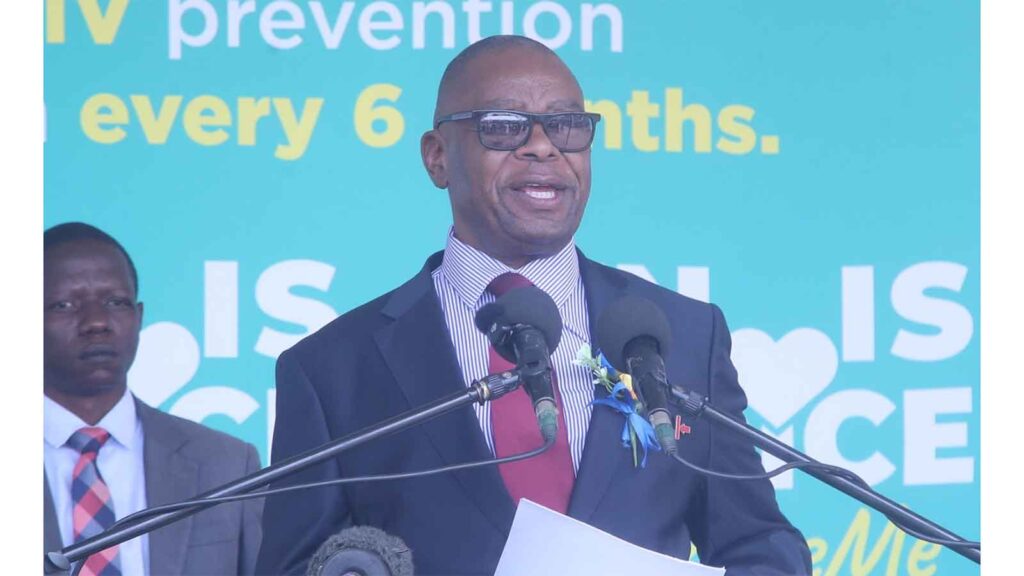
“Lenacapavir is given only twice a year. That means fewer clinic visits and more privacy. Importantly, it does not replace other HIV prevention options such as abstinence, faithfulness, consistent condom use, oral PrEP and other injectables — it adds to them. Choice remains central to our policy,” Dr Mombeshora said.
“Lenacapavir is given only twice a year. That means fewer clinic visits and more privacy. Importantly, it does not replace other HIV prevention options such as abstinence, faithfulness, consistent condom use, oral PrEP and other injectables — it adds to them. Choice remains central to our policy,” Dr Mombeshora said. The phased rollout will allow health authorities to strengthen supply systems, prepare health workers and ensure no community is left behind.
National AIDS Council chief executive, Dr Bernard Madzima, said the country’s HIV response had been widely recognised globally, with prevalence dropping significantly over the past two decades.
“At some point our prevalence was as high as 25 percent in the early 2000s, but it has gone down significantly, with an incidence of 0.9 percent today.
“These achievements are due to remarkable antiretroviral treatment coverage and prevention of mother‑to‑child transmission.
“However, we still record new infections, particularly among adolescent girls and young women and key populations.

“Lenacapavir is given only twice a year. That means fewer clinic visits and more privacy. Importantly, it does not replace other HIV prevention options such as abstinence, faithfulness, consistent condom use, oral PrEP and other injectables — it adds to them. Choice remains central to our policy,” Dr Mombeshora said.
“Today represents the dawn of a new era in HIV prevention. Lenacapavir, given twice a year, helps address adherence challenges and offers a discreet option, especially for young women who may not be empowered to negotiate safer sex,” he said.
Dr Madzima said the introduction comes as Zimbabwe finalises its National HIV and AIDS Strategic Plan V (2026–2028), stressing that traditional prevention tools such as condoms, voluntary medical male circumcision and daily oral PrEP remain highly effective.
Deputy Chief of Mission at the United States Embassy in Zimbabwe, Mr Phillip Nervig, who was representing Ambassador Pamela Tremont, said the innovation reflects continued partnership between Zimbabwe and the US in the fight against HIV.
“Through the America First Global Health Strategy, American expertise has the potential to transform HIV prevention around the world and right here in Zimbabwe.
“With two injections just every six months, Lenacapavir will make prevention easier and prevent the spread of HIV.
“To date, the American people have provided US$1.9 billion to combat HIV and AIDS in Zimbabwe. By collaborating with Gilead scientists to offer Zimbabwe access to Lenacapavir, we plan to support more than 271 000 Zimbabweans and directly prevent more than 9 000 new HIV infections in the next three years alone,” he said.
Lenacapavir was developed by US‑based biopharmaceutical company Gilead Sciences and is already being used in several countries, including Zambia, Eswatini and the US.
UNAIDS country director, Mr Trouble Chikoko, said the introduction of the long‑acting injectable advances the country’s commitment to Sustainable Development Goals.
“This introduction of a new long‑acting HIV prevention option, taken only twice a year, gives people a simpler, more convenient way to protect themselves.
“It is especially important for adolescent girls and young women and key populations that have not always been fully reached,” he said.
Harare Metropolitan Provincial Minister of State and Devolution, Senator Charles Tawengwa, said equity, informed choice, community engagement and sustainability must guide the rollout.
“Today is more than just a product launch. It is a statement of our collective commitment to protect the health, dignity and futures of our citizens, especially young people, women and vulnerable groups.
“No one must be denied access because of where they live or who they are, and services must be delivered with dignity as we scale up across our communities,” he said.
Rollout is expected to gradually expand to all 10 provinces as part of efforts to further reduce new infections and move the country closer to an AIDS‑free generation.