admin
admin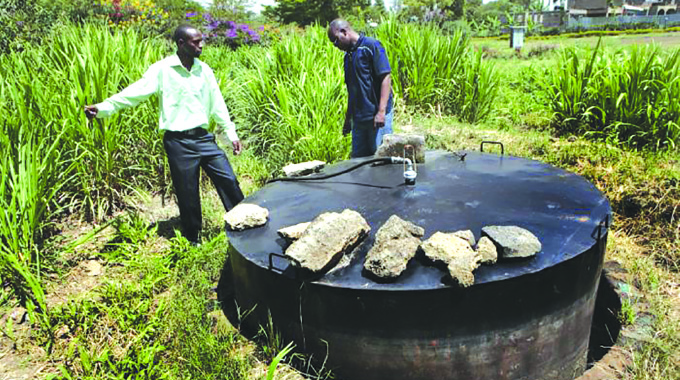
Enacy Mapakame Business Reporter
THE adoption of biogas as a source of energy is increasingly becoming popular in Zimbabwe on the back of the modest growth in livestock farming, an industry expert has said.
This comes as countries across the world are looking at adopting clean energy sources such as solar and biogas to limit greenhouse gas emissions and the adverse impacts of climate change.
Biogas is one of the clean energy sources and can be used as one of the climate-smart actions. Adoption of the energy source has been slow in the country, but that is beginning to change according to Lanforce Energy official responsible for large clients and partnerships management, Simba Makonese.
“Uptake of biogas as a source of energy was initially slow. But we are seeing an increase in uptake as people see the benefits,” he said during a question and answer session at the Annual Smart Farming Summit hosted by Global Renaissance Investments (GRI) recently.
The growth is being supported by livestock farmers who are keen on turning waste into clean energy sources.
“We have dairy farmers, they confine their cattle and there is a lot of waste that accumulates in the pens” he said adding that pig farmers were also taking the initiative to move to clean energy sources in the form of biogas.
Pigs generate a lot of waste that can be converted into clean energy.
Biogas technology has been adopted in Zimbabwe as an alternative method of generating energy. Full adoption of the technology has however, been slow due to several factors among them cost of setting up as well as lack of knowledge.
Makonese, whose organisation is into biogas, highlighted the need to further improve adoption rate of the technology, which can be achieved through education and communication on the benefits associated with this technology.
He added that as opposed to the traditional brick-and-mortar structures for the bio-digesters the sector is now adopting prefabricated bio-digesters, which reduces costs.
Through the adoption of biogas as an energy source, Makonese said they were moving towards fulfilling sustainable goal number 7, which emphasises access to clean energy and goal number 13, which focuses on the reduction of greenhouse gas emissions.
Biogas can be used to power operations at farms as part of climate-smart agriculture, in addition to household uses such as water heating, cooking, and refrigeration.
The energy source also becomes handy, especially in rural areas where use of tsotso stoves, an energy-saving method, is no longer sustainable for rural communities in the long run as laws to ban tree cutting are being enforced and deforestation is reducing the amount of wood available for locals.
The Government together with some development partners like Practical Action, have been training local community members to build biogas digesters and set up clean energy businesses that do not use firewood and traditional stoves to promote alternative livelihoods.
The biogas training programme not only gives women a more resilient way of surviving in the face of climate change but helps protect forests that are fast dwindling due to human and livestock pressure.



 Online Reporter