admin
admin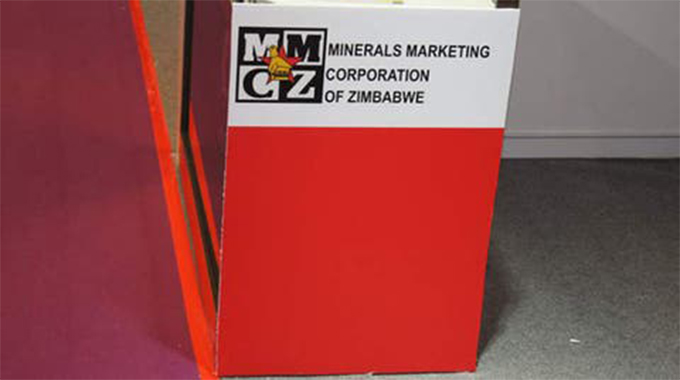
Ishemunyoro Chingwere
Zimbabwe earned close to US$2 billion from mineral exports in the first nine months of the year, a figure 24 percent above set target, according to official records.
The haul is for minerals whose marketing falls under the ambit of the Minerals Marketing Corporation of Zimbabwe (MMCZ) and excludes gold and silver that are also high value minerals.
Gold, one of the country’s largest single foreign currency earners, is marketed by the Reserve Bank of Zimbabwe’s Fidelity Printers and Refineries (FPR) together with silver.
The strong showing by the MMCZ marketed minerals, is a strong statement of intent against the background of the threat that was posed on the global economy by the crippling novel coronavirus pandemic.
Most major minerals markets closed their borders following the outbreak of the pandemic, threatening countries that heavily depended on imports for raw materials and finished goods.
MMCZ, however, said the huge sale was a culmination of timely and effective marketing strategies adopted by the state market which had to improvise in the face of highly restrictive measures adopted by several countries.
In an interview with this publication, MMCZ general manager Mr Tongai Muzenda, said platinum group of metals were the biggest contributor of revenues generated during the period under review.
This is as a result of firming global prices of the precious minerals mainly used in the automobile industry.
“Our sales for the period ending September stood at US$1, 77 billion, which was 24 percent above budget,” said Mr Muzenda.
“One of the driving factors for this was platinum group of metals, which did very well. On the contrary, other minerals like chrome ore and ferrochrome continued to suffer from a depression that has been around for a while now both in prices and volumes,” he said.
Chrome and ferrochrome have of late suffered as a result of stock piles that have obtained in China, the biggest steel market in the world.
However, the stockpile appears to be receding thus raising hope for increased prices and volumes and Zimbabwe is set to leverage on the impending demand.
Mr Muzenda said in the meantime the MMCZ will continue to strive to make sure the country accrues maximum benefits from its minerals, majority of them were on high demand on the global market.
Among other strategies, the state marketer will target to promote minerals such as gemstones and manganese.
Teams have already been sent out in areas where such minerals are prevalent and the MMCZ hopes to start seeing positive results on the export book.
Monitoring is also being scaled up to plug leakages, which have for long been identified as the biggest threat to the mining sector.
Under the US$12 billion 2023 mining sector milestone, minerals falling under the MMCZ ambit are expected to contribute US$8 billion in annual exports.
Expectation within the mining industry is that this will be met on the back of increased value addition and mining capacity.
Several mining houses are undertaking different expansion projects to meet the 2023 Government set milestone.
Volkswagen increases deliveries
The Volkswagen Group’s worldwide vehicle deliveries in September increased by 3.3 percent year-on-year to a total of 933,600 units, Germany’s largest carmaker said on Friday.
It was the first month this year in which Volkswagen recorded a year-on-year increase in worldwide deliveries. In August, Volkswagen’s global deliveries declined by 6.6 percent.
Volkswagen’s business in western Europe recorded the largest upswing in September, with vehicle deliveries rising 10.3 percent to 300,800 units, the company said.
Premium brand Audi recorded an 18.4 percent increase in sales to 172,200 vehicles in September. For the first nine months of the year, the Volkswagen Group’s sports car brand Porsche recorded the lowest fall in car deliveries with only 5.3 percent fewer units.
China continued to be the biggest single market for Volkswagen in September, with 387,500 vehicles delivered — a 0.9 percent increase compared with last year, the company noted.
Despite the early signs of recovery from the COVID-19 crisis in certain markets, total global deliveries between January and September were still down 18.7 percent at 6.5 million, according to Volkswagen.
Sales in China fell the least, with a year-on-year decline of only ten percent to 2.6 million vehicles, accounting for more than two-thirds of Volkswagen’s total global vehicle deliveries in the first nine months of the year.
As the region responsible for the company’s highest unit sales, China is of “outstanding importance” for the company, according to Volkswagen. Last year, Volkswagen delivered a total of 3.2 million vehicles to customers in China.-Xinhua


 Online Reporter