Online Reporter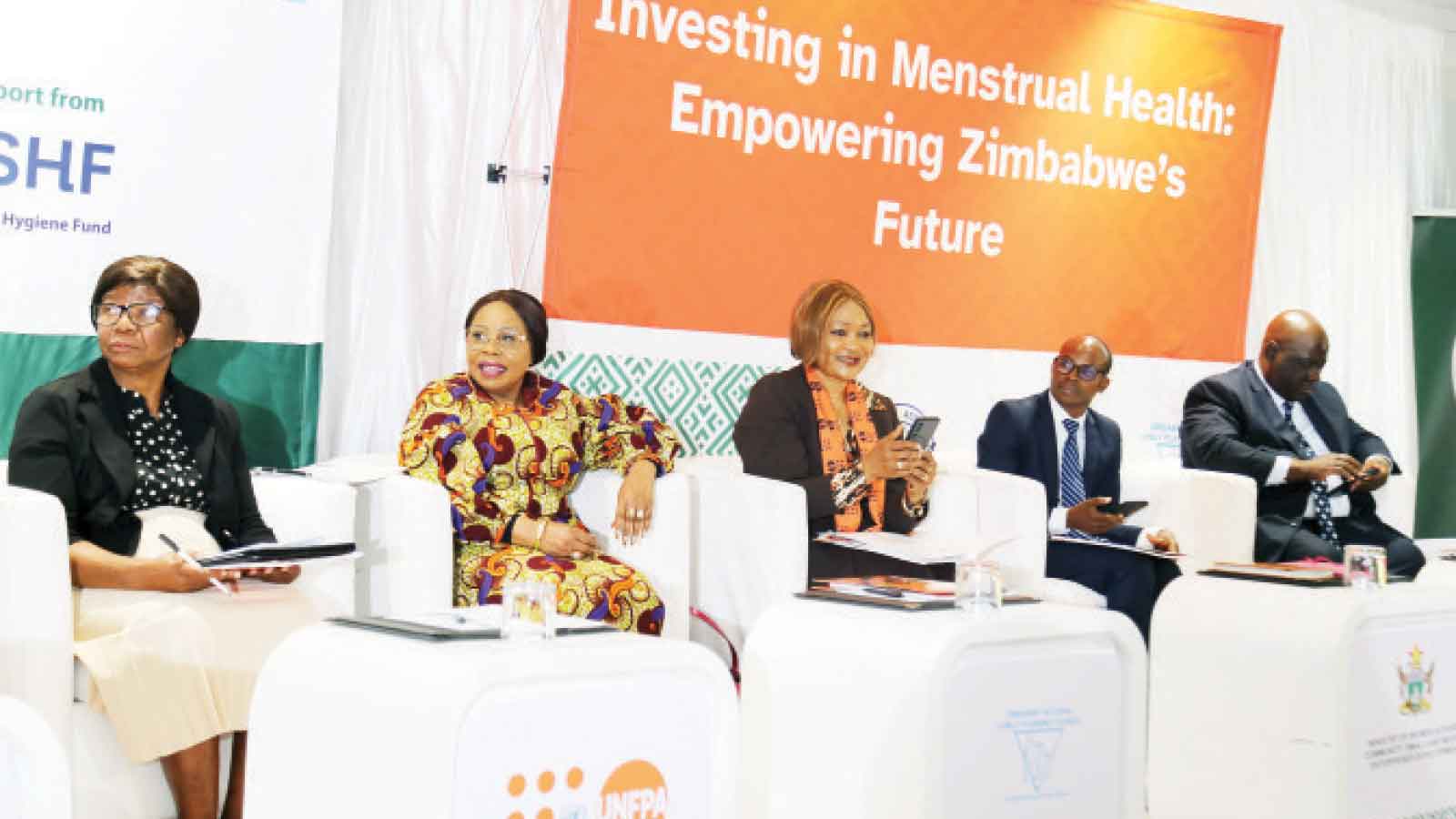
Rumbidzayi Zinyuke and Sekai Manyere
Health Reporters
Zimbabwe is moving to enact a dedicated Menstrual Health Management Act as Government intensifies efforts to ensure no girl misses school and no woman is denied dignity because she cannot afford menstrual products.
Women’s Affairs, Community, Small and Medium Enterprises Development Minister Monica Mutsvangwa made the announcement yesterday while officially opening the country’s inaugural Zimbabwe Menstrual Health Symposium in Harare, where policymakers, development partners, manufacturers and civil society gathered to map out reforms aimed at improving access to safe, affordable menstrual products.
Minister Mutsvangwa said Government was developing a comprehensive Menstrual Health Management Policy or Framework that would eventually be transformed into an Act of Parliament to provide a coordinated and sustainable response to menstrual health challenges.
“Building upon the collaborative groundwork our Ministry has successfully laid with menstrual health stakeholders, the formulation of a comprehensive Menstrual Health Management Policy or Framework represents the critical next phase of our agenda. This Framework will serve to consolidate our gains and orchestrate a cohesive, unified approach among all stakeholders. We are steadfast in our resolve to eventually mature this framework into a fully-fledged Act of Parliament, ensuring that menstrual health and hygiene in Zimbabwe are permanently safeguarded by the force of law,” she said.
Held under the theme “Advancing Standards, Policy Reform and Market Development for Affordable Menstrual Products”, the two-day symposium is the first of its kind in Zimbabwe and seeks to strengthen standards for menstrual products, promote policy reforms and support local manufacturing to improve affordability.
Minister Mutsvangwa noted that although Government had removed Value Added Tax and import duties on menstrual products through Statutory Instrument 4 of 2020, and committed to providing menstrual products in schools—particularly for vulnerable and rural learners—many girls and women still lacked access to affordable sanitary products.
She said the shortage forced many to resort to unsafe alternatives such as cloth, tissue paper and other improvised materials, exposing them to infections, discomfort and indignity. Period poverty, she added, continued to affect school attendance and academic performance among girls while limiting women’s participation in work, trade and other income-generating activities.
To improve access, her ministry has been training women and girls to produce reusable sanitary pads using safe, standardised materials, while also rolling out menstrual health education programmes targeting girls, boys, women and men to break stigma surrounding menstruation.
Government, working with the World Bank and the United Nations Population Fund (UNFPA), is also developing an educational package on menstrual health under the East Africa Girls’ Empowerment and Resilience Programme to provide age-appropriate information in schools and communities.
UNFPA country representative Ms Miranda Tabifor said menstrual health was a human rights, public health and economic development issue, adding that failure to address it undermined progress towards the Sustainable Development Goals on health, education and gender equality.
She said grassroots assessments conducted in districts such as Mutoko showed that 15 out of every 20 girls regularly missed school during menstruation because they lacked access to proper sanitary products, resulting in the loss of up to a quarter of the academic year.
“We cannot achieve our vision if half of the population is held back by a natural biological process,” she said.
Ms Tabifor welcomed Government’s commitment to develop legislation on menstrual health and pledged UNFPA’s technical and financial support towards the process. She said the proposed law would help close existing policy gaps and strengthen implementation of menstrual health programmes across the country.
Zimbabwe National Family Planning Council (ZNFPC) chief executive officer Mr Farai Machinga called for dedicated budget allocations to support menstrual health programmes, saying affordability remained one of the biggest barriers facing women and girls.
He said an individual required an estimated US$23 annually to adequately meet menstrual hygiene needs, placing sanitary products beyond the reach of many vulnerable households. Mr Machinga added that menstrual dignity extended beyond sanitary products to include access to clean water, sanitation facilities, soap and proper disposal systems.
“Investing in menstrual health is not a social welfare intervention. It is a strategic investment in education, gender equality, public health and national development,” he said.
Standards Association of Zimbabwe director-general Mr Cosmus Mukoyi said Zimbabwe had strengthened its participation in the development of international standards for menstrual products, creating opportunities for local manufacturers to produce quality products that could compete on regional and international markets.
He said the country had progressed from observer status to becoming a full participating member of the International Organisation for Standardisation technical committee responsible for menstrual products, giving Zimbabwe a voice in shaping global standards.
Mr Mukoyi said adherence to internationally recognised standards would improve product safety, support local industry and ensure that affordable menstrual products did not compromise on quality.