admin
admin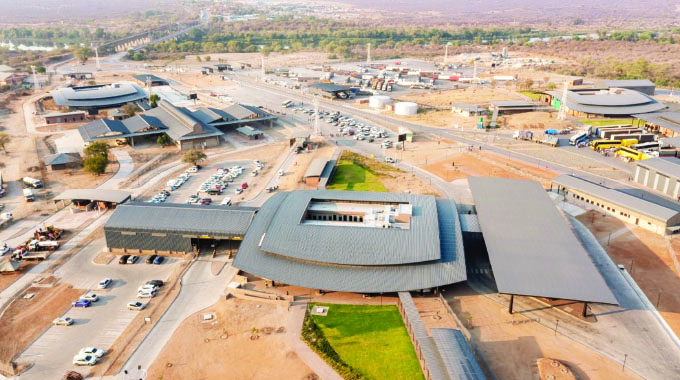
Prosperity Mzila Correspondent
The country wrapped up 2022 on a high note, having made tremendous progress in both its domestic and foreign policies.
This is attributed to President Mnangagwa’s focus and desire to rebuild the country’s economy as well as cultivate and re-establish the country’s relations with other nations.
Building our country brick by brick in every sector entails the cultivation of good relations with other nations, for there is no country that can survive in isolation.
Consequently, the timely engagement and re-engagement policy has brought many opportunities that are propelling the nation forward.
As we reflect on the progress made in the year 2022, we find out that the Second Republic made inroads towards the fulfilment of the electoral promises.
The nation went through two of the most torrid years (2020 and 2021), when it took a battering and suffered from the effects of the Covid-19 pandemic, global warming coupled with the effects of the decades long illegal sanctions.
President Mnangagwa and his team in Government worked hard to keep the country afloat by implementing people-centred policies, while keeping their eyes on the ball of economic recovery, infrastructural development and attainment of Vision 2023 of an Upper Middle Income Society.
This led Zimbabwe to emerge from Covid-19 as one of Africa’s fast growing economies.
From 2020 to 2021, when other nations shut their economies and withdrew into their shells in fear of Covid-19, President Mnangagwa seized the opportunity for the country to fully self-audit without the interference of external influences, since every nation was seized with their domestic affairs.
The President understood that his country’s economy did not have the privilege to sit idle in fear of Covid-19.
During that period Zimbabwe sealed its entry and exit points, and worked like a caterpillar in a cocoon, getting rid of old behaviours of laziness and the lackadaisical approach to work that had become the order of the day especially in the public service and metamorphosed into a new work ethic of hard work and commitment. One was either going to shape up or ship out.
This ensured that every citizen’s hands were on the deck, at the same time adhering to the World Health Organisation (WHO) lockdown measures.
First the Government set its priorities on vaccinating people before putting the entire nation under a cocoon lockdown with only essential services open.
What were these essential services that needed to be kept running despite Covid-19?
Road construction is an essential service, an enabler of trade, the construction of the Hwange 7 and 8 power stations also an aid to trade, the Beitbridge Border Post, Robert Gabriel Mugabe International Airport, bridges, dams and of course the new Parliament building.
These where the country’s cocoon from which we emerged in 2022, bold and confident to push for engagement and re-engagement. We rose with pride because behind the scenes Zimbabwe did not sit idle, Zimbabweans worked.
In 2022, as soon as the world was declared open, the country emerged from its cocoon as this beautiful butterfly that the Government could parade to attract investors into the country.
President Mnangagwa has a philosophy that encourages people not to admire infrastructure from other countries, but motivate citizens to improve their own infrastructure and surroundings.
This is the reason President Mnangagwa prioritised the construction and rehabilitation of our country’s roads, which are also the veins of this nation.
Today, investors who visit this country are impressed by the state of affairs at the Beitbridge Border Post and they wonder if it is still the same Zimbabwe they knew. Indeed, we are still in Zimbabwe just with a different work ethic.
The Second Republic is set to cash out on its holistic developmental investment in the 2023 harmonised elections after having indicated to the people that it is capable of taking the country to the next level in the economic, agricultural, industrial, mining and health sectors.
Economy
The Second Republic brought sanity to the country’s economy by reducing inflation and significantly slowed down the consumer price inflation from a high of 285 percent in August, down to 243,8 percent in December 2022, thereby increasing people’s buying power.
The free fall economy and the runaway illegal foreign exchange market was nipped in the bud through the introduction of Statutory Instrument 2022-330 (SI2022-330) the Public Procurement and Disposal of Public Assets, which introduced administrative penalties against offending entities and individuals.
The introduction of the Mosi-Oa-Tunya Gold coins presented an alternative reserve currency bringing in the much needed stability to the country’s economy.
The increase in exports in the first quarter of 2022 recorded US$2.4 billion in foreign receipts, a 15 percent increase from last year against payments of US$1.8billion, giving the country a net inflow of US$600 million to increase our foreign currency reserves to US$1,9 billion.
Agriculture
The Russia/Ukraine conflict and the effects of climate change had an impact on the country’s food security, but because of President Mnangagwa’s quick witted policies in the agricultural sector, Zimbabwe was able to produce 13 months’ supply of wheat, significantly reducing the import bill.
The Agriculture and Food Systems Strategy (AFSTS) (2020-2024), the introduction of the climate proofing technique (Pfumvudza/Intwasa), the launch of the Rural Development 8.0 paradigm among others ensured that no household was left behind; household by household, plot by plot, farm by farm, enterprise by enterprise and value chain by value chain in an effort to ensure that Zimbabwe is food secure.
Mining
Government continues to support both small scale and large scale miners, as it works towards the attainment of the 12 billion Mining Economy by 2023. President Mnangagwa managed to win in his call for investors to invest in Zimbabwe.
The country has witnessed investors from Russia, China, United Arab Emirates, Australia and Europe working in the country. The Arcadia Lithium Mine, Sabi Star Lithium Mine, Nikita Lithium expansion and the Manhize Steel projects have contributed a total of over US$5,5billion.
Other minerals such as gold, platinum, lithium and gas are good to contribute the remaining US$6.5 billion towards the US$12billion Mining Sector by 2023.
Industry/Manufacturing
With the good rains that the country is currently receiving and the farming programmes put in place by Government to assist seasoned and new farmers coupled with thriving mining activities, the manufacturing industry is set for a boost.
There are raw materials coming from within the country thereby reducing the need for imports.
Zimbabwe has become self-sufficient in terms of raw materials. What is required now is for the country to promote local consumption and shun imports. Zimbabwe now needs to export more than it exports for it to prosper.
Meanwhile, the country needs to maintain this progressive momentum to sustain the development trajectory that the country is set on.
To do that, Zimbabwe needs President Mnangagwa to continue with his foot on the pedal.
This is why in 2023 people are going to support him to continue as President for a second term.
This will allow a smooth flow and given another five years, this country would achieve its Upper Middle Income Economy by 2030.



 Online Reporter