

 admin
admin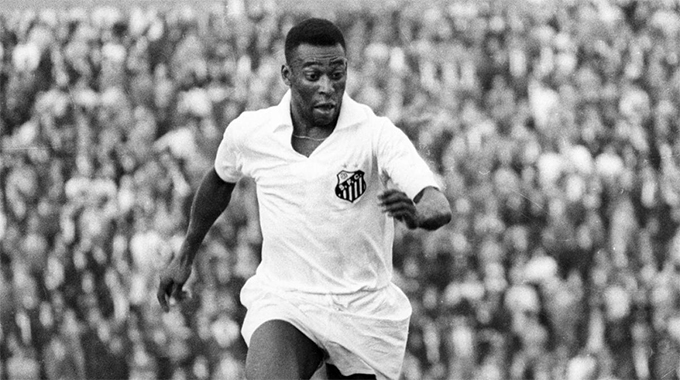
Phillip Zulu Special Correspondent
PELE, the King of Samba and the godfather of Jogo Bonito (the beautiful game, as he popularly called it), a three-time World Cup winner with the Brazil was on Tuesday laid to rest in Santos, Brazil, where his extraordinary football career started in the early 1950s.
But, he leaves behind an impeccable legacy of powering the game to dizzy heights by winning the World Cups — a feat that set the bar too high, as the modern day top- flight footballers wilt under strain as they seek to match his records.
I belong to a generation that religiously, passionately and profoundly followed the game locally and abroad simply because of the most Beautiful Game of football ever witnessed on earth.
To those that vividly remember the Pepsi films that were shown in schools, movies, cinemas etc. in the early 1970s, Pele was the subject matter of football grandiose and brilliance. We became the converts of Samba, we were mesmerised by the fine artistic deft touches of brilliance that were unleashed with brutal elegance, and an inimitable Samba dance at the end to signify their affection for carnival street dances that drive their locals into frenzy.
Brazil’s dominance in world football is not complete without mentioning the name Pele, who scored more 1 279 goals in over 1 363 matches and this is the hallmark of his brilliant career that every Samba fan will never forget. Some find flavour and vigour in trying to compare Pele with Diego Maradona and Lionel Messi, but to us his Samba faithful, we respect his ingenuity and grandiose qualities of winning three World Cup tournaments, something that remains unassailable to this day.
We all love both Maradona and Messi for their elegance on the pitch. Who will begrudge that magical left foot that both players fondly terrorise opponents with intelligence and football calculus? Jogo Bonito is the ultimate winner when fair contrasts of their styles of play goes under intense scrutiny by passionate fans at every turn.
The pro-Maradona and Messi brigades have this tendency of ignoring the fact that three World Cup wins are unassailable as things stand, and it looks increasingly impossible to equal this record. Comparing the King of Samba to anyone whose World Cup medals are less than three is simply an infatuation with inferiority.
Pele wore that number 10 shirt with pride, confidence and courage, as his splendid exploits of Samba brought everlasting smiles to his global multitude of fans who were in dreamland and awe of his undoubted talent.
The only Zimbabwean player, who played for Santos in Brazil, Kennedy Nagoli, rekindled our thoughts of the King of Samba as he produced photos of his playing days at Santos with Pele gracing the occasion of the then newly opened Santos academy facilities.
On the local scene, the late Archieford ”Chehuchi” Chimutanda popularised the No. 10 jersey with his wide smile and exceptional talent on the pitch. He wore the No. 10 shirt with pride and did great justice on the field of play with some terrific performances that made fans enjoy watching good football.
Samba’s huge influence on the local scene was epitomised by the free flowing style by the late Joel ”Jubilee” Shambo, Stanley ”Sinyo” Ndunduma, Shacky ”Mr Goals” Tauro and Stanford ”Stix” Mutizwa.
Rest in peace King of Samba Pele, you served the game with great humility and perfection.



 Online Reporter