Online Reporter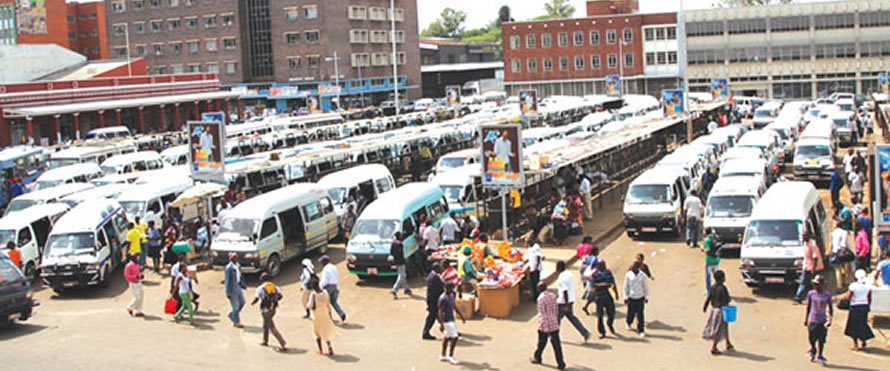
Your Money, Your Call
Cresencia Marjorie Chiremba
EVERY holiday season — and even on ordinary travel days — thousands of Zimbabweans take to the road, heading to family gatherings, funerals or business meetings, among various other destinations.
Yet for many, the journey becomes a frustrating ordeal when public transport vehicles break down mid-route, leaving passengers stranded for hours with no refund, no recourse and no accountability.
Be it Heroes Day, Easter or just a regular Friday, the pattern repeats itself.
From Harare to Mutare, and Bulawayo to Beitbridge, stories abound of buses and commuter omnibuses (kombis) grinding to a halt due to mechanical failure.
In some cases, passengers wait for hours for repairs. In others, the conductor — often the custodian of the purse — vanishes as soon as trouble strikes, leaving passengers with no way to reclaim their money or find alternative transport.
“I was travelling to Gweru for a funeral. The bus broke down near Kadoma. We waited for hours in the sun. The conductor disappeared with our money. We had to hitchhike the rest of the way,” said one passenger who boarded a long-distance bus from Mbare.
Such experiences are not only inconvenient; they are unjust. Passengers pay for a service, and when that service fails, they deserve protection. But in Zimbabwe, the legal framework for passenger rights in road transport remains murky.
While the Consumer Protection Act (Chapter 14:44) provides general safeguards against unfair business practices, it does not specifically address the rights of passengers in cases of transport breakdowns.
The Act prohibits suppliers from engaging in deceptive or unfair conduct and entitles consumers to redress, but enforcement is weak, and few passengers know how to lodge formal complaints.
More recently, the Government introduced regulations, under Statutory Instrument 118 of 2023, mandating speed-limiting and monitoring devices on all public service vehicles.
Kombis are now restricted to operating within a 60km radius, with longer routes reserved for high-capacity buses. These measures aim to improve safety — but they do little to address the issue of refunds or passenger compensation when vehicles break down.
Transport and Infrastructural Development Minister Felix Mhona has emphasised the importance of accountability and safety in public transport. However, there is still no clear policy requiring operators to refund passengers or provide alternative transport in the event of breakdowns.
Nor is there a mechanism to track fare collectors or ensure that money is returned when a journey is cut short.
The Traffic Safety Council of Zimbabwe has called for improved service standards and better enforcement of existing laws. But without a dedicated passenger rights charter or a transport ombudsman, passengers remain vulnerable to exploitation.
What needs to be done
The Ministry of Transport and Infrastructural Development must introduce regulations requiring operators to issue receipts, maintain a register of fares collected and provide refunds or alternative transport when breakdowns occur.
Passengers need simple, user-friendly platforms — via WhatsApp, SMS or local council offices — to report misconduct.
Public awareness campaigns can be used to educate commuters on their rights and how to seek redress.
Conductors who disappear with fares should be blacklisted and operators who fail to meet service standards must face penalties.
The relevant organisations must amplify passenger voices and push for reforms.
The road belongs to the people — and so does the right to safe, fair and reliable transport. Until these reforms are effected, every journey — holiday or not — remains a gamble.
Cresencia Marjorie Chiremba is a marketing and customer service consultant, customer experience columnist, and sales and service trainer. Contact details: [email protected] or +263712979461, 0719978335, 0772978335, www.customersuccess.co.zw