admin
admin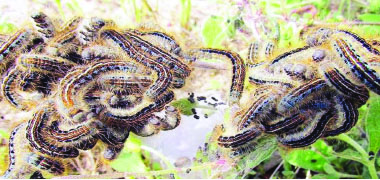
Elton Manguwo
THE Government has called on farmers to be on the lookout for the African army worm (Spodoptera) following reports of an outbreak of the pest in Malawi.
Department of Migratory Pests and Biosecurity Control director, Mr Shingirai Nyamutukwa issued the warning yesterday saying armyworm moths had since been spotted in Mashonaland West province through his department’s early warning systems.
Mr Nyamutukwa urged farmers to scout for the pest in their crops to ensure they act timeously to contain it if it is detected.
The African armyworm is known for its rapid development (short life cycle), high reproductive capacity, and high mobility by migration. Young caterpillars are difficult to detect, which gives farmers a very short period of time to react as infestations frequently go unnoticed.
“Scouting of fields should be done every day in the morning for early detection so preventative measures can be taken before damage has been done,” said Mr Nyamutukwa.
When caterpillars become conspicuous (at the fourth instar), they cause a lot of damage in a very short time.
The Department of Migratory Pests and Biosecurity Control has also urged farmers to report any cases of the armyworm, as soon as they see them. Infestation during plant development can result in low yields.
“The Government has enough chemicals ready for distribution free of charge to control the African armyworm,” said Mr Nyamutukwa.
The weather patterns that the country has been experiencing is conducive for African army worm development, as the severity and extent of outbreaks are increased by prolonged dry spells followed by early season rainstorms, which concentrate egg-laying moths and provide flushes of new grass as food for newly hatched caterpillars. Dry and sunny periods during the caterpillar development support its survival and rapid development.
“If unnoticed, the caterpillars can cause extreme damage to crops forcing farmers to replant. Replanting maize after armyworms have destroyed the first-sown plants often leads to low yields as the optimum planting dates will have been missed,” said Mr Nyamutukwa.
It is now way into the summer season and most crops are approaching knee level, which makes it critical to make sure there are not attacks from the African army worm that is infamous for attacking crops during periods of sporadic rainstorms and long sunny days throughout an outbreak.
Armyworm can also cause indirect losses to livestock if an outbreak occurs in pastures, which can cause starvation and severe poisoning when cattle graze on pastures recently infested by the armyworm.
Armyworms march along the ground and attack crops, as they search for food. They are a threat to the country’s efforts of attaining food security in line with the Government’s push to cut the food import bill.
To report outbreaks, call the Department of Migratory Pests and Biosecurity on: 0242 700143, cell 0772 868 804



 Online Reporter