

 daniel chigunwe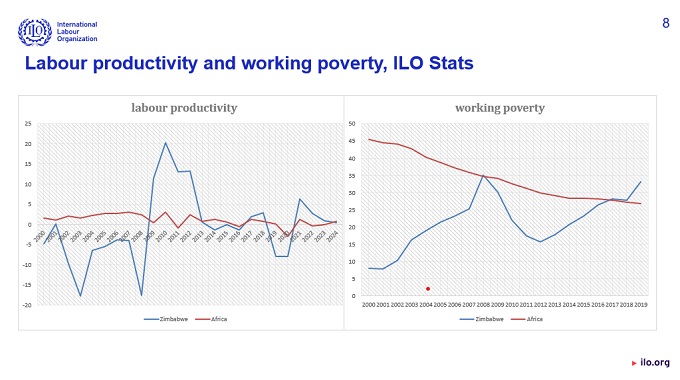
Misheck Ugaro
Zimbabwe has experienced mixed economic growth performance over the last two decades largely marked by two epochs of economic decline and growth.
The period 2010 to 2019 experienced a declining trend that peaked during the twin exogeneous factors of the Cyclone Idai and the Covid-19 pandemic which saw a massive annual economic contraction of 7 percent.
The end period of this decade was marked by the implementation of the Transformation Stabilisation Programme (TSP) which programme was geared to transform the economy and eliminate the legacy challenges of out-of-control budget deficit and a ballooning trade deficit.
The economy had suffered from years of under-performance both on the domestic front and the external front. This had led to serious exchange rate instability as well as hyperinflation.
The TSP successfully brought positive results that led to the commencement of the National Development Strategy 1 (NDS 1) aimed at economic growth under stable conditions and an immediate uptick in the growth rates from 2020.
The country resultantly performed well with growth rates averaging 5 percent over the first three years of the NDS1 from 2020 which is above the Sub-Saharan average growth rate of 3 percent.
The mid term review of the NDS1 has shown that the country’s growth trajectory has been generally on target even though the set target is considered below the required rate of growth to attain the upper middle-income economy by 2030.
The World Bank Country report of 2022, while acknowledging that Zimbabwe was outperforming its peers in the SSA region, it noted that in order to meet the stated 2030 vision the country should grow at a minimum double-digit rate.
Zimbabwe GDP Trend 2010-2023

Source: World Bank
The question at hand given the performance above is how this new growth has been shared by all in the country.
It is important that in order to meet the stated vision of leaving no one and no place behind the authorities have to ensure that the growth attained is shared by all.
One way of testing this aspect is through analysing the productivity and quality of employment that the country has generated.
The International Labour Organisation (ILO) has carried out a comparative analysis of the country’s labour productivity against the continental performance.
The results show that the country’s labour productivity has followed the GDP growth trends and averaged above the continent.
The productivity trends match the GDP growth trends. However, sadly, the ILO statistics also show that the quality of jobs have generally declined over the same period.
The second graph below demonstrates the trend in “Working poverty” which is rising compared to an improving situation on the continent.
This is pointing to the need for authorities to consider ways of improving the quality of growth the country is attaining. This can be attained by adopting a pro-employment planning position in both the forthcoming 2025 budget statement as well as the NDS2.
Zimbabwe labour productivity and working poverty trends

Source: ILO Stats
The above analysis leads to the conclusion that when authorities are drawing up the subsequent national economic plans, they now have to prioritise quality employment creation.
The budgeting process should adopt a position that generates quality jobs. An analysis of the current labour statics from Zimstat for the second quarter of the year shows that the majority of jobs are in the services and agricultural sectors while manufacturing jobs contribute only a small proportion below 10 percent. Mining and transport sectors contribute reasonable proportions in line with the structure of the economy.
Lastly, the country’s tax base has consistently narrowed as the informal sector has grown over time. The definition of the informal sector is contentious because curiously the majority of operators in this sector are registered and operate under renewable licenses.
It can therefore be argued that these businesses are not informal but instead are small to medium scale enterprises that can be included innovatively into the tax bracket. Operators in the public transport (Kombis), artisanal mining, retail shops spreading from groceries to clothing are all licensed and are on public record.
The tax plan must now have a way to harness these through innovative ways for example all kombis can buy displayable tax compliant discs on their screens just as they do for road licenses.
An incentive would be to protect all those adequately compliant and do away with the current mayhem of hide and seek with the police.
A widening of the tax burden from the narrowing formal sector will help boost the formal sector and the creation of formal jobs. An efficient tax system combined with an improvement on the ease of doing business in the country will boost investment and the creation of jobs.
Misheck Ugaro is the past vice president and now Council Member Zimbabwe Economics Society. Misheck is an investment banker and financial economist with major interest on macroeconomics.



 Online Reporter