admin
admin
Africa Moyo Deputy News Editor
Zimbabwe’s delegation at the 77th session of the African Charter on Human and Peoples’ Rights (ACHPR) has lodged a formal complaint over unverified allegations made by a panellist of the Pan-African Lawyers Union (PALU) on the situation in the country.
It has since asked for ACHPR to pull down from its website all unproven allegations from the report on the panel discussions, and issue a public statement disassociating itself from the assertions made.
The PALU representative was contributing during panel discussions held on Tuesday on the situation of enforced disappearances and elections in Africa.
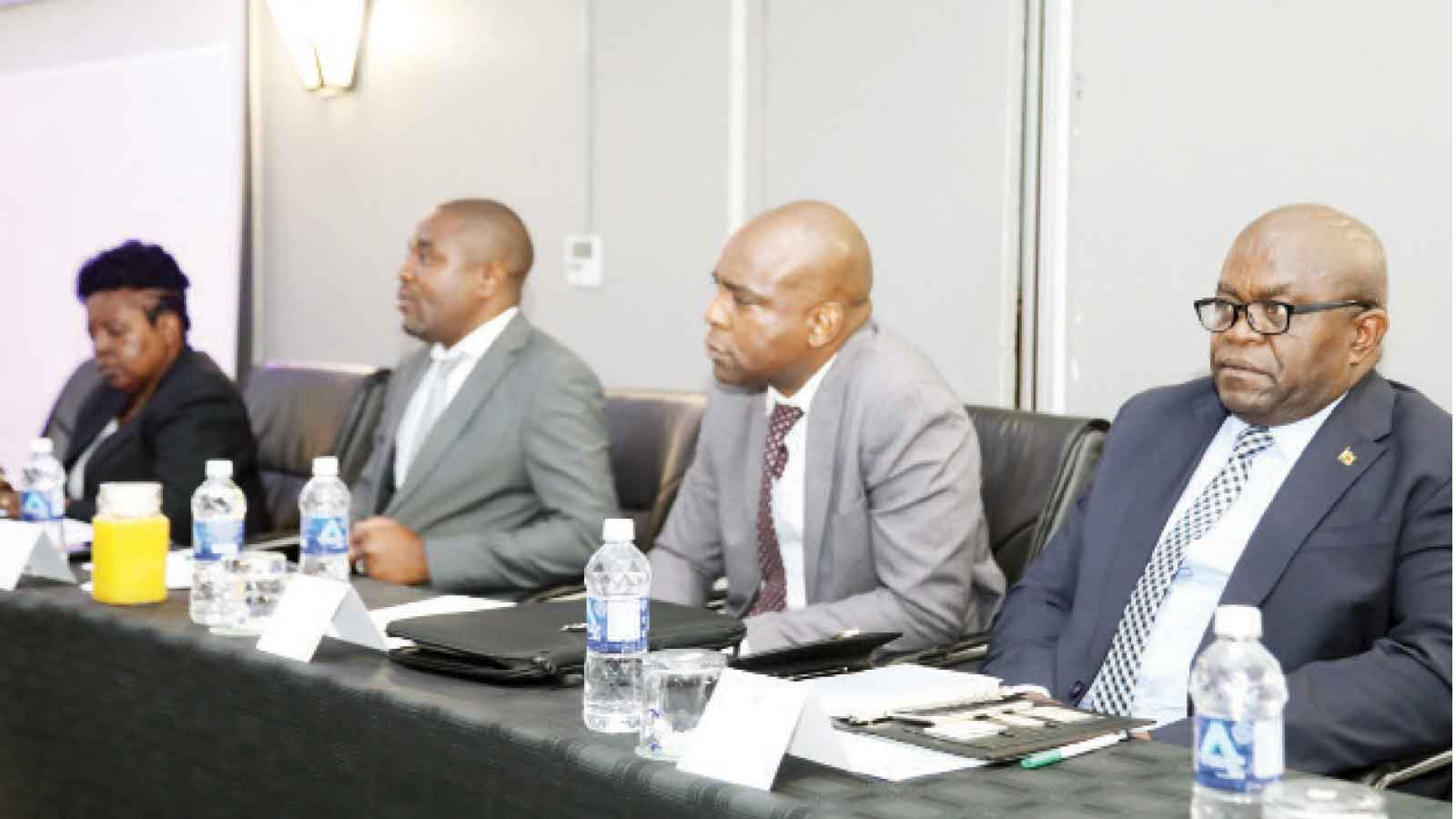
Zimbabwe’s delegation at the 77th session of the ACHPR, which is underway in Arusha, Tanzania, is led by Permanent Secretary for Justice, Legal and Parliamentary Affairs, Mrs Vimbai Nyemba.
Mrs Nyemba urged the ACHPR to verify facts before subjecting participants to misinformation and misrepresentations that are likely to tarnish the good name and image of member States.
In a letter of formal complaint, the delegation said Zimbabwe was “deeply concerned and disappointed”, adding that it “totally rejects the unverified claims, baseless and unfounded allegations” made by the PALU panellist.
“Zimbabwe takes exception to these unfounded allegations and unverified claims by the panellist and recalls the commission’s obligation under Article 51 (1) of the Charter that requires it to “ . . . ask the states concerned to provide it with all relevant information,” reads the letter.
“Therefore, it is prudent for the commission to communicate its concerns after obtaining factual evidence on arising matters rather than concur with unsubstantiated allegations.”
Zimbabwe said it was also alarming that the ACHPR allowed a panellist to present a case study on Zimbabwe’s 2023 harmonised elections when most final reports of elections observer missions are still pending, including the joint one by the African Union and the Common Market for Eastern and Southern Africa.
“This is a clear violation of the ACHPR’s mandate, which requires it to consider all relevant information before making any findings or recommendations. Additionally, neither the country rapporteur nor any of the commissioners have submitted communications to Zimbabwe concerning the elections.
“The Government of Zimbabwe reiterates that it is unacceptable that the ACHPR allows, as researched material, historical information that may have already been discussed in past sessions of the ACHPR or other multinational forums.
“It brings to question about who approved the study without the input of the concerned member state or without giving an opportunity for Zimbabwe to provide a panel member to allow for more balanced panel discussions,” reads the letter.
Zimbabwe expressed concern regarding the practice of the ACHPR Secretariat of uploading documents on the designated website late, saying delegations rely on early availability of documents to adequately prepare their interventions and to participate effectively in the work of the ACHPR.
This comes as the concept note for the panel discussion was uploaded three hours before the panel discussion, which took place at 4.30pm on October 24, in violation with Rule 33(1) of the Rules of Procedure of the ACHPR that states that “the Secretary shall distribute the provisional agenda and the relevant working documents to the members of the commission at least 60 days before the opening of an ordinary session.
“This makes it impossible for delegations to give any document and related discussions deserved attention and appropriate responses. This practice is unprofessional, disrespectful and undermines the credibility of the ACHPR.
“Member states are often caught off-guard and are subject to being misrepresented.
“Additionally, the ACHPR failed to properly examine the panellists and its resource information. This resulted in the dissemination of inaccurate and misleading information.
“Zimbabwe has timeously responded to all letters and communications of the ACHRP,” reads the letter.
In terms of the panel discussions subject matter, Zimbabwe provided a response to the ACHPR on January 23 this year, on Communication 794/22 concerning alleged disappearances of Sheffra Dzamara and Itai Dzamara.
“It is, therefore, shocking that Zimbabwe would be ambushed with such unfounded allegations. The motives of the commission in these sessions are coming into question, as they are now being used to ambush member states instead of allowing all parties an opportunity to address matters of human rights in a fair and respectful manner.
“It is also shocking that the panellist presented, as factual, allegations of abductions less than 12 hours after the occurrence.
“At the time of the panel discussions, it was unclear if the allegations had been brought to the Zimbabwe Republic Police, if any investigations had been conducted, or if there could be alternative facts,” reads the letter.
It added that Government and State security actors in Zimbabwe are mandated to protect citizens, upon receiving complaints, and will professionally respond to any reports received.
The Zimbabwe delegation advised that ACHPR reports and panel discussions should focus on facts and not allegations and respect the procedures of the ACHPR itself that only facts are published.
Therefore, Zimbabwe said it rejects the insinuation by the ACHPR that there are proven abductions of its citizens.
The letter further said Zimbabwe questioned the commission’s compliance with Article 56 (5) of the Charter, which provides that communications relating to human and peoples’ rights should be considered if they were sent after exhausting local remedies, unless it was obvious that this procedure was unduly prolonged.
“The Commission has never provided any evidence that procedures in achieving local remedies in Zimbabwe have been unduly prolonged. Zimbabwe’s course of justice must be respected before presumptions are cast to impugn the country’s dignity. Articles 50 and 51 of the African Charter on Human and Peoples’ Rights were crafted to protect the integrity of the functionaries of the State and test their effectiveness and efficiency.
“Premature reporting of alleged violations has become a vice that must be resolved by the commission. While it is commendable for the commission to be proactive in its activities, it must recall that it is bound to the Charter, specifically Article 45 (2) of the ACHPR which provides that one of its functions is to ‘ensure the protection of human and peoples’ rights under conditions laid down by the present Charter’,” adds the letter.
In view of the unverified allegations, Zimbabwe has “strongly” urged the ACHPR to take immediate steps to address the issues.
“It must also take the necessary steps to rebuild trust with member States by being transparent and accountable in its work.
“The Government of Zimbabwe is committed to working with the ACHPR to promote and protect human rights. However, we cannot do so while the ACHPR is being used to spread misinformation and propaganda.
“In that regard, we request a meeting with the Chairperson of the ACHPR, Honourable Remy Ngoy Lumbu, to express our displeasure at the way our country is being treated,” reads the letter.
The 77th session of the ACHPR started on October 20 and will end on November 9.



 Online Reporter