

 Online Reporter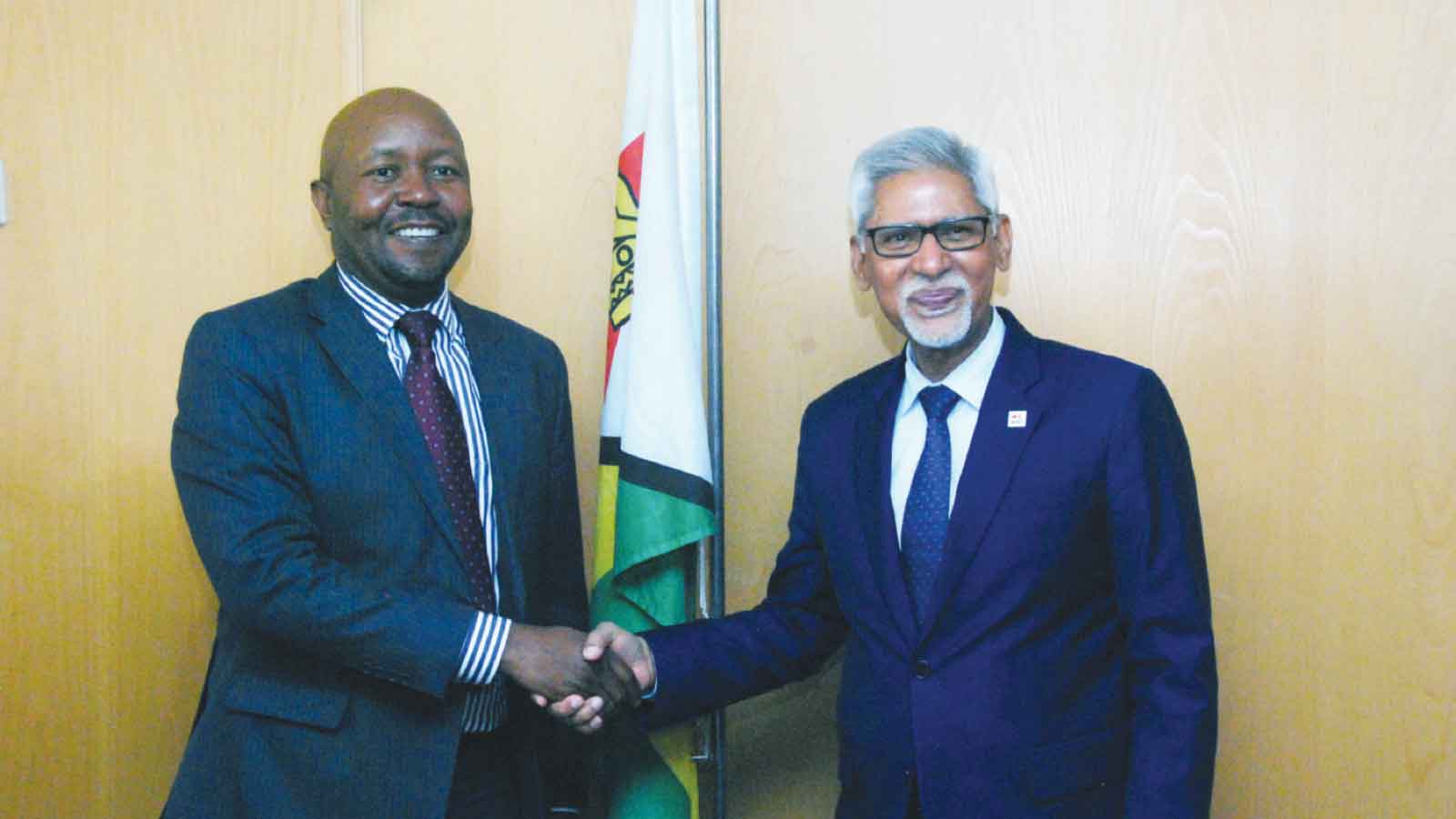
Rumbidzayi Zinyuke
Senior Health Reporter
ZIMBABWE is set to strengthen its partnership with the International Federation of Red Cross and Red Crescent Societies to improve community health services, expand immunisation coverage and enhance preparedness for health emergencies.
Speaking at a meeting with IFRC secretary-general, Mr Jagan Chapagain, in Harare yesterday, Ministry of Health and Child Care Permanent Secretary Dr Aspect Maunganidze, said Government valued its long-standing partnership with the IFRC and the Zimbabwe Red Cross Society, whose work has consistently complemented national efforts in community health, humanitarian assistance, emergency preparedness, health promotion and disease prevention.
He said the collaboration was critical as Zimbabwe implements the National Health Strategy and advances Universal Health Coverage.
“We value strong partnerships such as we have with the IFRC and we see clear opportunities for collaboration, especially in community health, epidemic preparedness and response, and community engagement,” said Dr Maunganidze.
He said Zimbabwe was keen to work with the Red Cross under the Gavi 6.0 programme to boost immunisation demand generation, tackle vaccine hesitancy and improve access to vaccines in underserved and hard-to-reach communities. Dr Maunganidze said the Zimbabwe Red Cross Society’s extensive community network positioned it well to help reduce the number of zero-dose and under-immunised children while strengthening engagement with community leaders.
“As the financing landscape changes, integration of interventions is now the key. We need stronger collaboration so that together we strengthen the health system and improve the well-being of our people,” he said. Mr Chapagain, who was in Zimbabwe on a working visit during which he met President Mnangagwa and senior Government officials, said the trip had reaffirmed the strong alignment between Zimbabwe’s national health priorities and those of the IFRC.
He commended Government’s commitment to working with humanitarian partners and pledged continued support through the Zimbabwe Red Cross Society.
“Our focus is always on strengthening community resilience, including health resilience. The biggest gap is often between health services and communities, and this is where the Red Cross can add value through its volunteers and community presence,” he said.
Mr Chapagain said the organisation was keen to deepen collaboration in community health, risk communication and community engagement, climate and health programmes, and immunisation initiatives targeting zero-dose children.
He said new approaches were needed to reach children who had never received vaccines, with greater involvement of community-based organisations and volunteers.
“The same strategies have not made the change we want to see. We need different strategies that bring community organisations such as the Red Cross to the centre of immunisation efforts,” he said.
To strengthen that collaboration, Mr Chapagain proposed the signing of a Memorandum of Understanding between the Ministry of Health and Child Care and the Zimbabwe Red Cross Society to formalise cooperation on immunisation programmes under Gavi 6.0.
“I think particularly in immunisation, maybe an MoU could help because we also need some resourcing to contribute. Without money, nothing happens,” he said.
Mr Chapagain said he would engage Gavi leadership in Geneva to explore funding mechanisms that would allow more resources to be channelled through the Red Cross to support community-based immunisation activities.
He also proposed stronger data sharing between Zimbabwe Red Cross health facilities and the Ministry of Health to support evidence-based policy formulation and planning.
Acknowledging global reductions in humanitarian funding, Mr Chapagain said the IFRC was promoting innovative domestic resource mobilisation to sustain community health programmes.
He commended Government for supporting Zimbabwe Red Cross income-generating initiatives, including operating canteens at health institutions, saying such partnerships enabled the organisation to generate resources while providing valuable services.
“I found a very strong alignment between the Red Cross priorities and the Government’s priorities, and we will work together to strengthen those shared priorities,” he said.



