Online Reporter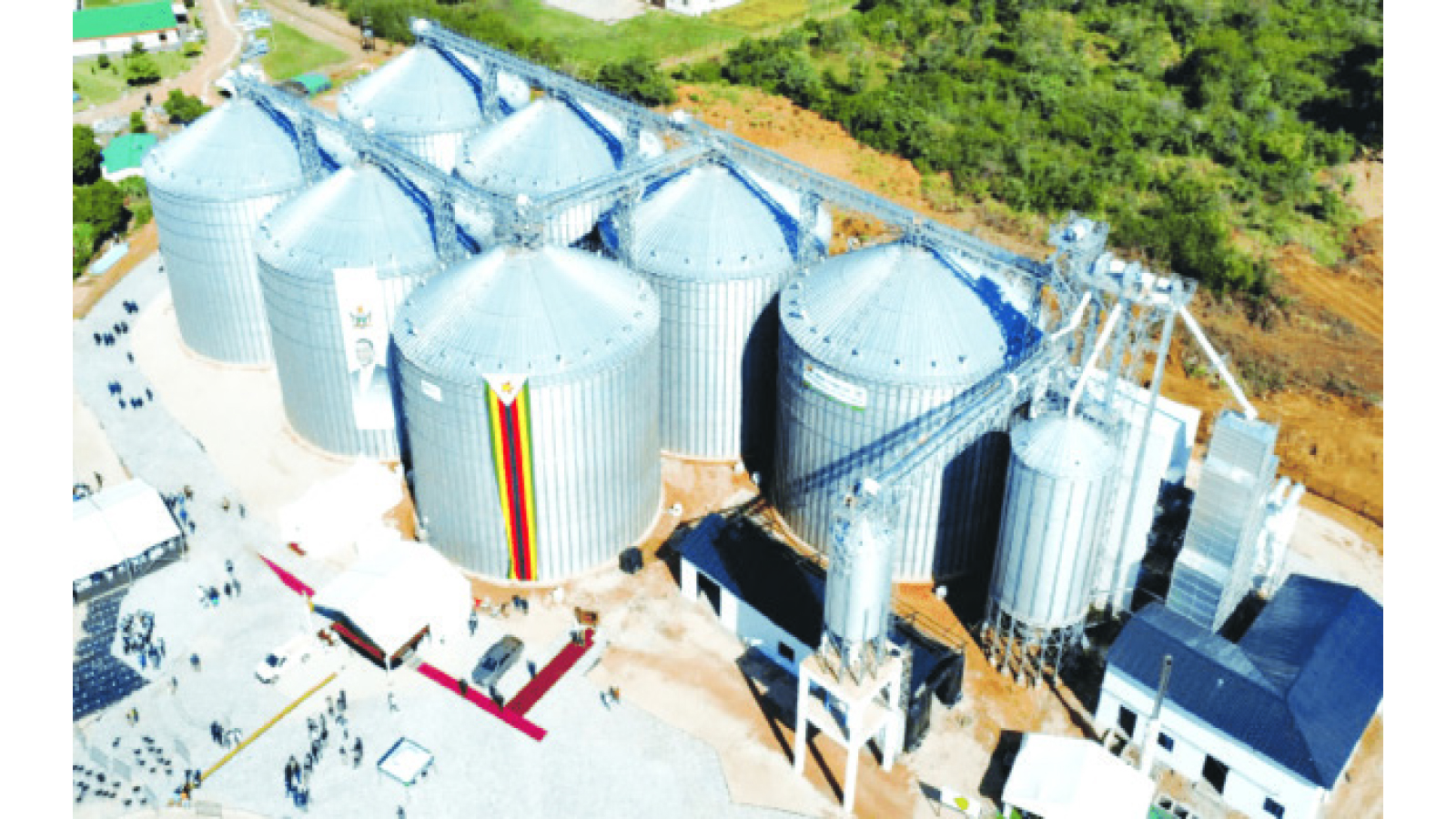
Theseus Shambare-Features Writer
TWO decades ago, empty silos and parched fields symbolised Zimbabwe’s struggle to feed itself.
Today, green belts of wheat, glistening irrigation canals, fish ponds and livestock herds reflect a quiet revolution reshaping the nation’s agricultural landscape.
For more than 20 years following the post-2000 fast-track land reforms, Zimbabwe struggled to regain its productive footing.
A cocktail of factors, from the disruptive early years of the Land Reform Programme to inadequate infrastructure and the mounting impacts of climate change, saw harvests plummet to historic lows, according to the Ministry of Lands, Agriculture, Fisheries, Water and Rural Development’s 2024 Annual Report.
Between 2000 and 2010, total food production fell by about 60 percent, while commercial farmland lost nearly three-quarters of its productive capacity.
Maize output declined from an average of two million tonnes in the 1990s to less than 500 000 tonnes in 2008.
Wheat production in Zimbabwe plummeted from over 325 000 tonnes in 1990 to a record low of 18 500 tonnes in 2008 due to a decline in inputs and capital, leading to a heavy reliance on imports to meet the country’s annual needs, according to Sabinet African Journals.
This collapse was driven by droughts, lack of inputs, low mechanisation and fractured supply chains.
Now, the tide is turning.
Zimbabwe is set to harvest 600 000 tonnes of wheat in 2025, surpassing both national demand and last year’s output of 562 591 tonnes.
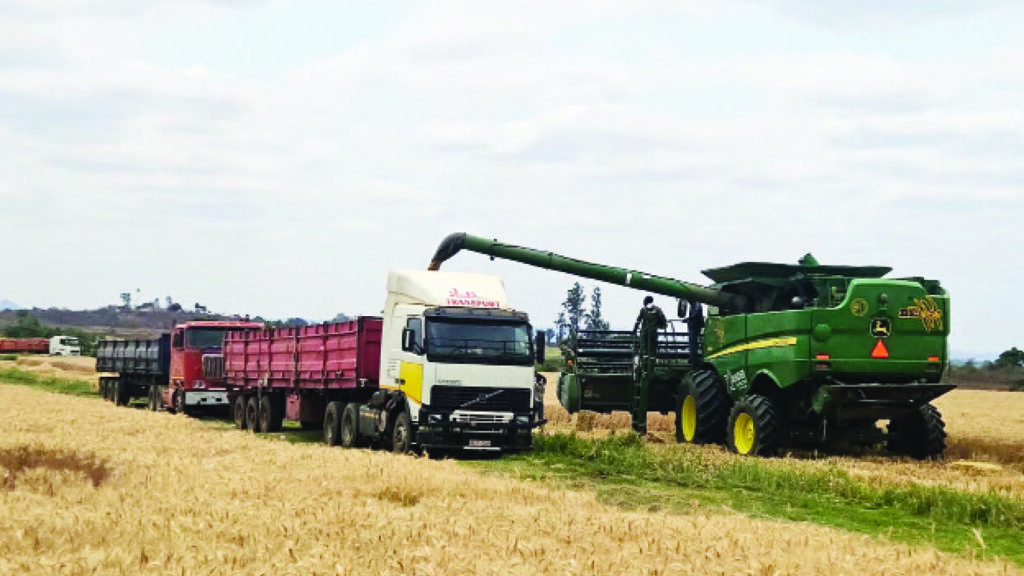
A combine harvester loads wheat into a lorry.
Over 120 000 hectares have been put under wheat, a new national record supported by contract farming, irrigation rehabilitation and mechanisation.
Lands, Agriculture, Fisheries, Water and Rural Development permanent secretary, Professor Obert Jiri, says the turnaround reflects deliberate planning and technology use.
“Through ARDA, over 60 000 hectares of wheat have been mobilised, expected to yield more than 300 000 tonnes,” he said. “Farmers are embracing irrigation, agronomic best practices and mechanisation to maximise productivity.”
State institutions, such as AFC Land Bank, CBZ Agro-Yield and ZINWA, have aligned credit, energy and water supply to support the wheat drive.
Mechanisation has expanded rapidly, with the national tractor fleet growing from about 8 000 to 15 000 units.
This expansion has boosted land preparation and adoption of conservation agriculture, improving both yields and soil health.
Irrigable land has increased from 175 000 to 217 000 hectares, cushioning farmers from erratic rainfall.
With production climbing, post-harvest management has become the next frontier.
Across the country, modern silos are being upgraded and new ones built, including AI-powered facilities equipped with sensors that monitor temperature, humidity and aeration in real time.
According to the chief director in the Ministry of Land’s agricultural engineering, mechanisation and farm infrastructure development directorate, Engineer Edwin Zimunga, the AI silos at Kwekwe and Aspindale have reduced post-harvest losses from as high as 15 percent to below three percent.
“These systems detect early pest or fungal risks, automatically regulate aeration, and maintain optimum storage conditions,” he said.
The result has been improved grain quality, longer shelf life and stable supply during lean periods.
By extending grain preservation, these smart silos ensure that Zimbabwe’s strategic reserves remain secure, contributing directly to national food stability.
The 2025/26 summer season targets 3,27 million tonnes of cereals, an 11 percent rise over last season.
The plan focuses on climate-proofing through irrigation expansion, Pfumvudza/Intwasa, and agro-ecological crop zoning.
Under the Presidential Input Programme, over three million farmers receive seed, fertiliser and training.
Land tenure reform is reinforcing this growth. Through the ongoing land titling exercise, thousands of farmers are receiving secure, bankable tenure documents.
For 76-year-old Mrs Maybe Mapira of Mazowe, Mashonaland Central Province, the document represents both dignity and legacy.
“I never thought I would hold a paper that says this land is truly mine,” she said recently, smiling beside her newly delivered irrigation pipes. This means my children can continue farming after me.”
She is among thousands benefiting from the Presidential Productivity Booster Kits, which combine irrigation tools, fertiliser and training for smallholders.
Alongside cereals, the tobacco sector has staged a stunning recovery.
In 2025, farmers delivered 354 881 661 kilogrammes — earning over US$1 billion in exports.
Africa’s first nicotine extraction plant, African Extracts, established locally, is adding value to tobacco, ensuring more of the value chain remains in Zimbabwe.
“Irrigation is more than a technique. It is a promise of stability and resilience,” said Tobacco Industry and Marketing Board’s Chelesani Moyo-Tsarwe.
Tobacco farmers are now integrating fruit and woodlot trees to balance commercial and environmental needs.
Beyond crops, the livestock sector has emerged as the silent driver of rural resilience.
Lands, Agriculture, Fisheries, Water and Rural Development Deputy Minister, Davis Marapira, described livestock as “the backbone of Zimbabwe’s agricultural economy,” contributing significantly to the gross domestic product, food security and rural incomes.
He said almost every rural household keeps at least one form of livestock, be it cattle, goats or poultry, providing manure, draft power and nutrition.
He emphasised the role of initiatives such as the Presidential Silage Programme, the Pasture Development Scheme and the RAFFS (Resilience and Adaptation in the Livestock Sector) project.
“These interventions reduce livestock deaths during droughts and promote improved breeds, feed formulation and pasture management,” he said.
He noted that livestock output has grown by double digits over the past seasons, with national meat and milk production closing the demand gap.
Improved animal health services, strategic boreholes and public-private partnerships are anchoring this growth.
However, Zimbabwe Commercial Farmers Union president, Dr Shadreck Makombe, cautioned that sustaining the current momentum will require consistent energy supply, affordable financing and stable markets.
“Agriculture is performing well, but we must address bottlenecks in power, fuel and access to affordable inputs if we are to sustain this growth,” he said.
Livestock, cropping and aquaculture are increasingly linked under the same vision of climate resilience and value-chain integration.
Aquaculture itself has become a frontier sector.
Zimbabwe is pursuing a US$1 billion fish industry through partnerships such as the one between Fin Fish Suppliers and Aller Aqua of Denmark, a global leader in fish feed.
This partnership improves feed conversion ratios, reduces production cycles and ensures uniform fish sizes for market competitiveness.
The Presidential Community Fisheries Scheme is already changing lives in districts such as Binga, Mutasa and Chiredzi.
Mr John Kapfunde, a beneficiary of the Free Fingerlings Programme, said he started with 3 000 fingerlings and now sells both fish and feed locally.
“Fish farming has become a steady source of income and nutrition for my family,” he said. “I am deeply grateful for the Government’s vision — our ponds now sustain us.”
The fisheries department says the goal is to formalise value chains, attract private investment and create thousands of jobs, while aligning with Vision 2030.
Complementing these efforts are 820 business units established nationwide across villages, schools, youth centres and vocational institutions.
These units act as local service hubs, offering training, processing and marketing support directly to communities.
“Business units bring agriculture closer to people and improve coordination across value chains,” Prof Jiri said.
Other programmes such as the Presidential Cotton Scheme and Climate-Proofed Inputs Programme further strengthen resilience and inclusivity.
Experts like Nyamavanga Farmers Association chairperson, Mr Silas Mubhemi, note that while production has increased, input costs and power outages remain key challenges for smallholders.
“Farmers are eager and productive, but sustainable access to energy and markets will determine long-term viability,” he said.
From the fields of wheat to the ponds of tilapia; from AI-powered silos to digitally registered farms, Zimbabwe’s agricultural story is shifting from survival to sustainability.
Prof Jiri summed it up: “Through targeted investments, technology adoption and inclusive policies, Zimbabwe is building an agricultural sector that can withstand climate shocks and feed its people.”
Indeed, the nation’s journey from drought to abundance is more than a comeback. It is a blueprint for Africa’s climate-smart future.
Indeed, the nation’s journey from drought to abundance is more than a comeback. It is a blueprint for Africa’s climate-smart future.