

 admin
admin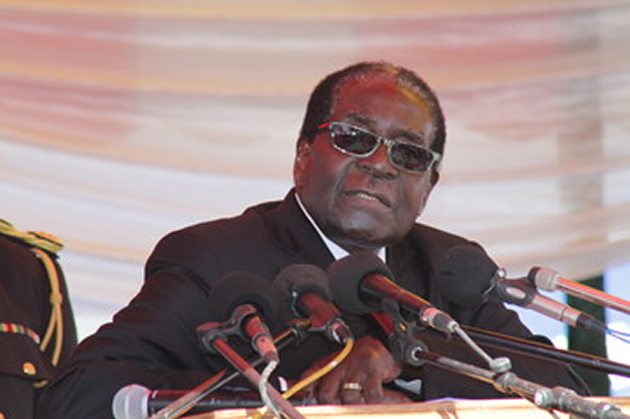
Farirai Machivenyika Senior Reporter
Zimbabwe is considering withdrawing security forces serving in Liberia on United Nations peacekeeping duties following the outbreak of the deadly Ebola virus in some West African countries that has claimed the lives of over 900 people.
Zimbabwe has police, soldiers and prison officers on UN duties in Liberia, one of the countries that has been hit by the outbreak.
Sierra Leone and Guinea have also been affected by the outbreak.
“When it’s announced that in some country perhaps far away from us that some incurable disease has emerged, do we begin to worry about that?” President Mugabe asked as he officially opened the Zanu-PF Central Committee meeting in Harare yesterday.
“Ebola is said now to have killed more than 700 people. We have our people serving with the UN units in Liberia. Are they safe? I hear we even have prison officers serving in Liberia, I wonder why we send prison officers to serve in other countries? But perhaps the information may not be that accurate.
“It’s Dr (David) Parirenyatwa (Minister of Health and Child Care) who informed me yesterday when after Cabinet I asked whether it’s not necessary for us to withdraw our people from Liberia and he said no let us wait a bit because from the ministry they have also just sent a doctor also to go and help in Liberia.
“But this morning, quite early, he said he had re-thought the matter perhaps we should withdraw our people and these don’t just include police officers, but there are said also to be prison officers.
“Anyway, I was just talking of the need for us to take precautions. We must not expose ourselves unnecessarily. I hope those who will be from there if we withdraw them will be people who will not carry magerms eEbola iyoyii for now we have been safe in our region.”
Meanwhile, Sadc Ministers of Health held an Extraordinary meeting in Johannesburg, South Africa, yesterday to build a consensus on appropriate strategic actions to prevent the introduction and or spread of Ebola in the region.
In a statement after the meeting, the ministers called on member states to accelerate their responses in the event of an Ebola outbreak in the region in accordance with the International Health Regulation standards that stresses the need for national co-ordination and leadership, and enhancement of cross-border collaboration and involvement of communities.
The minister also: “reaffirmed the need for high-level national leadership by Heads of State and Government in order to facilitate multi-sectoral response interventions and co-ordination required to cope with the epidemic.
The role of the WHO and Sadc Secretariat was considered essential to provide technical and facilitatory support.
The ministers called for a multi-sectoral approach that includes governments, development partners, churches among others, to create awareness of the disease in communities.
They also urged governments to commit financial resources to prevent the outbreak of the disease, while member States were urged to assist each other in the event of an outbreak in one of the member states.
WHO was also tasked to lead in resource mobilisation and production of materials for awareness campaigns.
The ministers selected South Africa to be the centre of excellence in Ebola laboratory diagnosis in the region.



 Online Reporter