admin
admin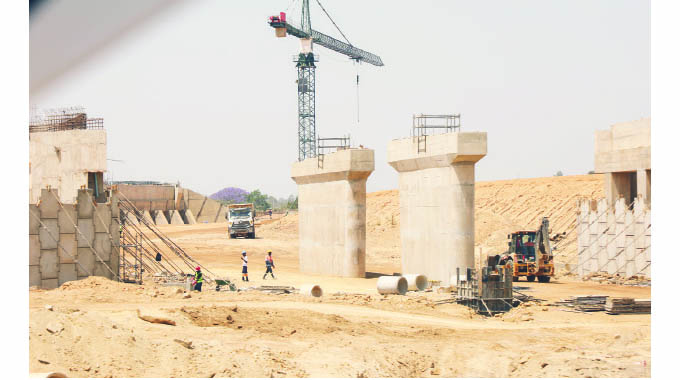
Gondai Bangidza-Correspondent
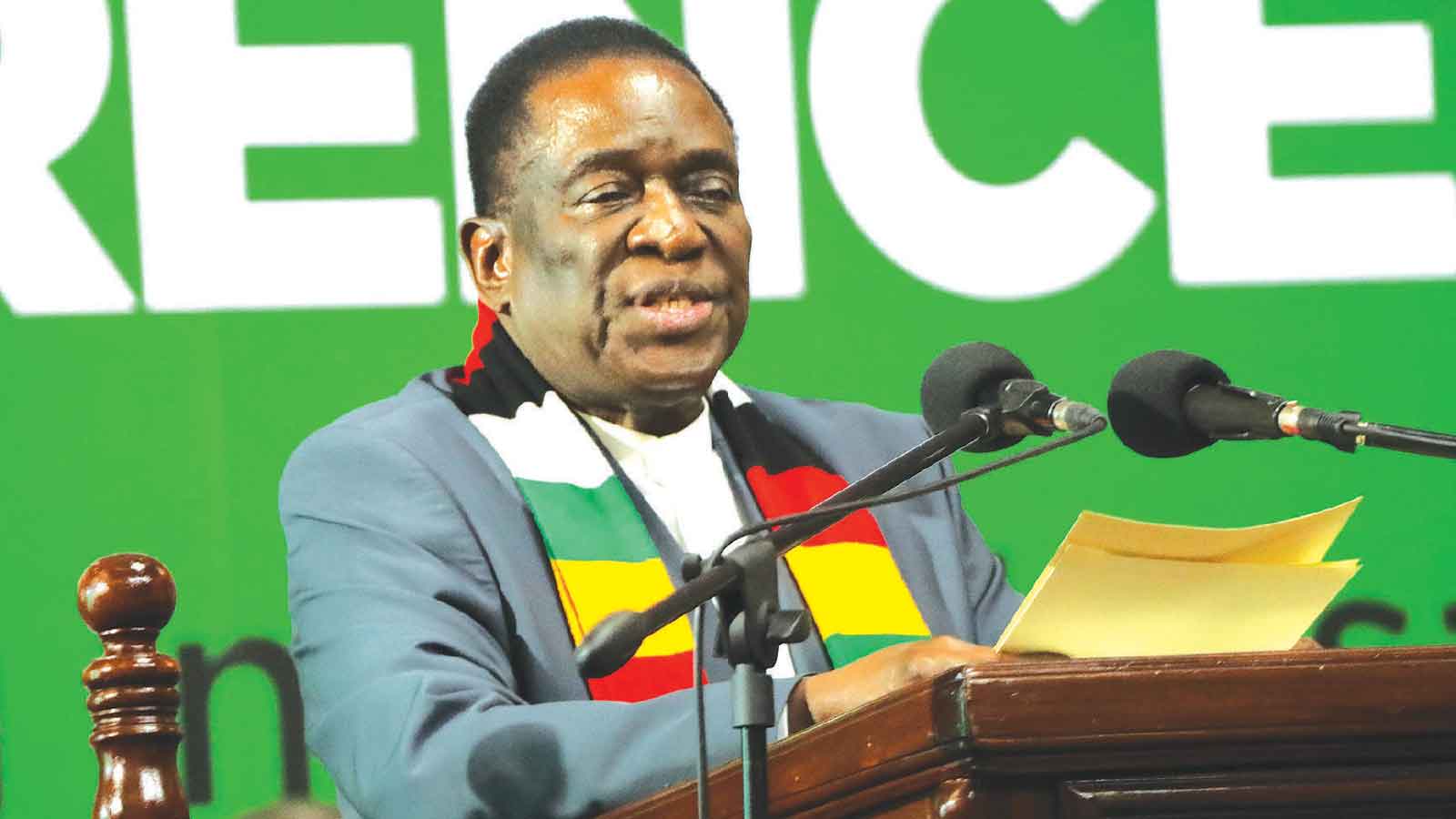
“As a result of sanctions, the Government is having to, ‘eat what we kill’ drawing from our own internal resources. Reliable evidence as an input for policy development is therefore imperative for high quality decision-making towards the prudent allocation of resources and improvement of service delivery and other public goods,” President Mnangagwa once remarked at the Zimbabwe Economic Development Conference in Victoria Falls on August 12, 2022.
The Second Republic under the leadership of President Mnangagwa has made strides to improve the nation particularly on the infrastructure development front.
As a country, our economic development is closely tied to infrastructure investment, which has resultantly led job creation, market access, health and education.
There have been notable projects which include road development, airports, energy and housing delivery projects that have so far been undertaken with others still in progress. For a long time, Zimbabwe has faced challenges in infrastructure development.
Major developments have been seen in dam construction and road networks rehabilitation that have had a significant impact to the nation’s economic development.
Zimbabwe is currently building new dams and since 2021, the Government announced that $10 billion was directed for the development of 10 major dams which are part of a long-term plan that shall support the agricultural sector and harness water for industrial and domestic use. The dam construction projects are also critical in climate-proofing agriculture and decrease dependence on natural rain for farming.
The 10 dams under construction are the following;
Kunzvi Dam in Goromonzi district with a 158,4 million cubic metre capacity.
Gwayi-Shangani Dam in Lubimbi district with a 635 million cubic metre capacity.
Semwa Dam in Mt Darwin district with a 260 million cubic metre capacity.
Silverstroom (Mbada) Dam in Centenary district with a 140 million cubic metre capacity.
Vungu Dam in Zibagwe district with a 118 million cubic metre capacity.
Ziminya Dam in Nkayi district with a 98 million cubic metre capacity.
Bindura Dam in Bindura district with a 100 million cubic metre capacity.
Dande Dam in Guruve district with a 160 million cubic metre capacity.
Chivhu Dam in Chikomba district with a 26 million cubic metre capacity.
Tuli-Manyange in Gwanda district with a 35 million cubic metre capacity.
These above dams are being constructed by four different companies; China Nanchang Engineering, China International Water and Electricity (CIWE), Grindale Engineering and Fossil Contracting that have a cumulative employment of above 12 540 for an average period of three years.
Each dam will have water for agriculture and domestic use which will also help households to improve livelihoods. Dam construction will boost agricultural production.
About 187 000 hectares were under irrigation in 2021 and now there is was 217 000 hectares.
Dam construction can boost agricultural production and help to build resilience against climate variability and change.
The construction of dams naturally leads to an increase in agriculture employment and food security for the nation by at least 35 percent from the current figures.
According to Government figures, an increase in agriculture production can result in an estimated 7 500 people being employed directly and indirectly with food production increasing by 74,6 percent.
These strategic infrastructure investments are vital in fostering growth, jobs and improved living standards. Zimbabwe’s road networks are currently being rehabilitated with new roads being constructed. In 2019, the Government through the President launched a US$400 million Emergency Road Rehabilitation Program (ERRP) meant to improve the countries road networks.
This supported the National Development Strategy 1 (NDS1) in which the Government is targeting road improvement to meet Southern Africa Transport and Communications Commission (SATCC) standards from 5 percent to 10 percent.
The Government of Zimbabwe also aims to increase the number of kilometres of road networks in good condition from 14 702km to 24 500km by 2025.
When the ERRP was launched it sought to improve road infrastructure to enhance road safety and an efficient transportation system.
Improving the country’s road infrastructure could also help Zimbabwe to meet its Sustainable Development Goals.
“The UN secretary-general’s special envoy for road safety alluded that Zimbabwe has the opportunity to achieve the goal of reducing by half the road traffic crash fatalities and injuries by 2030,” said the UN communication specialist in Zimbabwe Mr Sirak Gebrehiwot.
In the Harare Metropolitan Province, a cumulative 5 608 people have been employed by three road contractors working on road development projects. The infrastructure projects have a massive impact on increasing the amount of tax accrued by the Government, which can be used for other national programmes.
In other areas like Mashonaland Central, there was the laying of asphalt of over a 2,7 kilometre stretch along the Bindura-Mt Darwin-Mukumbura road which to date has been completed.
Additionally, the construction of a 16km road of the Mt Darwin to Mukumbura road has been completed as well as the 10km stretch of the St Albert-Dotito road. Asphalt was laid on the Guruve-Kanyemba road and the Norton road-over-rail bridge completed.
The major road contractors were Tensor Systems, Masimba Construction, Fossil Contractors, Exodus and Company and Bitumen World.
These companies have made strong strides in improving the country’s roads. The dam construction and road development programmes are said to have employed nearly 60 percent of workers from surrounding communities and this helps to boost community activities and improve livelihoods. Most road network projects have seen round the clock work with 12 hour shifts being implemented, as a way to meet deadlines.
In summary, the current Zimbabwe Infrastructure investment programme aims to consolidate economic development and will focus on critical sectors such as energy, transport, water and sanitation, housing, education, health and the digital economy.
These projects are funded directly by the Government and have not taken any loan, thus eliminating issues of debt and in turn echoing statements by President Mnangagwa: “We eat what we kill.”
The projects are being run by locals in keeping with the ‘Nyika inovakwa nevene vayo mantra.’
“Our discourse must be informed by our national interest and the fact that “Nyika inovakwa nevene vayo,” President Mnangagwa once said at the Zimbabwe Economic Development Conference Victoria Falls on 12 August 2022.


 Online Reporter