Online Reporter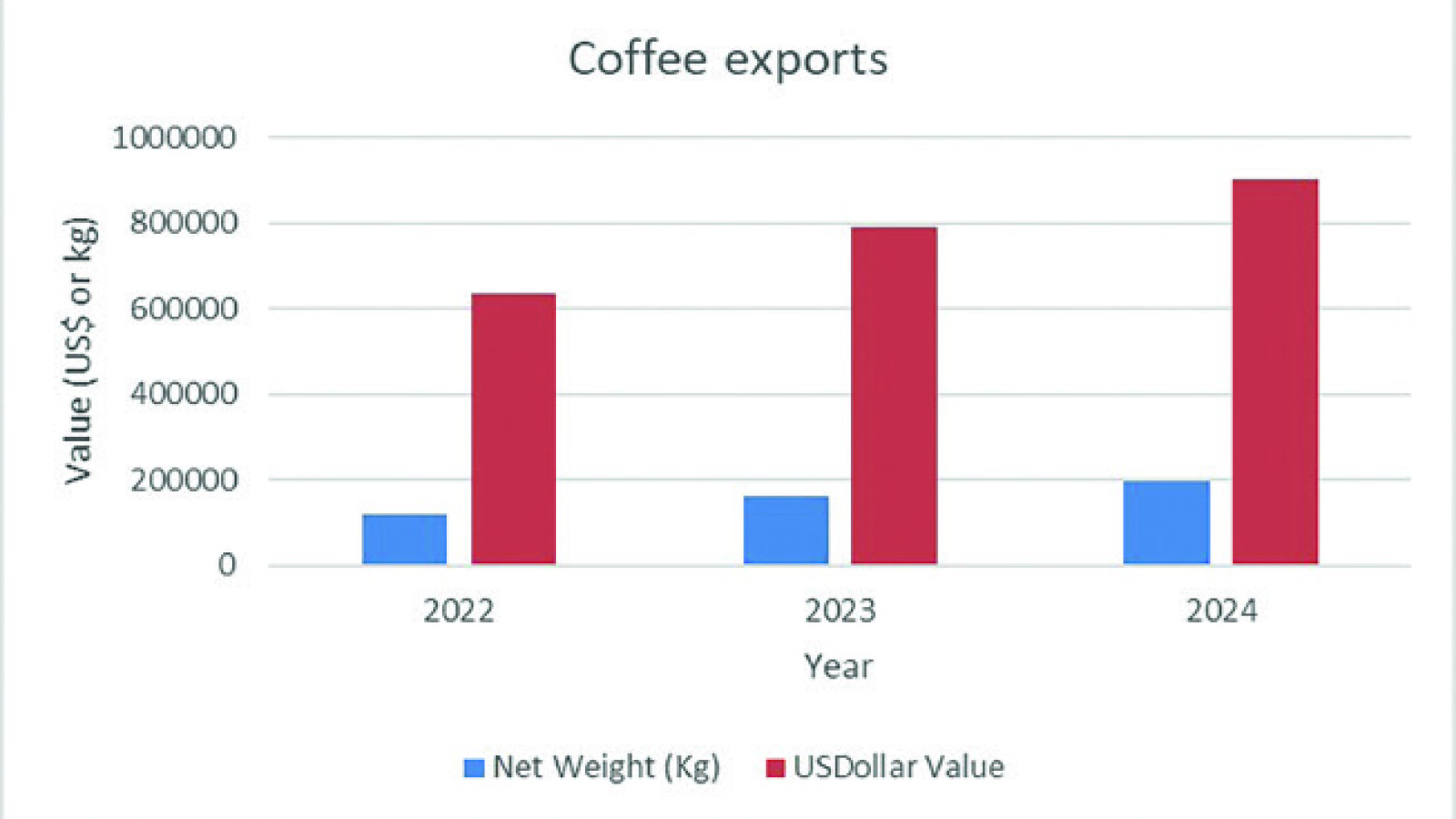
Edgar Vhera
Specialist Writer, Agribusiness
Zimbabwe’s coffee production is poised for significant growth, with the Horticultural Development Council predicting an increase from 600 hectares to 5 000 hectares by 2050.
The expected growth in coffee production has been attributed to enthusiasm from smallholder farmers who are starting new plantations.
According to the HDC’s September 2025 horticulture update, despite production declining sharply in the 2000s, recovery is now underway as output has nearly doubled since 2017.
The HDC recently partnered with the Government to host the Manicaland Coffee Revival Conference, where stakeholders planned a new future for one of Zimbabwe’s export crops.
“As Zimbabwean Arabica still commands premium prices worldwide, the conference was put together to review the state of the industry, share innovations in sustainable coffee production, explore opportunities for value addition and define a roadmap to expand production from under 700 to 5 000 hectares by 2050,” the HDC said.
Interest in coffee is growing, with an estimated 2 000 farmers engaged in or planning coffee production. However, the sector needs long-term financing, inputs and equipment, especially irrigation, to sustain its recovery.
Coffee output in 2024 was slightly over 300 tonnes, with good quality produce and export prices holding firm at about US$5 to US$6 per kilogram for AA grade.
Smallholder farmers contributed roughly 50 tonnes, while large-scale estates supplied 250 tonnes.
Coffee is currently grown on about 600 hectares, including around 75 hectares of young but still unproductive plantings.
The number of active smallholder farmers is slowly increasing, reaching about 1 300 growers with at least 50 trees each, cultivating roughly 470 hectares.
Growth in the coffee sector will depend on inputs and support for smallholder farmers, such as seedlings and fertilisers, being made available efficiently and on time.
At its peak, Zimbabwe used to produce 15 000 tonnes of coffee annually, supporting more than 20 000 jobs and contributing over two percent to Gross Domestic Product (GDP).
“With the right investment and policy support, coffee can transform rural livelihoods, boost exports and strengthen the economy of Manicaland and Zimbabwe as a whole,” the HDC said.
The country’s unique selling proposition (USP) is its top-quality coffee that is balanced with rich flavour, moderate/balanced acidity, and good aftertaste.
Coffee exports earnings grew from US$788 907 in 2023 to US$902 311 last year, with a 20 percent increase in volume terms from 162 to 196 tonnes.
The country’s coffee is exported as decaffeinated, coffee husks and skins, roasted coffee, extracts, essences, concentrates, and preparations of coffee and roasted coffee substitutes.