dyton mupawaenda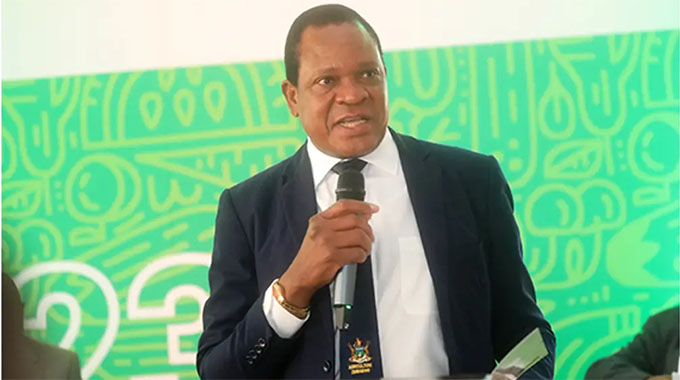
Precious Manomano-Herald Reporter
ZIMBABWE is earmarked to become one of the region’s agro-industrial value-addition hubs based on its geography and increased output in the agriculture sector, a cabinet minister said.
This comes as the Government has opened the doors for its people to establish value addition industries to process agricultural products and derive maximum benefits from exports of processed goods.
Delivering a lecture on climate-smart agriculture to members of the defence forces at the Zimbabwe National Defence University, Minister of Lands, Agriculture, Fisheries, Water and Rural Development Dr Anxious Masuka said Zimbabwe is now food self-sufficient following climate-smart agriculture interventions that were implemented by the Second Republic.
He said there is a need to continue increasing production and productivity to create a value chain that will ensure the country will not export raw materials.
“In the tobacco sector, 99 percent of our tobacco is exported semi-processed. We want 30 percent of that value in the next four years. Similarly, when we do maize production, we want to be able to move to the next stage of production of mealie meal.
“When doing sunflower and soybeans we need to go to the next step which is to see cooking oil and feed and this is the agro-industrialisation. That is what we are looking at so we are saying it is agriculture-led transformation that will lead us towards Vision 2030,” he said.
Dr Masuka indicated that climate-smart interventions are vital for improving agriculture yields.
“We climate-proof agriculture at two levels that is at household and national levels. We do this through sustainable intensive agriculture called Pfumvudza/Intwasa so that households are food secure to sustain themselves,” he said.
As a way of climate-proofing agriculture Government is currently rehabilitating and expanding irrigation schemes to have 350 000ha irrigable by 2025.
Lands, Agriculture, Fisheries, Water and Rural Development permanent secretary Professor Obert Jiri recently said instead of storing wheat in silos there is a need to open up agro-processing industries.
“I want to encourage farmers to open up industries and do bakeries instead of centralising wheat in one place. The results are good and we are sure farmers will also perform higher than this in the next season,’’ he said.
Farmers said value addition and beneficiation will help maximise profits.
Tobacco Farmers Union Trust president Mr Victor Mariranyika said although tobacco is the biggest foreign currency-earning crop it is critical to empower smallholder farmers so that they earn profits.
“Empowerment for smallholder farmers is critical so that they embark on value addition initiatives, this will ensure that they make profits,” he said.
Under the Second Republic Government will continue to facilitate value addition and beneficiation in line with the National Development Strategy 1 (NDS1) targets.
The intervention dovetails with President Mnangagwa’s vision for the country to become a prosperous and empowered upper-middle-income society by 2030.



 Online Reporter