Online Reporter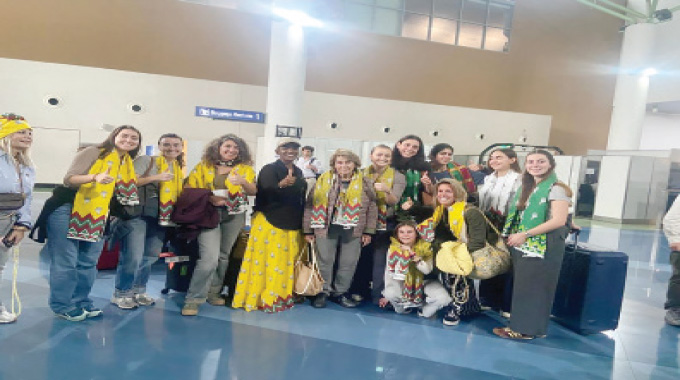
Nqobile Bhebhe, Zimpapers Writer
THE tourism sector, still basking in a wave of international accolades is crafting deliberate strategies to sustain its growth momentum through enhanced marketing and image building as the country recorded a significant surge in international arrivals in the third quarter of 2025, driven mainly by business and holiday travellers.
The growth comes against the backdrop of a rapidly improving business environment and rising macroeconomic stability anchored on Government’s business-friendly policies.
Zimbabwe has set an ambitious target to build a US$10 billion tourism economy by 2030, building on the milestone of surpassing the previous US$5 billion goal in 2024.
The expansion has been driven by heritage tourism, infrastructure upgrades including airports and roads enhanced global marketing and the new 2025–2030 Tourism and Hospitality Industry Policy, which prioritises sustainability, innovation, digital integration and leveraging iconic sites such as Victoria Falls and Great Zimbabwe.
Heritage-based tourism remains a central pillar of growth, anchored by flagship attractions including Victoria Falls and the Great Zimbabwe World Heritage Site.
In 2024, Zimbabwe generated over US$1,2 billion in tourism revenue after welcoming more than 1,6 million international visitors, while total investment inflows into the sector exceeded US$190,5 million.
Tourism is regarded as one of the country’s fastest-growing sectors and a critical pillar of the economy, with expectations that it will become one of the leading contributors to Gross Domestic Product (GDP).
The sector’s resurgence has been capped by global recognition, with Forbes magazine naming Zimbabwe the Best Country to Visit in 2025, a development widely hailed as a strong endorsement of the country’s tourism revival and renewed international confidence in Brand Zimbabwe.
Tourism and Hospitality Industry Minister Barbara Rwodzi said the growing global profile was clear evidence that Zimbabwe’s tourism rebound was firmly on track, underpinned by sound policies implemented under President Mnangagwa’s leadership.
She said sustaining the country’s new status among the world’s top travel destinations would require continued adherence to the President’s vision, which has proven effective in positioning Zimbabwe as a leading tourism hub in Africa and beyond.
Speaking to Zimpapers at the Joshua Mqabuko Nkomo International Airport in Bulawayo on Tuesday, Minister Rwodzi said the country continued to bask in international recognition through prestigious awards, a clear signal that Zimbabwe was back on the global tourism map.
The minister said the key priority now was sustaining the momentum through policies aligned with global tourism trends, while ensuring competitiveness and inclusivity.
“For example, the Forbes magazine awarded us an international of being a must visit destination in 2025.
“We are actually very grateful because this was given beginning of November, but until now the world is talking about it on televisions and various social media platforms such as TikTok.
“They are talking about Zimbabwe being a surprise sleeping giant that is coming from nowhere to be a mass visit,” she said.
“It’s an indicator that the world is now awakened and know that Zimbabwe is a great destination again from back from those years of sanctions restrictions.”
However, Minister Rwodzi cautioned against complacency, stressing that Zimbabwe could not afford to rest on its laurels as competition for global tourists intensifies.
“But we really need to keep this position at the top. So, our strategies that we are crafting are key. We want to thank President Mnangagwa for his own strategies that were in the NDS1 and now going to NDS2,” she said.
“We need to ensure that tourists keep travelling to Zimbabwe. International tourists are realising what was being said about Zimbabwe is no longer the case, the country has changed hence positive image building is key.
“So, President Mnangagwa’s foreign policy of saying ‘Zimbabwe is an enemy to none and friend to all’ is working wonders. Marketing strategies have to continue even for domestic tourists. Tourism is a low hanging fruit in terms of investments and we are witnessing investor interest growing.”
Minister Rwodzi said Zimbabwe would intensify international road shows to diversify source markets and consolidate recent gains.
“International road shows will continue talking to various market destinations,” she said.
“Pricing for various products for local tourists will be key in boosting the sector. Price regulation would be strategic.”
The minister also revealed that infrastructure development for Meetings, Incentives, Conferences and Exhibitions (MICE) tourism was underway as Zimbabwe positions itself to host large-scale international events.
“Infrastructure for MICE tourism is also being worked on as there is a need to have bigger facilities for conferences,” she said.
With sustained policy alignment, aggressive marketing and continued infrastructure development, Zimbabwe is positioning itself to consolidate its place among the world’s fastest-rising tourism destinations.
Meanwhile, latest figures from the Zimbabwe National Statistics Agency (ZimStat) show that business travel rose sharply during the third quarter of 2025.
The number of visitors arriving for business jumped by nearly 43 percent, rising from 82 454 in the same period last year to 118 496.
Holiday makers remained the largest single group of travellers after an 18 percent increase to 256 143 between July and September 2025, up from 217 651 in the third quarter of 2024.
Overall, Zimbabwe welcomed 520 751 international visitors during the quarter under review, representing a 15 percent year-on-year increase from the 454 043 recorded in 2024. When combined with returning residents, total arrivals reached 1 381 554.
“The report provides comprehensive statistics on visitors from abroad. The data offers valuable insights into the volume and patterns of international mobility in the country,” ZimStat director-general, Mr Tafadzwa Bandama, said.
“International migration statistics play a critical role in national planning and policy formulation.
“They contribute essential inputs for estimating population growth, generating key indicators for migration and quantifying the magnitude and direction of migration flows.”
While business and leisure travel recorded strong growth, the data showed declines in other segments. Visitors arriving for educational purposes fell sharply by 76 percent to 2 438, while those coming for shopping declined by nearly 19 percent.
The majority of visitors, 58,9 percent originated from African countries, marking a 21 percent increase during the quarter. South Africa remained the largest source market with 77 541 visitors, followed by Mozambique (53 995) and Zambia (47 792).



 Colletta Dube