

 admin
admin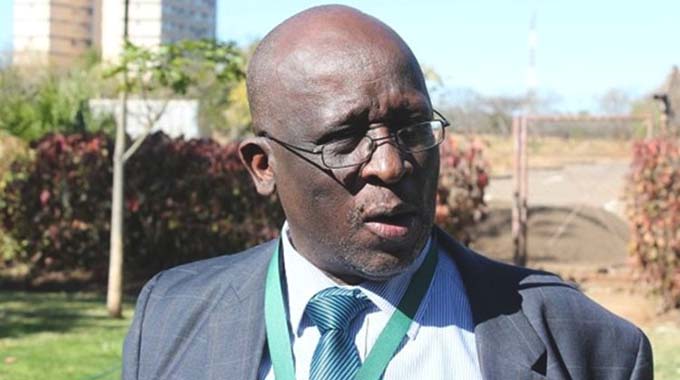
Ivan Zhakata-Herald Correspondent
ZIMBABWE is set to enhance its co-operation with China through a capacity-building workshop which focuses on Zimbabwe-China co-operation, economic reform and the transformation programme.
Through this co-operation framework, Zimbabwe is stepping up its development trajectory towards the attainment of Vision 2030 of an empowered and upper middle income society, learning from the Chinese experience.
Speaking at the Zimbabwe-China economic reform and transformation training workshop, Deputy Chief Secretary for Policy Analysis, Coordination and Development Planning, Mr Willard Manungo, said the two parties wanted to further enhance the co-operation framework signed between Zimbabwe, as represented by the Office of the President and Cabinet, and China, as represented by the International Co-operation Centre of the National Development and Reform Commission (ICC-NDRC). We want to share the experiences of China, on how China has transformed its economy to a point where China now is the second largest economy in the world.
“We need to draw lessons from the experiences of China. We are bringing in all the various entities so that we share the Chinese experience. The co-operation that we are doing with China is being co-ordinated by the International Centre for Co-operation and is under the NDRC of China.
“This is a demonstration that China has been an all-weather friend. In the energy sector, China has been supporting us at Kariba and currently China is supporting us at Hwange. In the transport sector, China has been supporting us with (upgrading) Victoria Falls and Harare airports,” said Mr Manungo.
“For China to become the second largest economy in the world, they had come a long way with issues around discipline, having the vision, focus and dedication. “China started being an economy that was largely centred on its natural resources. If one looks at our experience as Zimbabwe, we also have diverse natural resources, it could be in agriculture and mining and the lesson that we want to learn as we cooperate with China is the issues around value addition.
“Value adding the mineral resources that we have so that we enhance the income that we realise as an economy. We will also enhance the foreign exchange generation that we realise from the natural resources that we have,” he said.
Mr Manungo said Zimbabwe was also keen to learn from Chinese experts’ experiences on macroeconomic policies and incentives in China and from experiences in overseas investment of Chinese state-owned enterprises.
“We want to appreciate China’s experiences in prevention and co-operation during Covid-19, discuss exploration of medical co-operation between Zimbabwe and China in the era of Covid-19 pandemic and share experiences on harmonious development strategy of Wuhan East Lake High Tech Zone.
“We also want to learn from China’s experiences in the Shenzhen Special Economic Zone as Zimbabwe pursues its own special economic zones.”
Chinese experiences on the value chain development of the mining industry, how a digital economy drove smart transport and infrastructure transformation and building value chains in the agriculture industry were also seen as important to learn from.
Mr Manungo said the training programme was a component of Government’s efforts to enhance production capacity and attract foreign and domestic investments through creation of competitive special economic zones which were attractive to investors.
“These macroeconomic and trade policy interventions are included in the economic reforms being undertaken in Zimbabwe in an effort to achieve Vision 2030 that will create a prosperous upper middle income society. To this effect, the National Development Strategy 1 (2021-2025) was developed as a vehicle to realise this Vision.
“This co-operation is a result of the strong relations that exist between our two nations. The Peoples’ Republic of China, as an all-weather friend to Zimbabwe, continues to be one of the major supporters of Zimbabwe’s development aspirations like the construction of the recently completed Parliament of Zimbabwe, ongoing construction of the Museum of African Liberation in Zimbabwe, and high end investment projects like the Dinson Iron and Steel Company in Chivhu which is going to be the biggest in Africa.”



 Online Reporter