dyton mupawaenda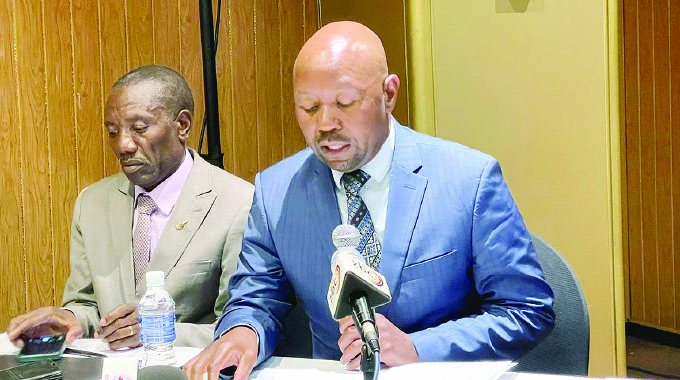
Rumbidzayi Zinyuke-Senior Health Reporter
Zimbabwe continues to work towards introducing a more encompassing social health insurance scheme that will complement the National Aids Trust Fund and other funds from development partners to mobilise resources for the national HIV response.
Secretary for Health and Child Care Dr Aspect Maunganidze, who was represented by chief director human resources Dr Simon Nyadundu, spoke on the additional measures at the close of the Going the Last Mile for HIV control project and launch of the Preventing HIV for Sustainable Epidemic Control programme (PREVENT) on Monday.
The health insurance scheme was proposed as part of efforts to protect communities from catastrophic costs associated with seeking health care in the country.
“The gains made in the HIV response feed into our National Health Strategy vision which remains the highest possible level of health and quality of life for Zimbabweans,” he said. “We seek to shift from vertical funding for health specific areas to a more horizontal response to make access easier, and to serve Zimbabweans more holistically.
“The Ministry will continue to promote healthy life choices to reduce disease burden for Zimbabweans and the burden on the health system and our health workforce. Government is planning to increase the domestic contribution to essential programmes like community health.”
Dr Maunganidze acknowledged the support of PEPFAR through USAID and the US CDC which has greatly contributed to the country’s HIV response.
Funding from the partners has seen over two million Zimbabwean men and boys receiving essential but voluntary medical male circumcision, improved access to condoms, contraceptives and pre-exposure prophylaxis for over one million vulnerable adolescent girls and young women and increased access to antiretroviral treatment among other interventions.
“We are confident that the ongoing partnership with PEPFAR through USAID and with Population Solutions for Health will continue the decades long record for technology innovation, market development, evidence-based and differentiated service delivery, including self-care and digital health, all for person centred programming under PREVENT,” he said.
The PREVENT programme is expected to build upon the successes of its predecessor, the Last Mile programme which was a US$157 million eight-year programme that sought to strengthen private sector services.
It served more than 700 000 adolescent and young girls, men and boys and key populations.
Population Services International senior country representative Ms Staci Leuschner, said the programme had made a significant impact on the country’s HIV response.
“We transformed our service offer to bring care closer to the people we served, differentiating our approach according to their own preferences, often to their doorstep. This was particularly important during Covid when movement restrictions, stigma, and discrimination disproportionately affected access to services for men who have sex with men, trans and gender diverse individuals,” she said.
PREVENT on its part, is a US$87,5 million five-year project designed to support the Ministry of Health and Child Care in sustaining HIV epidemic control with a focus on serving those most at risk for acquiring HIV and those least likely to seek health and HIV prevention care and treatment services in traditional settings.
These include adolescent girls and young women, high-risk men and boys, and members of key populations communities in their diversity.
PREVENT chief of party Dr Blessing Mutede said the programme would operate in 22 districts across the country in order to remove barriers to accessing life-saving HIV prevention care and treatment services, including barriers such as stigma and discrimination.
“This investment seeks to reduce strain on public sector services, to bring care closer to communities, and to improve programme sustainability by differentiating, de-medicalising, and decentralizsing service delivery models by engaging the private sector, innovating in digital health, and expanding self-care options,” he said.
Recognising the growing challenge of drug and substance use, PREVENT will also expand support for people who use and inject drugs in a harm reduction approach.
USAID mission director Mr Ramses Gauthier said they looked forward to meeting the unique needs of people through the programme.
“USAID remains committed to locally owned and sustainable responses. We commend the Ministry of Health and National Aids Council for your leadership of national key populations programming through a highly collaborative technical support committee. We look forward to continuing our support to HIV response for this work through PREVENT, including efforts to address stigma and discrimination, the primary barriers to service uptake,” he said.
He said the programme would expand options for digital health and self-care while engaging the private sector extensively and strengthening community-led national responses to HIV prevention.


 Online Reporter