admin
admin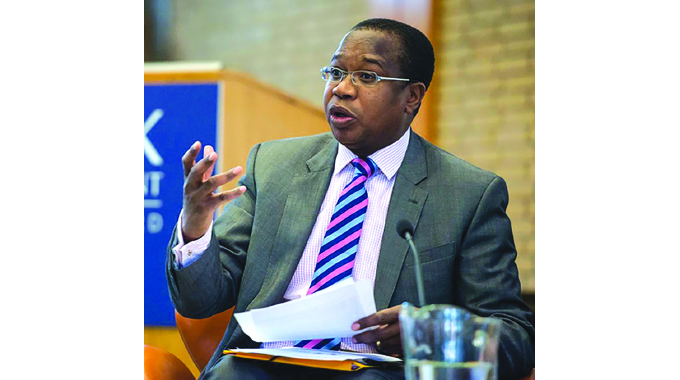
Oliver Kazunga
Senior Business Reporter
THE Zimbabwe Revenue Authority (Zimra) has engaged tax authorities in other African countries, including Rwanda, for benchmark studies to ensure effective collection of the wealth tax, Finance, Economic Development and Investment Promotion Minister Professor Mthuli Ncube has said.
Minister Ncube announced the introduction of the tax when he presented the 2024 National Budget late last year and its collection effective from the beginning of the year.
The wealth tax, levied 1 percent tax of the asset value, and initially expected to be applicable on properties worth US$100 000 or more, is now charged on properties valued at US$250 000 and above.
Responding to questions from the floor during a breakfast meeting organised by the Insurance and Pensions Commission (IPEC) in Harare last week, Prof Ncube said a team of officials from Zimra had already been dispatched to learn how the country can implement the wealth tax system.
“As I speak, the tax authorities (Zimra) are engaging their counterparts in Africa on how best to implement this; they are just learning from others including Rwanda which started this tax a decade ago.
“They (Zimra) should also work with other agencies in Africa,” he said.
Prof Ncube said the wealth tax was not primarily a property tax.
“Ordinarily, in other countries, it’s an individual-focused tax where a lifestyle audit is done on one’s salary, third and fourth houses, cars and so forth.
“The resources required to do a lifestyle audit can be onerous so we took an easier way out to just focus on one asset (house) on that wealthy individual who is likely to possess an additional house,” he said.
The Treasury chief is on record saying the public should understand that the wealth tax is not a housing tax, but a means of taxing wealthy individuals for the benefit of the economy.
Due to the illegal economic sanctions imposed on the country over two decades ago, Zimbabwe has been unable to access external concessionary borrowing from the international community such as the International Monetary Fund and World Bank.
Amid limited fiscal space and constrained borrowing capacity, the Government adopted an inward-looking approach to mobilise resources to fund key programmes. These include infrastructural development projects like roads, dams, health care and educational facilities.
Among many infrastructure development projects, in the past five years, the Government has rehabilitated the Harare-Masvingo-Beitbridge highway and upgraded the Beitbridge Border Post to meet world-class standards.


 Online Reporter