Online Reporter
Tapiwanashe Mangwiro
Senior Business Reporter
The World Bank has projected Zimbabwe’s economy to grow by about 5 percent this year, placing its forecast above the expected global average at a time when world economic expansion is slowing and uncertainties remain elevated.
The forecast, contained in the Bank’s latest global estimates, suggests Zimbabwe will outperform the global economy growth rate, projected at 2,6 percent and broadly keep pace with faster-growing parts of Sub-Saharan Africa.
In its assessment, the World Bank noted that the global economy had shown notable resilience to heightened trade tensions and policy uncertainty, supported last year by stockpiling of traded goods, strong risk appetite and a surge in artificial intelligence-related spending.
However, it cautions, “These temporary supports are fading and that global growth is projected to edge down to 2,6 percent this year, with risks tilted to the downside should trade barriers rise further or financial conditions tighten.”
Against this backdrop, Zimbabwe’s projected 5 percent economic expansion stands out as comparatively robust.
The bank’s country and regional projections show Zimbabwe sustaining growth at around this level into 2027, even as global and regional dynamics remain uneven.
Sub-Saharan Africa is forecast to grow by about 4,3 percent in 2026, rising modestly thereafter, while many emerging and developing economies continue to struggle to return to pre-pandemic income levels.
The World Bank warned that more than a quarter of Emerging Market and Developing Economies (EMDEs) still had per capita incomes below 2019 levels, underscoring the importance of domestic reforms and macroeconomic stability.
Zimbabwean authorities say that the 2026 outlook is anchored in improving fundamentals rather than short-term gains.
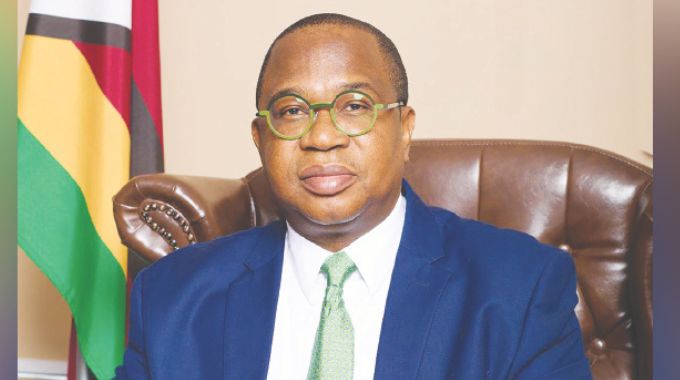
Finance, Economic Development and Investment Promotion Minister Professor Mthuli Ncube said the outlook remained positive across most productive sectors, which are expected to drive overall economic expansion.
“In 2026, the prognosis of the economy is on track as we expect the economy to grow by five percent. The agriculture and mining sectors are expected to lead overall growth, especially taking into account the viable global commodity prices. What is now needed is to redistribute the gains into the education, health and social programmes for the benefit of the citizenry,” he said.
The Treasury chief has repeatedly linked growth prospects to stability in prices, the exchange rate and public finances.
“Macroeconomic stability, currency and exchange rate stability and strengthened monetary-fiscal policy coordination are critical to sustaining economic growth,” Minister Ncube said in a recent interview with The Herald Finance and Business.
He noted that stability created the conditions for growth in investment, production and wider participation in the economy.
Fiscal discipline is a central part of this strategy.
The Government has committed to maintaining a near-balanced budget, limiting recourse to inflationary financing and aligning expenditure more closely with revenues. According to Minister Ncube, this approach is intended to avoid the boom-bust cycles of the past.
“We will continue to ensure that fiscal policy supports macroeconomic stability and the broader objectives of sustainable growth,” he said, arguing that credibility and predictability are essential for both domestic and foreign investors.
Monetary policy has moved in tandem, with authorities prioritising inflation control and liquidity management. The objective, officials say, is to entrench confidence in the currency and reduce distortions that previously undermined economic activity.
The World Bank has consistently emphasised that stronger macroeconomic frameworks are vital for emerging economies seeking to attract private capital and create jobs, noting that without improved economic dynamism, many countries will struggle to absorb growing working-age populations.
Within this framework, Zimbabwe’s sectoral base is expected to support the 2026 growth projection. Agriculture remains a key driver, benefiting from policy support and improved input availability, while mining continues to underpin export earnings and foreign currency inflows. Manufacturing and services are also expected to contribute as power availability improves and reforms aimed at reducing business bottlenecks take effect.
The World Bank argues, “Policy makers in EMDEs should advance domestic reforms to diversify trade, strengthen macroeconomic frameworks, and remove structural bottlenecks to catalyse investment and long term growth.”
The confidence around 2026 is reinforced by recent performance.
The Government and other experts’ forecasts suggest a strong rebound in 2025, with growth estimated at around 6 to 6,6 percent, following a weaker outcome in 2024. Minister Ncube has attributed the 2025 expansion to recoveries in agriculture, mining, manufacturing, electricity generation and wholesale and retail trade.
“Economic growth is expected to be driven by agriculture, mining, manufacturing and services, supported by improved macroeconomic stability,” he said when outlining recent performance and the outlook.
This stronger 2025 result provides momentum heading into 2026, suggesting that the projected moderation to 5 percent reflects normalisation rather than a loss of traction. It also aligns with the World Bank’s broader message that while global growth is slowing, countries that maintain stability and push ahead with reforms can still achieve solid outcomes.
Risks remain, including climate shocks, external demand weaknesses and shifts in global financial conditions. The World Bank has warned that growth could falter if trade tensions escalate or market sentiment deteriorates.