admin
admin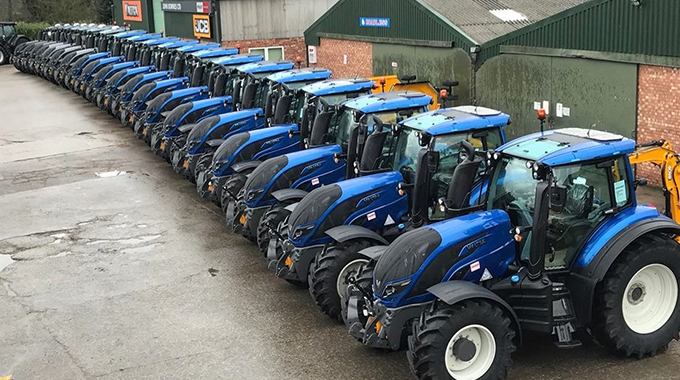
Elita Chikwati, Harare Bureau
Zimbabwe is expected to receive 1 500 tractors and their implements from Belarus in the next few weeks as Government moves a gear up in mechanising the agricultural sector to boost productivity, a senior official has said.
Lands, Agriculture, Water, Climate and Rural Resettlement Deputy Minister Douglas Karoro said this in an interview at the sidelines of a climate change workshop organised by the ministry’s youth desk in Harare yesterday.
Deputy Minister Karoro said more tractors were expected from Belarus and other countries.
“We have sourced tractors from different countries and 1 500 is the first batch from Belarus. The tractors will come through Agribank and will not be given for free but will be distributed as a loan to farmers with capacity,” said Deputy Minister Karoro.
“We also have other arrangements with Brazil, China and India. We have a serious shortfall of tractors resulting in late land preparation and also leading to delays in planting.
“Late planting is a net effect of reduction in crop yields. With enough tractors, we are assured of early land preparation and boosting productivity at farms,” he said.
Deputy Minister Karoro said distribution of the tractors would focus on both small-scale and large-scale irrigation schemes countrywide, who demonstrate capacity to repay loans.
Besides tractors, Government has also taken delivery of irrigation equipment such as centre-pivots as the nation shifts from over-reliance on rain-fed agriculture.
This is meant to modernise agriculture and make irrigation easier for farmers.
Government is also repairing irrigation facilities for schemes and supplying the machinery, which is required.
Farmers will pay back to ensure the facilities are revolving.
Government is committed to comprehensively develop the sector so that “Vision 2030” of making Zimbabwe an Upper Middle Income society is achieved.
The Transitional Stabilisation Programme presents quick-win investment opportunities for the realisation of self-sufficiency and food surpluses that will see the re-emergence of Zimbabwe as a major contributor to agricultural production and regional food security.



 Online Reporter