admin
admin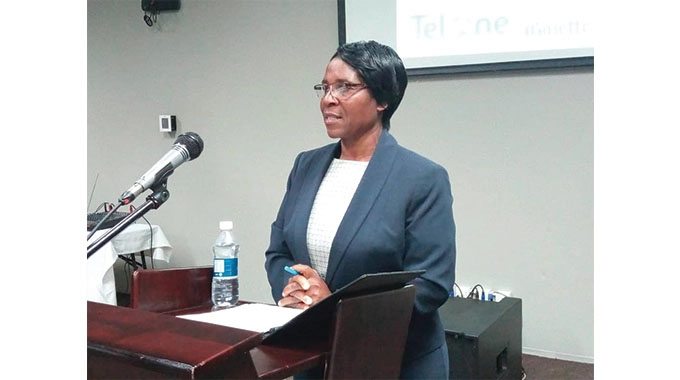
Tinashe Farawo in PARIS, France
IN a major diplomatic milestone, Zimbabwe has been chosen to continue hosting the United Nations Educational Scientific and Cultural Organisation (UNESCO) regional office for Southern Africa and Government has immediately called for the strengthening of the human resource capacity to complement the current staff which serves nine countries.
The nine countries are Botswana, Eswatini, Lesotho, Malawi, Mozambique, Namibia, South Africa and Zambia.
Speaking at the 42nd UNESCO General Assembly here in Paris, the Permanent Secretary in the Ministry of Information Communication Technology, Dr Beaullar Chirume said: “We commend UNESCO for selecting Zimbabwe to host the Regional Office of Southern Africa (ROSA). However we implore UNESCO to strengthen the Human Resources capacity by increasing the staff complement from the current 2 officers who serve 9 countries.”
She said, the country supports preservation and access of documentary heritage and has embarked on a countrywide establishment of Community Archives in Promoting this Recommendation.
“Zimbabwe currently has established eight Community Archives. However, funding is required for monitoring and evaluation, procurement of requisite equipment and improvements on preservations and capacitation of beneficiaries.
“Zimbabwe has also embarked on digitization of delineation reports (Chieftainship reports). Four out of the county’s 66 districts have been covered so far.
“However, inadequate digitization equipment has hindered the roll-over of the project in a swift mood.”
She said, Zimbabwe was bridging the heritage gap by recording oral history to capture liberation war heritage, under-documented cultures, as well as contemporary issues.
“Content in major local languages is available on the net.
“The Constitution recognises sixteen local languages. More work still needs to be done to have all languages available. Efforts have been made to develop software programmes for learning local languages.”
Dr Chirume said, Government was working in support of access to information and freedom of expression.
“Zimbabwe has reviewed the media environment and licenced new language-based community radio stations.
These community radio stations have revitalised indigenous languages and cultures. Zimbabwe appreciates the financial and technical support by UNESCO towards the community radio stations in particular installation of early warning disaster alert system for Chimanimani.”
In an effort to strengthen the safety of female journalist Zimbabwe has developed policies that protect them in the newsroom and beyond.
“Zimbabwe continues to promote gender mainstreaming in the media sector as evidenced by the rise of female journalists to key positions.”
She said, connectivity has been enhanced nationally through establishment of base stations to cover digitally marginalised areas of the country.
“Most schools in urban areas are connected. Zimbabwe has embarked on a project to equip schools (urban and rural) with ICT Laboratories each consisting of (40) computers, a projector and a printer.
“Zimbabwe has set up 24 Containerised Village Information Centres (CVICs) to bridge the digital information gap.
Public Finance Management System (PFMS) Kiosks have been set up in all the 56 districts in the country.
“Digital skills capacitation is being done to teachers and civil servants where ICT labs have been established. Zimbabwe in bridging the digital divide, citizens are receiving digital skills training at various Community Information Centres (CICs) and Containerised Village Information Centres (CVICs) that are established around the country.”
Awareness campaigns are being done to promote sustainable and responsible use of ICTs through various awareness programmes such as the National Cyber Security Awareness Month.
“Zimbabwe recognizes the threat cyber-attacks and cybercrime pose to critical information infrastructure as well as the damage it can cause to the trust and confidence in ICT systems.
“For the safety of children in the cyberspace Zimbabwe has a Zimbabwe Child Online Protection Committee (ZICOP). The National Child Online Protection Policy and its implementation plan have been developed to provide for the protection of Children whilst online.
Due to the increase of Fake News, Zimbabwe has not been spared. The country is embarking on a National Policy Framework Consultative Process. Support will be needed for the National Consultative process.”


 Online Reporter