Online Reporter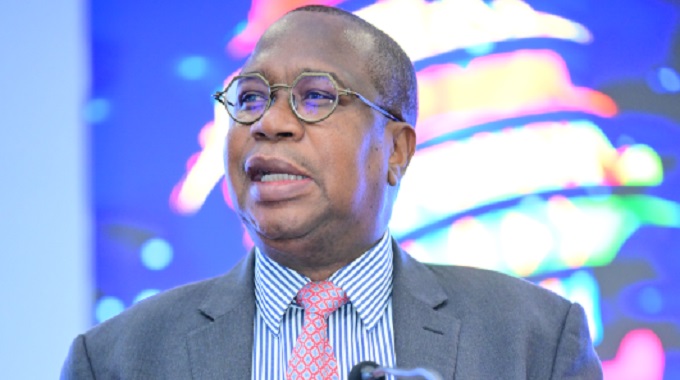
Debra Matabvu
ZIMBABWE has begun talking with the United States to push for a reduction in the 18 percent tariff imposed on local exports by the Donald Trump administration, Finance, Economic Development and Investment Promotion Minister Professor Mthuli Ncube has confirmed.
In an interview from Washington, where he was attending the 2025 Spring Meetings of the International Monetary Fund (IMF) and the World Bank Group, Prof Ncube said discussions had been initiated with both the US Treasury and officials on Capitol Hill — the seat of the US government — to advocate a lower tariff regime that would enhance Zimbabwe’s trade competitiveness.
“So, there have been fruitful discussions that we are having here. We have managed to meet with officials within the US government in Treasury and Capitol Hill trying to make sure they understand what we are trying to do as we try to develop our economy and as we try to enact various policies and also just to continue to improve economic relations between Zimbabwe and the United States,” said Prof Ncube.
“We also met in terms of negotiating a new tariff regime between our two countries. We are also engaging on that to make sure that we come up with a favourable position because we run a current account deficit with the US and we feel that, as Zimbabwe, perhaps at the end of the day we should be on the lowest tariff possible, which is 10 percent, as opposed to the 18 percent that has been proposed.”
The move comes amid concerns over sweeping tariffs introduced by the Trump administration, which have impacted many developing economies.
Zimbabwe, which maintains a trade deficit with the US, has responded by suspending tariffs on American imports to encourage trade and expand market access for US goods, while simultaneously promoting local exports to the world’s largest economy.
On April 9, President Trump announced a three-month pause on some of the new “reciprocal” tariffs imposed earlier this month, with the exception of those targeting China.
However, the minimum 10 percent tariff introduced on April 5 remains in effect for goods from all countries, including Zimbabwe.
Prof Ncube said rising tariffs and their global ripple effects had been a central theme at this year’s Spring Meetings, as policymakers and economists debate the economic fallout from mounting trade restrictions.
“Here at the IMF, World Bank Spring Meetings, a critical issue that has emerged is the impact of the new tariff regime where the US has been pronouncing new and increased tariff levels for various countries and how then this will affect the global economy as countries retaliate or negotiate,” he said.
“But clearly this is going to slow down the global economy and this has been well discussed here in Washington.
“We now think the global economy in terms of growth outlook will slow down from 3,2 percent to about 2,8 percent, so we are shaving off about 0,4 percent because of this uncertainty.
“But this uncertainty is going to impact trade activity in the first place. It is also impacting investment flows and it is also impacting bond yields, for example. It is also going to impact monetary policy because monetary policy has to respond to certain needs and impacts of these tariffs on various economies.”
He said Zimbabwe, in particular, was closely watching the impact of these shifts on commodity prices, especially base metals like lithium, palladium and rhodium, which form a major part of the country’s exports.
Prof Ncube noted that firming gold prices, driven by the uncertainty created by trade tensions, could prove a silver lining for the local economy.
Gold has historically served as a safe-haven asset during periods of global uncertainty, and the current surge is boosting Zimbabwe’s export revenues and foreign currency inflows at a crucial time.
“The upside, of course, is on the gold prices,” he said. “This uncertainty caused by the new tariffs regime is translating to higher gold prices and we are benefitting from that as a country.
“So, on one hand, we are benefitting from the higher gold prices and on another, we face the pain on the potentially lower commodity prices on base metals and some of our exports.”
Prof Ncube said in addition to trade talks, Zimbabwe was pushing forward to facilitate the commencement of its Staff-Monitored Programme (SMP) with the IMF.
The SMP is aimed at enhancing macroeconomic stability, build fiscal resilience and pave the way for debt clearance talks.
“As Zimbabwe, we continue to take a deep dive on some of the key areas in our Staff-Monitored Programme; we are trying to make sure that we conclude on this programme,” he said.
“So, we have had further conversations on these critical areas.”