admin
admin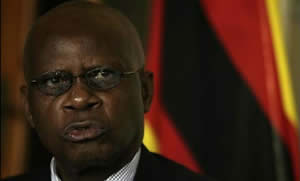
at Safari Court Conference Centre here today declare a legal nullity, judgments made by the improperly constituted Sadc Tribunal, Justice and Legal Affairs Minister Patrick Chinamasa has said.
Justice ministers and attorneys general tasked to review the operations of the Tribunal have acknowledged that the regional court was improperly constituted.
They want it to be nullified and a properly-constituted court be established.
The tribunal was suspended last August pending proper reconstitution this year.
This came in the wake of complaints and objections raised by Zimbabwe over its rulings that sought to nullify the revolutionary land reform programme launched by Government at the turn of the millennium.
Some white former commercial farmers took their cases to the Tribunal to try and reverse the land reform programme after the State acquired their farms for redistribution to the landless majority.
The Tribunal subsequently courted controversy when it passed judgments that contravened Zimbabwe’s constitutional position on land reform.
Government made it clear it was not bound by the rulings as the Tribunal’s constituting treaty had not been ratified by two-thirds of Sadc members as required.
Zimbabwe is one of the 10 countries that have not ratified the protocol that seeks to give the Tribunal force.
Zimbabwe’s position was backed at an Extraordinary Sadc Summit in Pretoria, South Africa, in August 2008 where leaders resolved that the Tribunal’s standing be reviewed. The review was not forthcoming, forcing the summit to re-state its position when it convened in Kinshasa, DRC, last year.
Summit tasked justice ministers and AGs to commission a study on the whole concept and mandate of the Tribunal last year, which report will be tabled to summit. Reports, however, say some member states do not want the Tribunal’s judgments be declared null and void.
Minister Chinamasa, told our sister paper The Southern Times, that it was illogical for some member states to want to accept the Tribunal’s judgments while at the same time recognising that the regional court had not been properly constituted.
“Summit has to deliberate and be persuaded to reach a logical conclusion following the acceptance that the instruments were not ratified.
“Everybody accepts the logic that under international law instruments can’t enter into force until they are ratified.
“The logical conclusion is that whatever that body (Tribunal) did is null and void,” Minister Chinamasa declared.
“In Swakopmund (April Justice Ministers meeting), we said let’s take a decision which voids the judgment. The Sadc Secretariat then said that this would antagonise the international community; they argued that it would tarnish the reputation of Sadc.
“And yet it’s in Sadc’s interests to do the right thing – we have no right to satisfy foreign interests,” Minister Chinamasa said.
Reflecting on the origins of the Tribunal, Chinamasa said that Zimbabwe fully backed the regional integration process but pointed out the process should “bear the DNA imprint of Sadc countries”.
“Organisation must be rules based, not one run on the whims of Sadc Secretariat or dictates of foreign interests. We shouldn’t be influenced on the path that we have to follow by our desire for development assistance. That should not be allowed to dictate the pace of the revolution of the organisation,” Minister Chinamasa said.
The Southern Times reports that chief among some of the recommendations to Summit on the Tribunal from the Justice Ministers’ and Attorneys General meeting is redefining the Tribunal’s jurisdiction issues.
Currently the Tribunal Protocol states that it has jurisdiction over all disputes and applications.
The Justice Ministers are recommending that the Tribunal have jurisdiction over matters specifically provided for in the Protocol on the Tribunal or in any other instrument of Sadc.
The Ministers are also recommending amending Article 14 (b) on interpretation, application or validity of all Protocols, Article 15(1) on jurisdiction over disputes between member states and between natural or legal persons and member states.
In addition, the Tribunal should be reformed to provide for an appellate chamber of the Tribunal to hear appeals from decisions of the Tribunal.
The instruments governing the powers of the Tribunal should also be amended with specific focus on Article 23 which says that the Tribunal shall determine its own rules of procedure.
The Justice Ministers are recommending that a committee of Ministers of Justice or Attorney-Generals establish a working group of senior legal officials to identify rules which should then be relocated to the Sadc Tribunal Protocol.
Article 32(3) of the Tribunal which says that Tribunal decisions are binding upon the parties to the dispute and enforceable will be revised to take into account the scope of Tribunal jurisdiction and Sadc applicable law.
The Sadc Treaty, which gave birth to the Tribunal, was signed in 1991 but left its operationalisation to a Protocol which was to be negotiated later, Minister Chinamasa said.
“The Protocol was signed but only two countries ratified and yet it was entered into force by the Secretariat. Member countries were caught napping. The amendment to the Treaty (2001) was initiated by the
Secretariat contrary to the provisions of the Sadc Treaty which says that amendments are proposed by member states,” Chinamasa explained.
“The amendment was signed but again not ratified by the two-thirds. It has never been ratified; no country has ratified that amendment. The Tribunal started operating on the basis of a Protocol and amendment which are not valid,” Minister Chinamasa argued.
Apart from the Tribunal other issues expected to dominate the agenda fater the removal of Zimbabwe and Madagascar are the principles, guidelines and institutional framework, declaration and roadmap towards the establishment of the grand free trade area between Sadc, Comesa, and the East African Community as well as the impact of the global economic crisis on the region.



 Online Reporter