admin
admin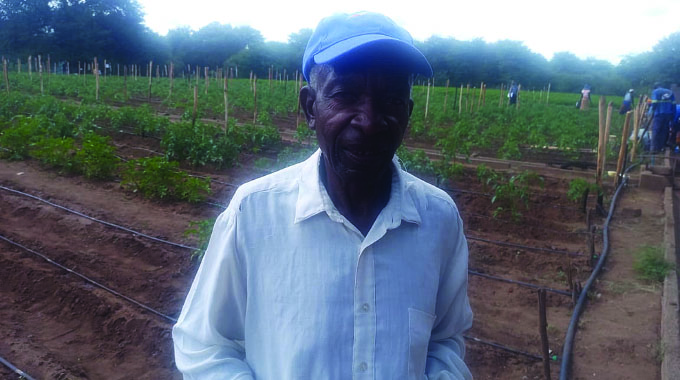
Sifelani Tsiko Innovations Editor
The terms “detainees” and “restrictees” are part of the country’s collective memory as they capture the experiences of Zimbabwe’s liberation-struggle-era political prisoners and detainees who were incarcerated in Rhodesia’s main prisons and detention centres.
Forty–two years on, as Zimbabwe celebrates its independence under the theme: “Leaving No One and No Place Behind,” The Herald remembers detainees and restrictees who were held in Rhodesian penal centres.
Rhodesian prisons and detention centres were at the centre of the long drawn-out struggle for independence.
Between 1960 and 1979, it was there that prominent Zimbabwean African nationalists engaged in a protracted guerrilla war that ultimately ended white colonial rule in Rhodesia in 1980.
Deep inside Gwanda, a rural district in southern Zimbabwe, Nathaniel Moyo (75) an ex-Rhodesian prison warden and now a village head at Ndibe recalls how the Rhodesian settler regime responded by imprisoning a large number of African political activists and other persons suspected of being aligned with the guerrillas.
“I joined the prison services in 1966 in Harare. I worked for several years in Harare until I was transferred to Bulawayo in 1983.
“During the 60s, I kept guard of political leaders that included Robert Mugabe, Enos Nkala, Edison Zvobgo, Ndabaningi Sithole and numerous others that I cannot remember their names,” Moyo said.
“When I was a prison warden, I remember, at one point, I watched over some 30 political activists. It was a difficult time for me and other black prison officers.
“The issue was how could one balance the strict demands of Rhodesian settler regime work and the genuine African case for liberation — the side of the majority blacks?
Moyo remembers very well how prisoners were shuttled between various Rhodesian prisons and detention centres.
“The conditions of restrictees and detainees changed dramatically from the Federation years where the terrain was a little better and liberal to much harsher conditions when Ian Smith declared his Unilateral Declaration of Independence in 1965,” he said.
“As the liberation leaders became more radicalised, the harsher and brutal the Rhodesian settlers responded.
“We operated under difficult and tough circumstances. White policemen were disliked by the nationalists for being very arrogant. The nationalists saw white policemen as being hostile to them.
“They were sympathetic to black policemen and black prison officers. I remember very well that they would tell us: ‘Lapha madoda silweli ilizwe lethu. What we don’t want is the evil repressive system.”
Zimbabwe’s liberation-struggle-era political prisoners and detainees that included Paul Tangi Mhova Mkondo, Josiah and Ruth Chinamano, Daniel Madzimbamuto, Sydney Joseph, Joshua Nkomo, Joseph Msika, Robert Mugabe, Edgar Tekere, Leopold Takawira, Maurice Nyagumbo, Naison Ndlovu, Sikhanyiso Ndlovu, Charakupadenga Hunda, Kissmore Benjamin Kaenda, Jane Lungile Ngwenya, Tumburai Matshalaga, Isaac Chakanyuka, Christopher Ushewokunze, Reuben Dunduru, Charlton Ngcebetsha, Jini Ntuta and many others were once held at Gonakudzingwa restriction camp.
The former detention camp was located in the notorious Gonarezhou National Park at Sango border post between Zimbabwe and Mozambique.
Many others were incarcerated in Rhodesia’s main prisons and detention centres such as Gwelo Prison, Salisbury Prison, Chikurubi Maximum Security Prison, Khami Maximum Security Prison and Sikombela, and Wha Wha detention centres.
These political prisoners and detainees were made up of peasant men and women whom the Rhodesian forces mostly accused of harbouring and collaborating with “terrorists” and young urban political activists accused of sabotage activities as well as educated professionals accused of recruiting the youth to join the liberation war as guerrillas.
The list also included nationalist leaders themselves and captured combatants.
“The nationalist leaders denounced trespass laws and other repressive labour practices. During the colonial era, blacks could not go to certain areas that were marked ‘Whites Only’. Blacks could not drink beer anywhere they wanted,” Moyo recalls.
“There was segregation. Whites enjoyed many benefits and privileges unlike the majority of blacks.”
As he patrolled the corridors of the Salisbury Prison, Moyo also remembers the discussions he would hold with Mugabe and Sithole —both prominent nationalist leaders at the time.
“I used to talk a lot with Ndabaningi Sithole who was also part of the nationalist leaders detained at the prison at that time. He would tell me in Ndebele that we are here because we are fighting to liberate the country,” he said.
“He had radical views and I would listen carefully, as I also sought to understand how the liberation struggle was going on. I spoke to Mugabe too. He was so eloquent and respectful to black prison officers. Mugabe would speak out his mind and hold you in awe.
“You could tell he was principled and could stick to his Marxist and pan-African beliefs.”
Of course, Moyo said there were others who treated black prison officers as sell-outs. Whenever they saw a black prison officer swinging a set of keys and looking all hard, he said they would shout angrily at them.
“Some of the nationalist leaders were bitter and never hesitated to shout at black prison officers. At first, the detainees would separate themselves into the Zapu and Zanu camps. Over time, through continued interaction and interface in prison they came together and spoke one language,” he said.
The Rhodesian prisons and detentions were a space of their own. Moyo remembers listening to various detainees speaking their mind out about the liberation struggle.
He also remembers the violence of the colonial state and the various methods of torture used on inmates.
Apart from this, Moyo also remembers how the nationalist leaders stood up and challenged their incarceration and the repressive colonial system.
“Prisons at that time were something else. I remember how we as black prison officers would take the risks to smuggle documents and letters in and out of prison for the nationalist leaders,” he said.
“It was risky and would cost one a job. There were many stories in prison. There were nasty incidents in which radical political activists would fight against violent prison warders. They were also positive stories about how nationalists befriended black prison wardens to get favours.
“Some prisoners were brave and determined. They educated themselves through prison classes organised by other political prisoners. Some even got degrees.”
Ristrictees and detainees played a crucial role towards dislodging colonial rule through their powerful messages they sent to the masses while in prison.
They were a true symbol of African resistance to colonial rule.
Scores of Zimbabwe’s leading nationalists were held for lengthy periods in Rhodesian detention centres.
They paid a supreme price for the liberation of the country. These notorious detention centres failed to break the spirit of nationalism despite a battery of measures that were taken by the white settler regime to stop the march towards the freedom of the masses.
The Rhodesians were so determined to subdue and hurl everything they could find at this collective African nationalism spirit that sought to bind, unite and ensure Africans had control of their destiny and resources.
Despite this assault, the detained nationalist leaders’ spirit remained unbowed by the divisive and repressive machinations of the white settler regime. They endured and forged ahead with determination.
“The nationalist leaders were a committed and principled lot. They were not tribalists and opportunists,” Moyo said. “They appealed to all masses in the country. They were nationalistic in character. Mugabe and Nkomo really stood out on this.
“This spirit must continue and we must continue to embrace this national spirit. Tribalism and divisions are not good for our country. We must unite and be one people as Zimbabweans.”
Moyo retired from the prison service in 1989.
“I retired in 1989 and I have joined a community garden project where my wife grows vegetables, onions and tomatoes to augment our income,” he said.
A Planting for Progress project implemented by Practical Action in Gwanda and Bulilima rural district has helped out his community with solar powered irrigation systems that have enhanced water availability in his area.
They also got support for a chicken rearing project to enhance their livelihoods.
Moyo loved his job as a prison officer.
“I take my hat off to anyone who works as a prison officer right now. It’s not an easy time. I want to let the public know that what these men and women do is very important in our country.
“People rarely get to hear about the value of the officers. Prison officers are important people too. I think the officers also deserve recognition for what they do.”


 Online Reporter