dyton mupawaenda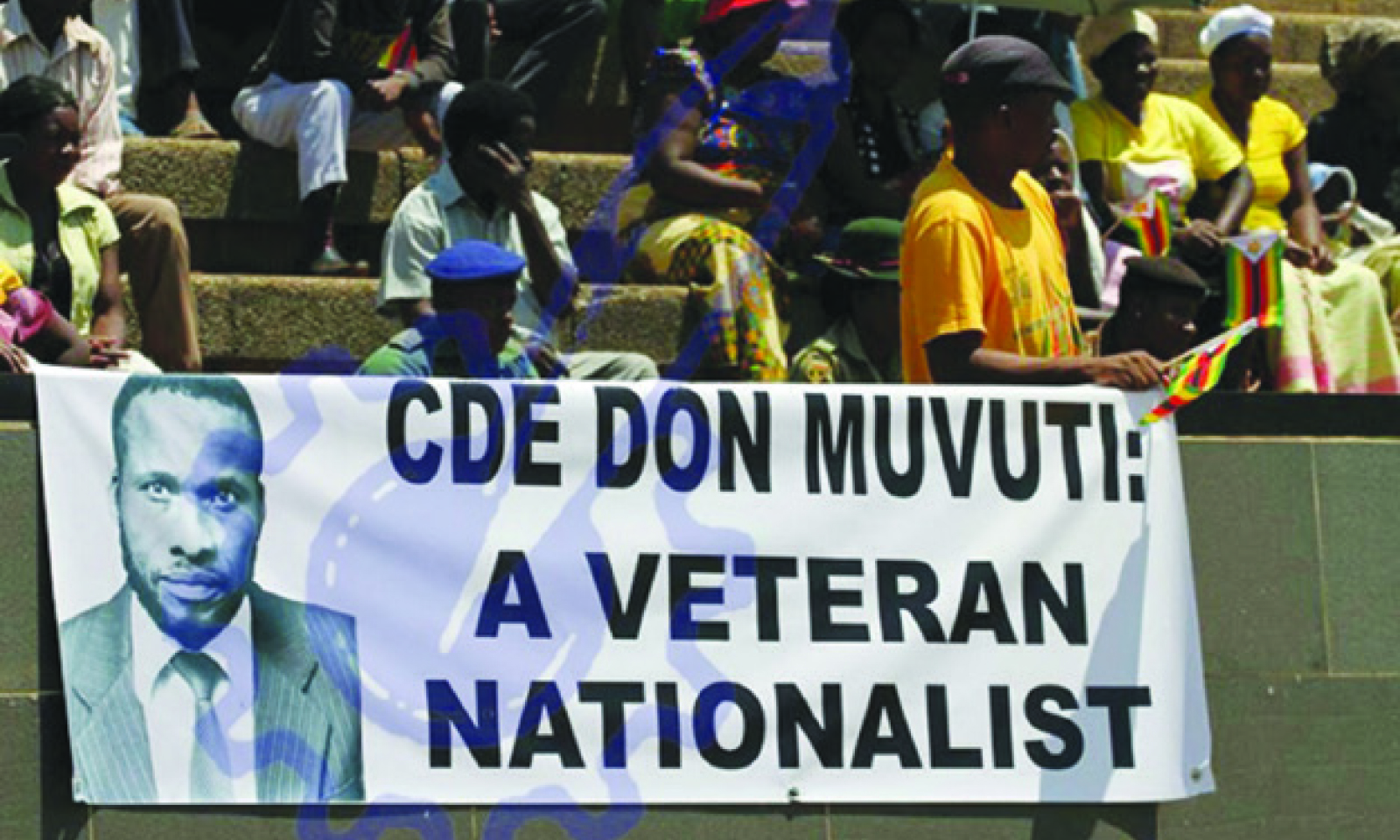
Farai Ian Muvuti-Herald Correspondent
THERE are moments when the earth speaks, not through earthquakes or thunder, but in the hush that follows a rainstorm, in the knowing nod between generations.
And so it was in Gokwe North on Zimbabwe’s 45th Independence Day. The skies opened over Nembudziya and rain poured with purpose, as if summoned to bear witness to our collective journey. Rain, in our culture, is never just weather. It is affirmation. Renewal. A sign that the spirits, too, are celebrating.
As we stood amid the downpour, the President’s call rang clear: For those of us born after the war — the so-called born-frees — to rise, to build, and to defend the nation bought with blood.
That call struck something in me. Not because it was new, but because it echoed something I have always carried — a story, a lineage, a responsibility.
I am the grandson of Zechariah Muvuti. My late father, Benjamin Burman “BBC” Muvuti, and his four brothers were among the thousands who answered the call to dismantle colonialism and stitch together a nation. Each took a different path — some to the front, others behind the curtain. Yet together, they helped shape the very soil we celebrate today.
BBC Muvuti, my father, was no ordinary man. In the rigid world of colonial Rhodesia, he rose as one of the first black Zimbabweans to break into the elite ranks of insurance sales. Between 1971 and 1981, he represented the country at roundtable conferences in Montreal, Canada — the only black African man in rooms long closed to us. Yet he did not stop there. Upon returning home, he established Bestafoam Pvt Ltd, which became Zimbabwe’s second-largest foam rubber and furniture manufacturer, creating jobs, mentoring entrepreneurs, and building an economic ecosystem before black empowerment had found a name.
In Bulawayo, his home in Luveve was more than domestic space — it was a node of quiet resistance, a crossroads for travelling comrades, party messengers, and returning fighters. He helped mobilise resources, facilitated logistics, and ensured many could reach camps across borders. His participation in the 1976 Geneva Peace Conference was quiet but critical — and his later involvement in the mediation processes that led to the 1987 Unity Accord solidified his reputation as a trusted political confidant.
But what many remember most is not the stature — it is the spirit. My father was a unifier. He bore no allegiance to tribe or faction; his loyalty was to Zimbabwe and its people. He worked closely with the likes of Joshua Nkomo, Joseph Msika, John Nkomo, Nathan Shamuyarira, Enos Nkala, and Maurice Nyagumbo. And yet he never sought office. Service, to him, was reward enough.
We grew close over politics and print. When I moved abroad, our long-distance bond was maintained through shared reading — particularly the Nathaniel Manheru column in The Herald every Saturday. We would phone, debate, laugh, and sharpen one another’s thinking through those politically barbed essays. For all his gravitas, my father had a voracious appetite for thought — and a warm sense of irony. In those conversations, I learnt that politics was not just practice. It was interpretation. And memory.
My uncles were no less extraordinary. Uncle Killion Muvuti, still with us, trained at Nachingweya under the pseudonym Kidz Mhari. He crossed through Botswana and Zambia into the crucible of military discipline. Wrongly accused of infiltration, he was spared only when he revealed his familial ties to comrades Muhondo and Sango. In that moment, brotherhood outweighed bureaucracy.
Uncle Don Muvuti, later declared a National Hero, served as deputy secretary-general to Edgar Tekere in ZANU. He was a man who bridged battlefield and ideology with clarity and courage. Buried at the National Heroes Acrein Harare after a period of ill health, his name is now etched in stone — though for many of us, it was always carved in memory.
Dr James Chideme Muvuti, the family’s healer, gave up the comfort of a European medical career to serve in Chimoio. He converted his car into an ambulance, attended to the wounded during the massacre, and later became chief secretary to the Minister of Health post-independence. But he was never a man of corridors and ceremony. On weekends, he and Killion would load up supplies and head deep into the rural interior, tending to those forgotten by policy.
And then there is my older brother, Retired Colonel Samuel Muvuti — a steady hand and stoic voice, even in the most turbulent hours. He joined the commissariat department at Doroie transit camp in Mozambique in 1976, only to be struck down by a near-fatal bout of malaria.
At that time, comrades were dying by the dozens each week. It was then that he sought out a name rumoured through camp — a Dr Muvuti.
The reunion with our uncle in the middle of the bush was unexpected and profound. “Imagine,” he told me, “face to face nababa in some nondescript jungle you had come to call home.”
He survived. He trained. And just weeks into training at Chimoio, the base was bombed. He witnessed the horrors, the losses, the disintegration of certainty — and yet carried on. Eventually, he was airlifted to Nachingweya, where, to his astonishment, he found Uncle Killion again. “I felt blessed,” he said. “To see vamwe baba vangu again — kumaziva ndadzoka.” In war, the Muvuti men kept finding each other — not because of strategy, but because duty pulls kin in concentric circles.
My late brother, Christian Muvuti, also served. In total, 22 members of the Muvuti family entered the struggle. Fourteen returned. The others remain among the fallen — unnamed on plaques, yet engraved on the bones of this land.
These stories are not exclusive. They mirror the unspoken accounts of many families across Zimbabwe. Stories buried in silence. Whispers told around fires. Memories folded into photo albums. As Frantz Fanon wrote, “To speak a language is to assume a culture, to support the weight of a civilisation.” Memory is our language — and we must speak it with care.
So as Zimbabwe turns 45, and drums echo from the granite hills of Chikomba to the crowded markets of Mbare, I — now based in London — often find myself glancing at the Lancaster House building. It stands there still: a grey witness to compromise, ink, and unfinished dreams. For me, it is more than architecture. It is a reminder. That duty to country does not end with age. That remembrance is not nostalgia. It is a form of resistance.
It is this memory, this inheritance, that inspired the creation of The Southern African Times — a platform to ensure African stories are told not in translation, but in truth. Our narratives must not be edited out. Our histories must be held — firmly, unapologetically, and by those who lived them.
I walk in the footsteps of giants — my father, my uncles, my brothers. Their footprints made space for mine. And as Zimbabwe marks 45 years of hard-won independence, I too celebrate — not just in fireworks and flags, but in a vow: to write, to remember, and to serve.
Farai Ian Muvuti is the chief executive of The Southern African Times


 Online Reporter