Online Reporter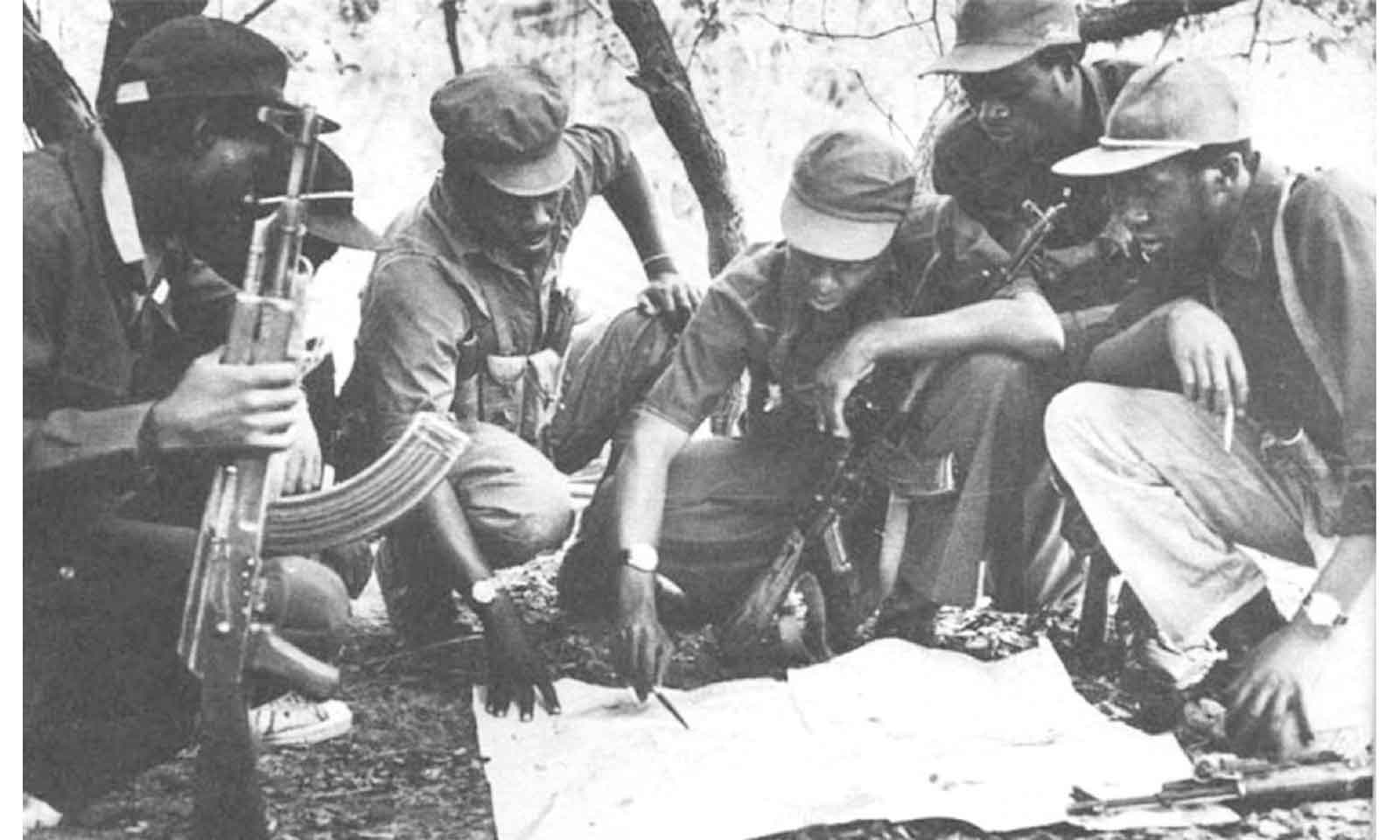
Gibson Nyikadzino
Zimpapers Politics Hub
MODERN-DAY Zimbabwe was midwifed from a revolution and not a movement.
When comparisons are made, at least striking resemblances and contradictions are expressed. Between a revolution and a movement, there are stark reminders of what the two seek to achieve.
A revolution is an act of self-sacrifice to the point of death with a goal to move people to change socially, economically and politically entrenched systems, replacing them with new ones.
Without achieving that goal, revolutions will continue to be in motion. Whereas, movements are short-lived. They only seek to move people so that they express their disgruntlement and indignation over something.
Revolutions are expressions of change and overhauling of systems, while movements are only fizzles of disgruntlement.
In the context of Zimbabwe’s independence, the revolution that ushered the modern day state was a covenant to fight the British system of colonialism, segregation and exclusion to the death until it was defeated.
Therefore, let no man question the audacity of Zimbabweans in dealing with colonialism, neo-colonialism and imperialism.
The land between the Zambezi and Limpopo hosts people of courage. People who in 1966 on April 28 decided to challenge, with commitment, a racially structured system whose only language to fold was military confrontation since all other “democratic” avenues had been locked in a cul-de-sac.
The only alternative was to remove the racist colonial system with the use of weapons.
So, the word revolution must not be abused. It remarks a significant turning point in something or of something.
When people talk about the “industrial revolution” the turning point was the exploitation of African resources to feed the industries and factories of Europeans, and the subsequent division of African countries among colonial powers at the 1884 Berlin Conference.
Even so, the 1917 Russian “revolution” by the Bolsheviks changed the nature and course of the politics in Russia whose bearing influence and impact remain tremendously effective today the world over.
Such historical turning points have also happened in Zimbabwe in 1966 (as Rhodesia) when people of peasantry backgrounds militarily fought the colonial regime to gain political power in 1980, and in 2000 when politically independent Zimbabweans sought their economic freedom by reclaiming their land.
They were reclaiming a birthright that their forefathers had been illegally dispossessed of by the white colonists.
The essence of the two turning points or revolutions in Zimbabwe has been to empower the black majority with political and economic power that de-racialised the ownership of the means of production from being historically dominated by the white, to transfer the power to the black majority.
For successfully fighting two key revolutions, one political and another economic, the audacity of Zimbabweans to dream should be hoisted to define their warrior spirit and symbol of determination to fight obstacles, including those that are racially entrenched.
No one should denigrate the revolutionary aspirations Zimbabweans have, and no one should seek to reverse the gains that have so far been achieved for the sake of all.
No desecration should be made to spoil the courage of Zimbabwe. More so, the strength of Zimbabweans and their determination should be national symbols of liberation that are derived from the coining of national messages of colonial resistance, sovereignty that resonate with genuine beliefs underlined in the nation’s fabric of values.
Zimbabwe’s revolutionary and nationalist aspirations are espoused in the country’s identity based on the history and belief system of resistance underpinned in nationalism.
Nationalism, either political or cultural, has an element of defence and Zimbabweans as a diverse family have the prerogative to protect and defend that historical identity as its stewards, watchtowers or guardians.
The watchtowers and guardians of nationalism in Zimbabwe today should be understood also as moral innovators who have established ideological movements at times of social crisis in order to transform the potential of communities, providing models of socio-political development guided by strategies of modernisation.
Fighting colonialism head on was an exercise of courage that was meant to protect post-colonial gains being enjoyed today and in the future.
We have enemies Zimbabwe’s foes, both within and outside borders, have engaged in vicious lies and well-orchestrated attempts to distort and manipulate historical aspects that maintain the unity of Zimbabweans because of their ability to dislodge racism.
The name of Zimbabwe, the country, is being threatened by some whose existence is hanging by the benevolence of the West and them being in foreign lands.
Paid cultural mercenaries continue to whimper at their failure in undermining the good in the development journey being done.
The forging of national sentiment, or nation building, involves cultural domains, history and values being central.
While the nationalist liberators continue the trajectory to advance the historical mission of liberating Zimbabwe from the clutches of neo-colonialism, the broad masses should be led to their emancipation with sincerity.
Any other wild illusion about it constitutes a classic example of self-betrayal and self-condemnation to the ranks of perpetual servitude.
The stampede for neo-colonial version of what others want Zimbabwe to do outside the historical context that defined its right to fight should not be used to undermine Zimbabwe’s anti-colonial democratic values.
Unselfish Revolutionaries! Without question or any fear of contradiction, Zimbabweans are revolutionary fighters. Then did remarkable things even when they had nothing from the start, except courage, bravery and a warrior spirit of sacrifice. There is no selfishness in courage and bravery.
The spirit to defeat colonialism, back then and now, was contagious. That spirit is relevant in ensuring everything is done for the collective good.
Revolutionaries are not selfish people! As Marcus Garvey said: “The ends you serve that are selfish will take you no further than yourself but the ends you serve that are for all, in common, will take you into eternity.”
Zimbabweans, remember we are one!