Online Reporter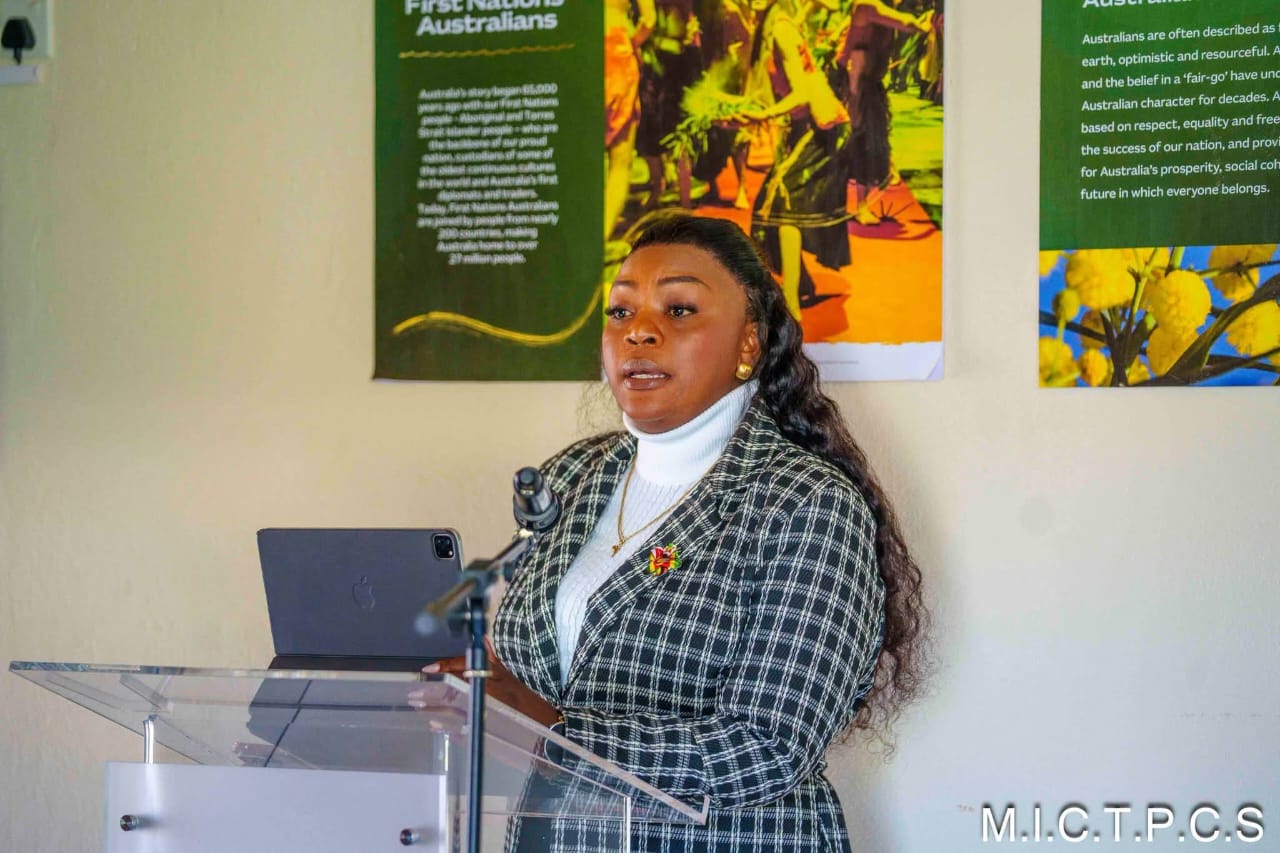
Ivan Zhakata
Herald Correspondent
Zimbabwe is stepping up efforts to harness artificial intelligence (AI) to drive economic growth and improve public service delivery, with Government seeking stronger collaboration with Australia to accelerate the development of the emerging technology.
Speaking at the Australian Embassy Artificial Intelligence Roundtable in Harare on Thursday, Information Communication Technology (ICT), Postal and Courier Services Minister Tatenda Mavetera said Zimbabwe and Australia shared a common vision of ensuring AI is deployed responsibly to create economic opportunities, strengthen national capabilities and improve citizens’ lives.
The roundtable brought together Government officials, academia, industry, development partners and diplomats to discuss opportunities for collaboration following the adoption of national AI frameworks by both countries.
Minister Mavetera said Zimbabwe launched its National Artificial Intelligence Strategy 2026-2030 in March this year, while Australia unveiled its National AI Plan in December last year.
“Our countries differ in scale and context, but our strategies reflect a common conviction: AI must create economic opportunity, improve public services, build national capability and be deployed safely and responsibly,” she said.
Minister Mavetera said Zimbabwe’s strategy was built around six pillars, namely talent and capacity development, infrastructure and computational sovereignty, AI adoption and service transformation, governance and regulation, research and innovation and international collaboration.
She said Government’s immediate priority was to ensure Zimbabweans acquired the skills needed to participate in the AI revolution.
“Our task is to ensure that citizens are not passive consumers of AI. They must be equipped to understand it, use it productively and participate in shaping its future,” Minister Mavetera said.
She said universities were expected to modernise curricula while industry should provide internships and practical training to develop the country’s AI talent.
On infrastructure, Minister Mavetera said Government was pursuing digital sovereignty through investment in connectivity, secure data systems, cloud infrastructure and computing power.
She said the proposed Project Pangolin National AI and Data Platform would provide secure access to high-value datasets in sectors such as agriculture, health, education and public administration.
“It will allow Zimbabwean innovators to use Zimbabwean data to solve Zimbabwean problems,” she said.
Minister Mavetera said AI had the potential to transform key sectors of the economy through improved weather forecasting, disease surveillance, personalised education, enhanced productivity in mining and manufacturing, and efficient public administration.
She said Government will also roll out the AI for Impact Challenge in Mutare from July 27 to August 1, 2026 to encourage innovators to develop practical AI solutions for national development.
However, she said innovation should go beyond developing prototypes.
“A prototype that remains on a laptop does not transform a nation. Our measure of success must be the number of solutions that are tested, adopted, financed, scaled and integrated into real institutions and communities,” she said.
The minister said Zimbabwe’s AI development will be guided by strong ethical principles rooted in Ubuntu and Unhu through the National AI Charter, while measures would also be put in place to address risks associated with AI, including misinformation, fraud, privacy breaches and bias.
She said Government will establish a National AI Innovation Fund to support local innovators and startups while strengthening partnerships with universities and the private sector.
Minister Mavetera also called for closer cooperation between Zimbabwe and Australia in AI skills development, research, governance, agricultural technology, health innovation and climate resilience.
She said AI development must be accompanied by robust cybersecurity and child online protection frameworks to safeguard citizens against cyber threats.
“Digital transformation without cybersecurity creates vulnerability,” she said, adding that AI governance, cybersecurity and child online protection should work together to build public trust in emerging technologies.
She urged Government institutions, universities, technology companies, telecommunications operators and development partners to work together to build a secure, inclusive and innovative AI ecosystem capable of driving Zimbabwe’s national development aspirations.
“Zimbabwe has chosen a path of responsible ambition. We will build AI that reflects our values, responds to our realities and advances our national development aspirations,” Minister Mavetera said.