Kizito Sikuka-Correspondent
ZIMBABWE remains committed to the equitable and sustainable utilisation of its shared water resources with neighbouring countries.
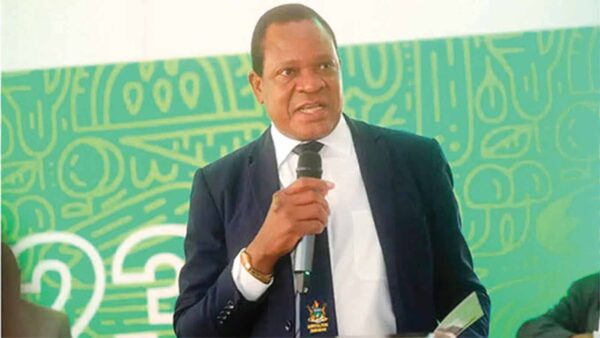
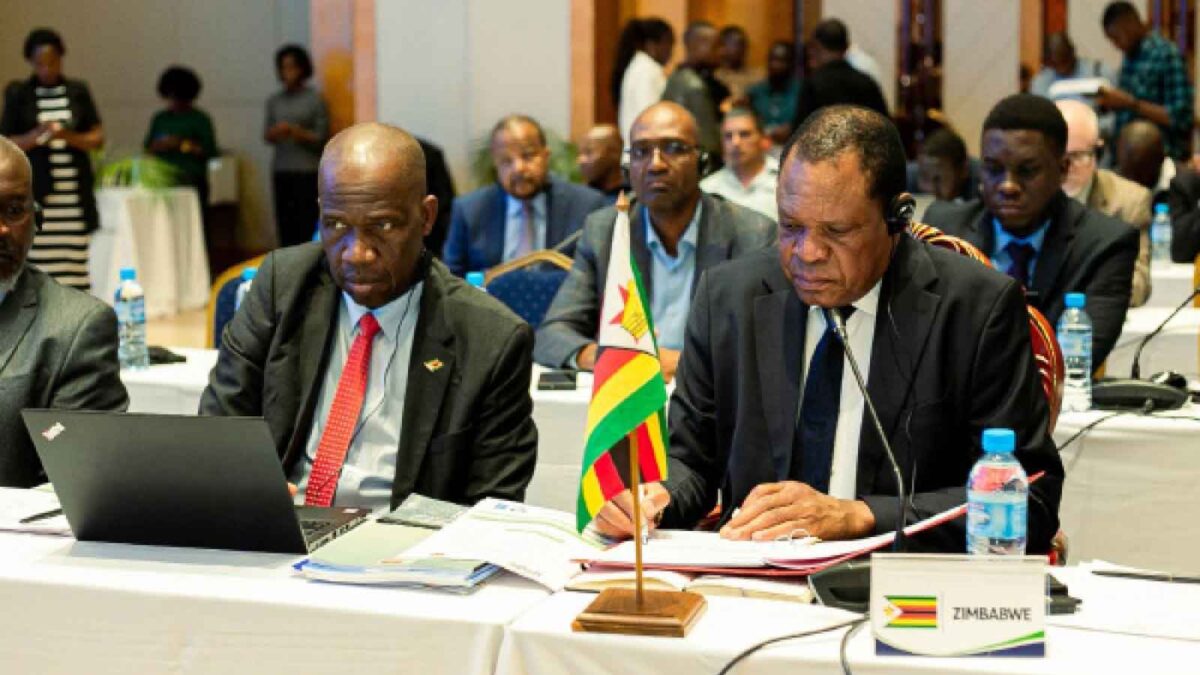
Agriculture, Mechanisation and Water Resources Development Minister Dr Anxious Masuka said this yesterday in Maputo, Mozambique, at the inaugural Council of Ministers meeting of the Limpopo Watercourse Commission (LIMCOM).
LIMCOM is a river basin organisation that brings together the four countries sharing the Limpopo River, namely Botswana, Mozambique, South Africa and Zimbabwe.
“Water resources development is central to the achievement of our National Development Strategies and our national vision of becoming a prosperous and empowered upper-middle-income society by 2030,” Dr Masuka said, adding that the realisation of these ambitions depends on the availability and sustainable management of water resources.
“It is within this context that the Limpopo River Basin assumes strategic importance to Zimbabwe’s national development agenda. As a shared basin, its sustainable management directly influences our ability to expand irrigation, strengthen agricultural resilience, support productive economic activities and improve water security in these regions.
“This reinforces the importance of co-operation among our four member states, recognising that national development aspirations within a shared river basin cannot be fully realised in isolation,” he said.
Dr Masuka said Zimbabwe, which shares water resources with its neighbours, would continue working with other countries to ensure shared water resources benefit all parties, including present and future generations, noting that shared waters should be a source of co-operation and peace rather than conflict.
“Through structures such as LIMCOM, we are demonstrating that the sustainable management of shared waters is not only a regional obligation, but also an important contribution towards achieving our collective global commitments,” he said.
Dr Masuka said the formal establishment of the LIMCOM Council of Ministers marked an important milestone in transboundary water co-operation in Southern Africa.
The operationalisation of the council elevates transboundary water management to the highest level of political commitment across the basin. It also fosters closer co-operation for the judicious, sustainable and co-ordinated management, protection and utilisation of shared watercourses in line with the Revised SADC Protocol on Shared Watercourses of 2000.
“The establishment of the council marks a defining moment in the history of regional co-operation and the collective management of one of Southern Africa’s most strategic shared river basins.
“For the first time, we convene as the LIMCOM Council of Ministers, united by a shared vision and a collective determination to secure the future of the Limpopo River Basin for generations to come,” Dr Masuka said.
Article 4 of the LIMCOM Agreement, signed in November 2003, did not include the Council of Ministers. However, in March 2024, member states agreed to begin the process of amending the agreement to formally establish the council as LIMCOM’s principal policy and decision-making body.
This was realised on November 26, 2026, when Ministers responsible for water affairs from Botswana, Mozambique, South Africa and Zimbabwe convened in Maputo for their inaugural meeting.
“Today, we celebrate this journey of co-operation, our shared natural heritage and the enduring bonds that unite Botswana, Mozambique, South Africa and Zimbabwe through the mighty Limpopo River.”
New LIMCOM chairperson Mr Fernando Rafael, who is also Mozambique’s Minister of Public Works, Housing and Water Resources, concurred, saying no member state could fully benefit from the Limpopo River without collaborating with other riparian states.
“The Limpopo River is our river. We need to work together to fully benefit from this shared water resource,” Mr Rafael said.
The Limpopo River flows north from South Africa, where it forms the border between South Africa and Botswana and later between South Africa and Zimbabwe, before crossing into Mozambique and draining into the Indian Ocean.
Its basin has a catchment area of about 412 000 square kilometres and is home to more than 21 million people who depend on it for diverse socio-economic activities, including agro-industry, large-scale irrigation, mining and eco-tourism.
Zimbabwe accounts for about 15 percent of the basin, while South Africa accounts for about 44 percent. Mozambique and Botswana account for 21 percent and 20 percent respectively.
At the inaugural LIMCOM Council of Ministers meeting, Zimbabwe, together with the other LIMCOM member states, endorsed the Strategic Action Programme (SAP) for the Limpopo River Basin and their respective National Action Plans (NAPs).