Online Reporter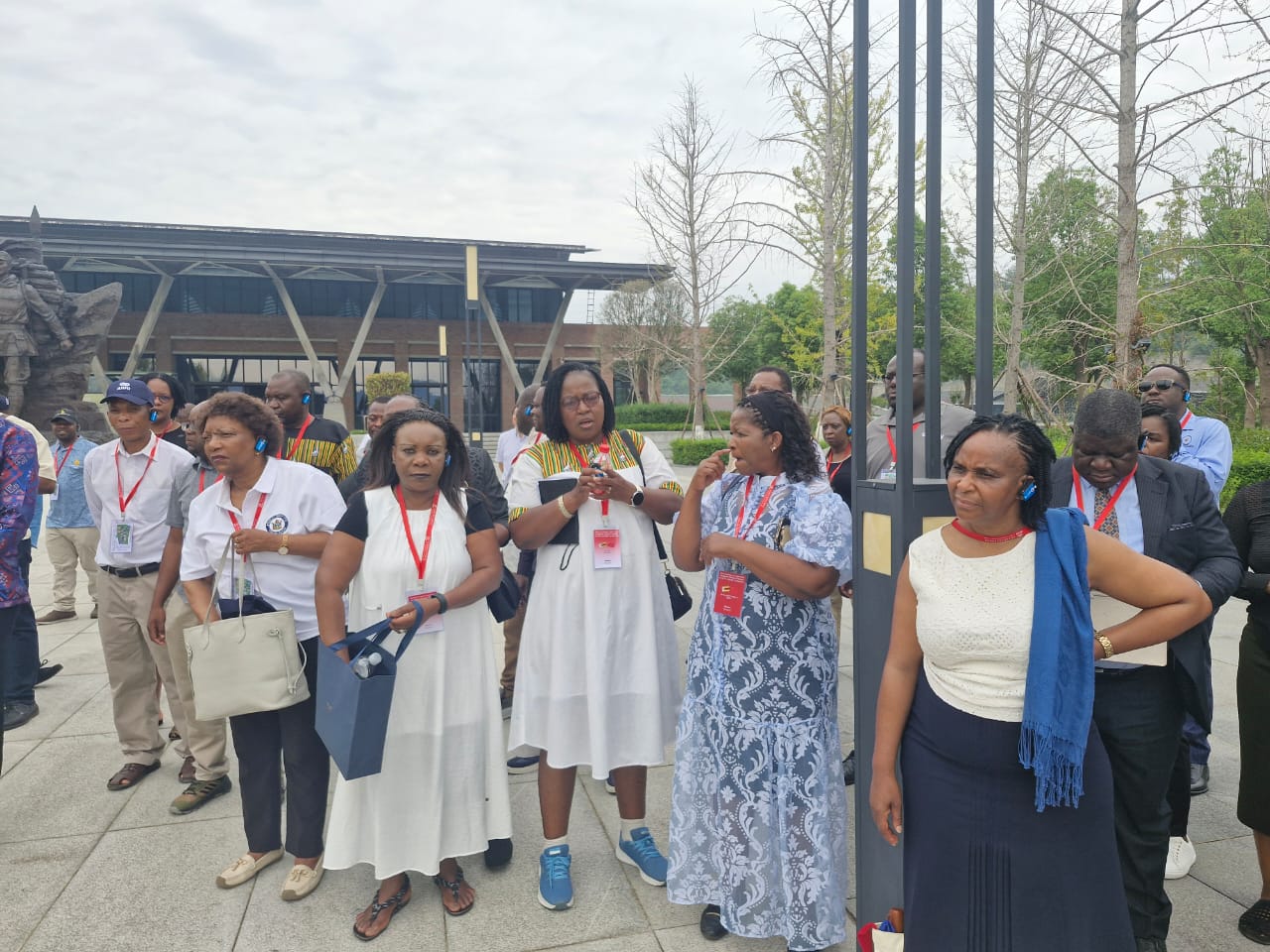
Vusumuzi Dube in NANCHONG, China
ZIMBABWE can draw valuable lessons from China’s experience in poverty alleviation and rural revitalisation, Public Service, Labour and Social Welfare Deputy Minister Mercy Dinha has said.
Deputy Minister Dinha made the remarks after a lecture on “The Role of Development Zones in Rural Revitalisation: Enterprise Tour at Yilong County Economic Development Zone” in Yilong County, Nanchong City, Sichuan Province.
The lecture was delivered by Ms Zhang Jie, Secretary of the Communist Party of China Yilong County Committee, at the Sichuan Zhang Side Executive Leadership Academy.
The engagement formed part of the Ministerial Seminar for Senior Public Management Officials of Zimbabwe being held in China and organised by the Academy for International Business Officials (AIBO), an institution under China’s Ministry of Commerce.
Deputy Minister Dinha said the delegation had gained a deeper understanding of Yilong County’s transformation from a deeply impoverished revolutionary base into a revitalised administrative county.
“We are here in Yilong, in Sichuan Province, and we are very impressed with the place. We have really learned a lot about Yilong County and its journey from a deeply impoverished revolutionary base to an administratively revitalised county. We have learned about the poverty situation, whereby at that time, back in 2014, there were difficulties in travelling, healthcare was inadequate, water supply was scarce, and education was not accessible to everyone and was not of the required quality.
“We have learned about that journey from the time Yilong County was impoverished to 2020, when it was revitalised. During the presentation, we also learned how development initiatives were cascaded from the city to the county and then to the villages,” she said.
“We also learned about the importance of documentation. At the time the fight against poverty began, there was detailed documentation of households. They knew how many households were impoverished and how many people needed assistance,” added the Deputy Minister.
She said the experience demonstrated the importance of having accurate data to identify vulnerable communities and ensure that assistance reaches those who need it most.
“The vulnerable people at that time numbered more than 100 000, and that journey continued until around 2020, when significant development had taken place. Today, we can see the achievements, starting with the transport sector.
“There is now a road network, high-speed trains, well-paved rural roads and tarred roads. There is also water transport, with both passenger and cargo vessels,” said the Deputy Minister.
She said Zimbabwe could identify similarities between some of China’s social development interventions and programmes being implemented by the Zimbabwean Government.
The Deputy Minister cited the Basic Education Assistance Module (BEAM), which supports vulnerable children with education-related costs, as an example of Zimbabwe’s efforts to improve access to education and reduce school dropouts.
“Here, we have learned that now that the fight against poverty has been won, the focus is on equity and equal access to education for all, including rural communities, vulnerable people, persons with disabilities and everyone else.”
Dinha said social protection was particularly relevant to her ministry, noting that China’s approach to supporting elderly and vulnerable people provided lessons that Zimbabwe could adapt to its own circumstances.
“The most important part, and one that is also directly relevant to my ministry, is social security. We have learned about the social safety net for the elderly. The elderly are provided with accommodation, meals, medical care and activities. There are elderly people being catered for, as well as vulnerable and poor people who are also receiving support.”
She said the delegation had also learnt from China’s approach to supporting farmers throughout the agricultural production cycle.
“When you look at agriculture, as highlighted in the presentation, there are provisions and agricultural services that are provided to the people from the time they sow their crops until the time of harvest. This also aligns with what we are doing in Zimbabwe through programmes such as Pfumvudza, where vulnerable farmers are provided with inputs such as fertiliser and seed. At one point, there was also the distribution of farming equipment, including tractors, planters and other machinery. So there are clear similarities between the two approaches.”
Deputy Minister Dinha said Zimbabwe was still on its own development journey but could draw confidence from China’s experience.
“We have not finished the race yet because we are still developing, but we have learned a lot from China, especially from this county administrative area.
“As our President, His Excellency Dr ED Mnangagwa, has said, if China can do it, any other country can do it. I am positive that we can also do it in Zimbabwe. We can fight poverty, and we are still on the journey towards revitalisation,” said the Deputy Minister.
She said the lessons from Yilong were particularly relevant to Zimbabwe’s pursuit of its Vision 2030 development agenda.
“We are still on the journey to succeed in the fight against poverty, but I think we are almost there because, by 2030, we are looking at achieving an upper-middle-income society in Zimbabwe.
“We are going to achieve that through Vision 2030.”