admin
admin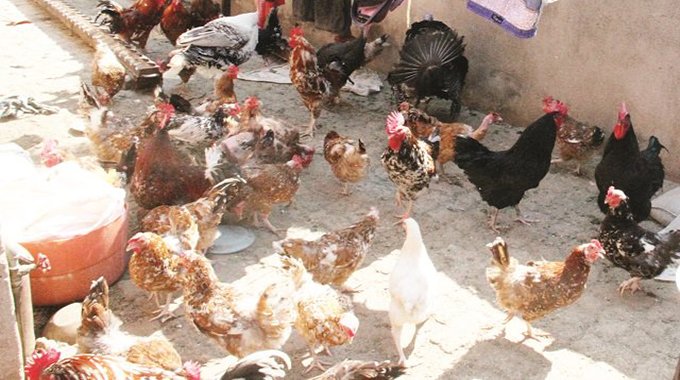
Dumisani Nsingo, Senior Farming Reporter
ONE of Matabeleland region’s top free range chicken breeders, Mr Aggrey Moyo has embarked on a similar poultry project in Botswana buoyed by a huge demand of the birds in the neighbouring country.
Mr Moyo said he has invested in setting-up a 10 000 egg capacity incubator for the production of a wide range of free range chicks.
“There is a huge demand of free range chickens here in Botswana. The market is very lucrative and it’s not yet saturated thus we are looking forward to running a profitable enterprise. We have completed setting up our incubator and we intend to start at a small-scale and thereafter we turn commercial,” said Mr Moyo.
The enterprising poultry farmer intends to breed White Sussex, Brama, Australorp, Boschveled, Koekoe, Rhode Island Red, Cohins free range chicken breeds.
“We are going to have a wide range of breeding stock with the White Sussex topping our list because it’s attractive to farmers as it yields up to 240 eggs a year. It’s really a rare commercial breed which draws high demand both in Zimbabwe and Botswana with its price pegged at $110 for 10-week-olds.
“We are also going to breed commercial egg laying breeds in the form of pure breeds of Amberlink and Hyline while turkeys and ostriches will also be part of the breeding stock,” said Mr Moyo.
He said plans were already in place to increase the range of the free range breeds in future.
“Judging by the high demand for free range chickens here in Botswana we are being tempted, getting many breeds including a variety of bantams. Our source of breeding stock into Botswana is South Africa, which has a broad range to select from.
“We also have a lot of enquiries from Zimbabwe but we are not quite sure of the laws, if they allow us as farmers to share all these breeds because there will be pure breeds from F1 (First Filial) generation,” said Mr Moyo.
Back home in Bulawayo Mr Moyo has a breeding stock of more than 100 birds which include six breeds namely the Black and Blue Australorp, Koekoe, Road Island, Orpington, Boschvelds and White leghorn.
He said farmers in Zimbabwe have over the years faced a lot of red tape in their efforts to import free range chicken breeds.
“The regulation may be allowing the importation of some of these breeding stock into the country but how to really get them into the country, it’s a very difficult thing . . . you don’t get the right answers on how you can get the permit and easily do it.
“We have tried it in the past. We are really facing those challenges of getting the permit easily. The laws are just inhibiting and prohibiting us to do it the way we dream of doing it,” said Mr Moyo.
He said the growth of free range chicken production in Zimbabwe was being hampered by lack of Government and institutional support.
“Production and breeding of free range chickens in Zimbabwe is not well co-ordinated and it has never been given much attention, especially by the Ministry (of Lands, Agriculture, Water, Climate and Rural Resettlement) at Government level so that being the case you find that the main focus is mainly on broilers where there are some laws that regulate the acquisition of the birds from across the borders including the importation of meat but with free range poultry there is very little attention,” said Mr Moyo.
He said it was imperative for Government to support free range chicken production as it has the ability to turn around livelihoods in communities.
He also noted that there was a need to improve the quality of the birds, which has over the years been affected by inbreeding.
Over the last decade there has been a rise in popularity for traditional meals that include free range chicken popularly known as “road runners” or nkukhu makhaya, guinea fowl, turkey, rabbit and duck meat to go along with traditional starches such as sorghum and rapoko, pasta as well as brown rice.


 Online Reporter