Online Reporter
Robin Muchetu in Umzingwane
ZIMBABWE has pledged US$1 million to the Global Fund Grant Cycle 8, reaffirming its commitment to sustaining progress in the fight against HIV and Aids, Tuberculosis, and Malaria, while strengthening health systems amid donor funding cuts.
Speaking during World Aids Day commemorations in Umzingwane District on Monday, held under the theme “Overcoming disruption, transforming the Aids response”, Minister of Health and Child Care Dr Douglas Mombeshora said strategic partnerships remain critical.
“As we talk about progress, we must also talk about partnership. Zimbabwe made its full contribution to the Global Fund Grant Cycle 7 and I am pleased to announce that the Government has pledged US$1 million towards the Global Fund (GC8. This demonstrates our commitment to shared responsibility and sustainable financing for the HIV response. We equally value our partnership with Gavi, Unicef, WHO and many others who support Zimbabwe),” said Dr Mombeshora.
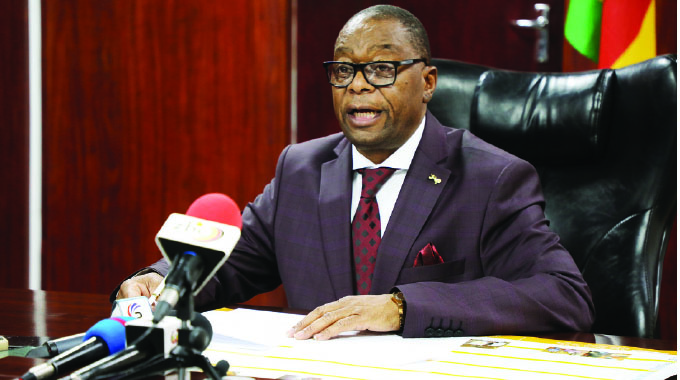
Dr Mombeshora stressed that partnerships are the backbone of Zimbabwe’s success story.
“It’s only through unity that we defeat our greatest challenge. Over the years, Zimbabwe has built one of the most resilient HIV programmes in the region. We met the UNAids 95-95-95 targets, and today more of our people are living productive lives. This did not happen by chance — it happened because communities, health workers, Government and partners worked together.”
He said under National Development Strategy 2 (NDS2), Government will continue strengthening health infrastructure, capacitating health workers, and expanding innovative domestic financing to complement the National Aids Trust Fund (Aids Levy).
“We remain committed to community leadership because communities are not just beneficiaries — they are the backbone of our progress.”
Zimbabwe has achieved significant milestones, including being among the first 10 countries to access Lenacapavir, a long-acting injectable taken twice a year as a preventive measure.
“To young people, let me assure you — if you can remember to charge your phone every night, two injections a year will not defeat you,” said Dr Mombeshora, thanking Pepfar for supporting this and other interventions.
Other achievements include expanding blood-based HIV self-testing from eight to 53 districts, improving privacy and early diagnosis.
Continues on www.chronicle.co.zw
“Testing should never feel like an examination — you cannot fail your status; you can only fail by not knowing it,” he said.
Zimbabwe has also strengthened services for children, introducing a child-friendly antiretroviral tablet and rolling out triple HIV, Syphilis and Hepatitis B testing for HIV-exposed newborns within the first 24 hours of life.
Dr Mombeshora emphasised that HIV care must be integrated with services for non-communicable diseases, mental health, TB, sexual and reproductive health, and drug misuse.
“A person must receive holistic care at one entry point, in an efficient, dignified and supportive way. Equally important is the fight against stigma — the last barrier to HIV elimination. Stigma drives silence, fear and delayed care. Let us speak openly, support one another and replace judgment with empathy. Zimbabwe is strongest when no one is left behind.”
National Aids Council CEO Dr Bernard Madzima said this year’s theme reflects the need to overcome disruptions that have threatened progress.
“Covid-19 shifted attention and resources away from HIV, and emerging health threats like NCDs and substance abuse have forced us to rethink and integrate HIV with other health conditions,” he said.
Dr Madzima noted that financial cuts have made domestic resource mobilisation critical.
“Our National Aids Trust Fund, established nearly two decades ago, has come in a big way to ensure we do not run out of ARVs, diagnostics and other HIV-related services. We are confident our programme will not be derailed.”
— @NyembeziMu