shloboe boe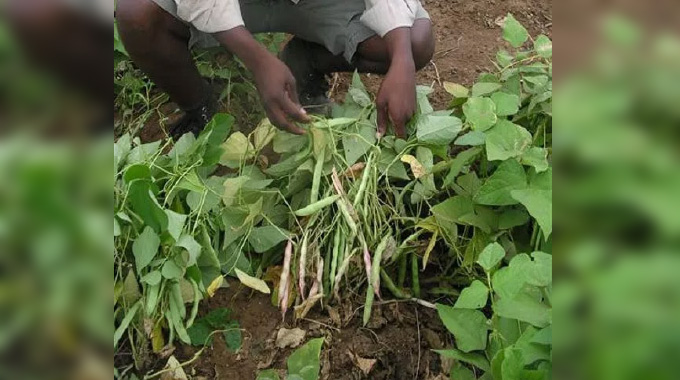
Johnson Siamachira
Historically, agriculture has been the backbone of Zimbabwe’s economy, dominated by large-scale commercial farming while smallholder farmers operated on the margins.
In the 1980s and 1990s, cotton was once hailed as the country’s “white gold,” but its value diminished with declining international prices, forcing farmers to search for alternative income sources.
The post-2000 land reform programme redistributed large-scale farms to smallholder and communal farmers, making them the primary producers. However, many lacked technical know-how, access to credit, and markets, resulting in reduced agricultural productivity for what was once Africa’s breadbasket.
Consequently, malnutrition surged, particularly in rural areas.
In Zimbabwe, malnutrition is widespread among women of reproductive age (15 to 49 years) and children under five.
The 2024 Zimbabwe National Nutrition Survey reports that 27 percent of children experience stunted growth, while more than 72 percent of those under five and 69 percent of women of reproductive age are iron-deficient.
Though stunting has declined from 33 percent in 2010 to 27 percent in 2024, it remains above the global threshold, according to the Ministry of Health and Child Care.
To address this, nutrition-sensitive agricultural approaches have gained momentum under the Sustainable Development Goals. One such initiative is HarvestPlus Zimbabwe’s Scaling Nutrition Resilience Project, funded by the Happel Foundation.
Launched in 2022, the project supports over 5,000 smallholder farming families; about 25 000 individual beneficiaries, helping them increase incomes and improve nutrition through commercial farming of biofortified crops.
At the centre of this effort is NUA45, a biofortified iron and zinc bean variety bred conventionally — not genetically modified. With iron levels of > 60 mg/kg and zinc at more than 25 mg/kg, NUA45 offers a nutritious alternative to traditional beans.
Farmers report average yields of 1,234 kg per hectare compared to 1,107 kg for conventional beans, giving a yield advantage of about 12 percent.
“Just last season, I cultivated 0,4 hectares of iron beans and harvested three tonnes per hectare within three months, earning more than US$3 000,” said Ms Nosta Mapuranga, 61, one of the farmers of the variety.
Before the project, few farmers in the participating districts accessed formal sugar bean markets, which paid about US$0,50 per kilogramme. Most are sold informally at much lower prices.
“Now, I have 10 bags of maize bought with income from iron beans,” said Ms Mapuranga.
“In the past, around this time, I wouldn’t even have had one basin of maize. We’re no longer talking about hunger in this home.”
She added, “The project has improved our nutrition. We no longer see malnourished children. When one shows signs of weakness, we feed them with iron beans.”
Mr Esau Chana, another smallholder farmer, concurred: “Our main concern has always been food security, and we’ve achieved it.”
With her earnings, Ms Mapuranga has invested US$6 500 in building a family home and bought two steers worth US$400.
“The project focuses on capacity building so we can facilitate teaching from within. Even after it ends in 2026, the work will continue. Agriculture must be seen as a business that creates wealth,” explained Mr Martin Chiwandire, the district agricultural and business advisory officer in the Ministry of Lands, Agriculture, Fisheries, Water and Rural Development.
At Chifamba Secondary School in Guruve, 80 boarding learners now eat iron beans as part of their school meals.
Headmaster Mr Stephen Matayiwa said learners’ health has improved significantly since the introduction of the beans.
HarvestPlus’s private-sector partner, Chico Foods, packages and distributes NUA45 beans through major retailers.
Sales manager Mr Malvin Shiringo said, “NUA45 beans are changing how people think about nutrition. They’re helping fight iron deficiency while offering a healthier alternative.”
Mr Chana said, “Working with Chico Foods guarantees us a reliable market and fair prices. They even come to our fields to buy the beans, which makes things easier for us farmers.”
HarvestPlus Zimbabwe Country Manager, Sakile Kudita, highlighted the power of partnerships: “By working with food processing companies like Chico Foods, we’re ensuring smallholder farmers have stable markets while making nutrient-dense foods accessible to more people, including non-farming consumers.
“Moreover, commercialisation is a sustainable model scaling socially beneficial technologies like biofortification, which helps fight hidden hunger.”
Despite the successes, farmers face challenges such as drought and limited irrigation, which can threaten production.
The 2018 Global Nutrition Report emphasises that while knowledge on malnutrition is increasing, progress against key nutrition indicators remains slow, calling for greater efforts to make healthy diets affordable and accessible.
Biofortification, however, is not a silver bullet against hidden hunger.
To achieve lasting nutritional and economic transformation, Zimbabwe must strengthen nutrition-sensitive agriculture and scale partnerships that link farmers, markets, and consumers — turning farming into a sustainable business that nourishes the nation. —New Ziana.



 Online Reporter