Chronicle Editor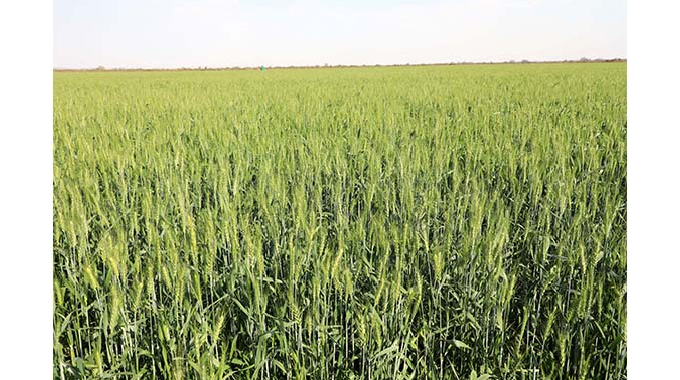
Joseph Madzimure, Zimpapers Elections Desk
BEFORE the advent of the Second Republic, Zimbabwe used to buy grain from abroad but that has become a thing of the past with the country now producing enough for its use and even for export.
President Mnangagwa is on record saying Africa needs to take urgent steps to boost crop production and adopt climate-sensitive sustainable farming practices that ensure food self-sufficiency, and his administration has taken the necessary steps towards that vision, which is also spelt out in the National Development Strategy 1 economic blueprint.
Before the coming in of the Second Republic, agriculture was affected by a myriad of challenges including fluctuating weather conditions.
Long dry spells contributed to increased food shortages.
President Mnangagwa’s initiatives have seemingly won the war against hunger and food insufficiency on the back of sound policies and critical infrastructure development as the country moves an inch closer to attaining its breadbasket status on the continent.
Under the Second Republic, there has been a major drive to capacitate the agriculture sector while creating an enabling environment for its growth.
Zimbabwe is an agro-based economy and consequently, key infrastructure continues to be rehabilitated and constructed with the Second Republic overseeing the construction of 12 large dams since 2018, which are set to increase production in the agriculture sector.
The construction of dams is being accelerated with the objective of putting at least 350 000 hectares under irrigation by 2025 as Zimbabwe adapts to climate change and moves from reliance on rain-fed agriculture.
Farmers across the country have expressed their appreciation for the work being done by the Second Republic to ensure sustained food self-sufficiency with the eventual aim of being net exporters of agricultural produce.
After attaining food self-sufficiency, Zimbabwe is now pushing to have a bigger share of the export market.
From the crops and livestock assessments conducted so far, there are indications that the sectors are growing.
In the next summer cropping season, the Government is targeting a cereal production of 3,7 million tonnes to ensure national food and nutrition security.
Numbers do not lie; the agriculture sector has already hit the initial 2025 target of becoming an US$8,2 billion industry.
This target was achieved in 2021.
Zimbabwe is now food secure after achieving bumper maize and wheat harvests in the last few cropping seasons.
Still, the Government remains determined to transform agricultural systems for the sector to contribute positively towards Vision 2030, to become an upper middle-income society.
Last year, the country achieved a milestone in cereal production, attaining a record-breaking 375 000 tonnes of wheat and producing 1,5 million tonnes of maize.
Zimbabwe requires 360 000 tonnes of wheat per annum, and the huge harvest, which is the biggest since 1966, means there will be no shortages of bread and other confectionery.
The Government has initiated public-private sector engagements to ensure its projections of a harvest of about 3 million tonnes of maize from the present season, are realised.
The huge maize output would be coming from a targeted hectarage of 1 940 969ha, representing a 3 percent rise from 1,9 million hectares planted last year.
The growing of soya beans rose from 52 000ha to 56 000ha, a move that will also ensure Zimbabwe has reasonable quantities of raw materials for the production of cooking oil, thereby reducing the import bill.
Tobacco production surged by 19 percent from 110 000 hectares to about 181 000ha this year.
Some dams such as Marovanyati and Chivhu were commissioned as climate-proof agricultural activities in this area.
Other dams currently under construction include Sema Dam in Rushinga, Ziminya Dam in Matabeleland North, and Vungu Dam in Midlands Province, which will all spur the country’s agricultural prowess.
All these developments will aid Zimbabwe’s attainment of an upper-middle-income economy by 2030.
A record wheat harvest is also on the cards as this winter wheat planting season is expected to surpass last season’s record harvest.
The country is set to register two consecutive wheat production records for the first time since production of the cereal started in the country in 1966.
Both these records have been registered under President Mnangagwa’s astute leadership.
Wheat production is set to reach 420 000 tonnes, well beyond the 375 000 tonnes of cereal produced last year.
Zimbabwe requires a minimum of 360 000 tonnes for its self-sufficiency and this year’s production is evidence that the country is on course to achieving its target of being an exporter of the cereal soon.
All these gains are being registered on the back of an enabling, conducive environment that has been created by the Second Republic as it has remained true to its word of leading the country on an exponential growth trajectory.
The Second Republic is also accelerating plans to grow the country’s national herd to 6 million, from the current 5,5 million cattle. All these successes are a result of President Mnangagwa’s agricultural growth recovery plan which has proved to be solid and action-oriented.
Zimbabwe’s main focus is on ensuring that all citizens at all times have physical, social, and economic access to sufficient, safe, and nutritious food that meets their food preferences and dietary needs for an active and healthy nation.
To assure household and national food and nutrition security, Government has availed, inter alia the pfumvudza/intwasa programme, Presidential Input Scheme, National Enhanced Crop Productivity Scheme (command agriculture) contract farming, the dam construction programme, the livestock recovery and growth plan, irrigation schemes and the farm mechanisation programmes.
In 2021, the country registered a bumper harvest of over 3 million tonnes of grain, a feat never met by the nation before.
Due to the Second Republic’s commitment to ensure food self-sufficiency, Zimbabwe is considering exporting surplus wheat to Mozambique from this year’s anticipated harvest of 420 000 tonnes.
To maximise agro-production and productivity, Government is mechanising farming through the acquisition and deployment of modern equipment for farmers.
The John Deere Facility supplied 300 tractors, 80 combine harvesters,600 planters, 200 disc harrows, 100 boom sprayers, and 100 trailers, while the Belarus facility supplied 163 tractors, 19 combine harvesters, and low bed trucks.
A farmer from Goromonzi, Mr Tawanda Bondamakara said Zimbabwe is now poised to become Africa’s bread basket.
“Of great importance to note is that when a country achieves food self-sufficiency, we are now focusing on producing for exports, which will earn the country’s much-needed foreign currency. This is a positive development considering that we used to import maize from neighbouring countries,” said Mr Bondamakara.
Mrs Getrude Maromo, a farmer from Mazowe concurred saying the Second Republic has put in place key enablers for agricultural growth.
“The Government has constructed major dams which will be used for irrigation purposes to achieve better yields. No country can sustain itself when importing food. The Government is doing a tremendous job,” she said.



 derick.khumalo