


 Online Reporter
Kudzanai Sharara in Berlin, Germany
Zimbabwe’s horticulture sector has achieved its most successful international showcasing to date at the Fruit Logistica trade fair in Berlin, Germany, with organisers reporting record-breaking engagements.
Participants confirmed a surge in export enquiries that far exceeds Zimbabwe’s current production capacity for some niche fruits.
The performance marks a significant leap towards the Government’s ambitious target of building a US$14 billion export economy by 2030.
On the final day of the world’s premier fresh produce expo on Friday, ZimTrade, the national trade development body, declared the 2026 participation an unequivocal success.
Director of operations at ZimTrade Mr Similo Nkala said the Zimbabwe pavilion attracted more visitors than in any of the past six years.
“Fruit Logistica 2026 has managed to meet our expectations. We have received more visitors to our stand than in any other year,” Mr Nkala said.

The scale of interest was vast.
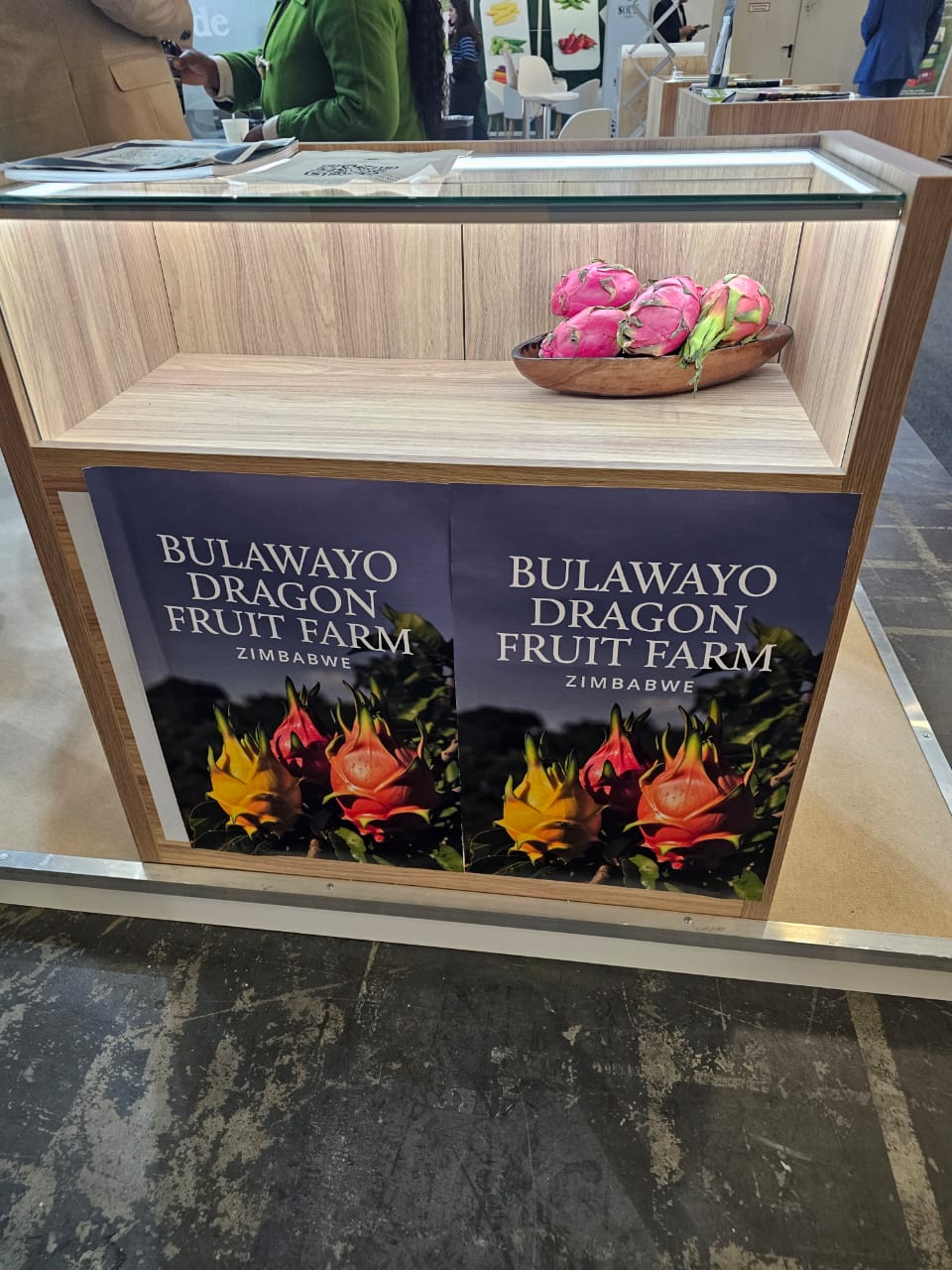
While established products like blueberries, citrus and avocados remain in high demand, a surprise star emerged: the dragon fruit.
“One fruit that has been a big hit . . . is the dragon fruit,” Mr Nkala said, revealing that the demand uncovered at the fair currently outstrips domestic supply.
“The production that we have as a country is not enough to meet the demand that we saw.”
In response, ZimTrade plans to engage farmers to establish new dragon fruit production clusters across the country.
This strategic pivot to meet newfound demand exemplifies ZimTrade’s core mission: to integrate Zimbabwean agriculture into lucrative global value chains by directly connecting local producers with international buyers.
The fair yielded serious business dialogue across the spectrum.
Commercial director for Cicada Ms Karen Jiri reported “a lot of good traction” and enquiries from the Middle East, the United Arab Emirates (UAE) and China, particularly for avocados.
Mr Simba Usore of Naturale Frozen Fruits said the engagement had “exceeded expectations” for placing frozen products abroad, attributing it to Zimbabwe’s “great reputation” for quality.
Beyond the fresh fruit, the event facilitated crucial logistical and certification discussions, identified as key hurdles to export growth.
Blueberry farmer and former national cricket captain Mr Alistair Campbell conducted extensive talks with freight companies, while Mrs Jiri emphasised that certifications like Global G.A.P. (Good Agricultural Practice) were “critical” for market access.
The success has immediate practical implications for Zimbabwe’s agriculture sector.
Mr Nkala revealed that participating companies received more enquiries than they can individually fulfil and are “willing to even share some of the enquiries” with farmers who could not attend the fair. This includes outgrower and irrigation schemes, promising to funnel new business to small-scale farmers.
Looking ahead, ZimTrade is launching an aggressive market diversification strategy.
With over 70 percent of current exports going to the UAE, South Africa and China, Mr Nkala announced planned market scans in Serbia and Thailand, alongside participation in trade fairs in Zambia, Botswana and Mozambique.
“There is a need for us to diversify our exports,” he said.
For domestic producers, the message is one of opportunity. Mr Nkala urged non-exporting farmers to engage with ZimTrade’s support programmes such as the forthcoming horticulture masterclass and the Youth AgriChallenge.
“For those who already have the infrastructure, we are willing to share some of the enquiries that we received,” he said.
The results in Berlin provide robust evidence of the sector’s growing resilience and competitiveness.
Blueberry exports, a primary driver, saw earnings grow by 23 percent in 2025, with production nearing 12 000 tonnes, leveraged by a strategic harvest window that supplies markets ahead of global competitors.
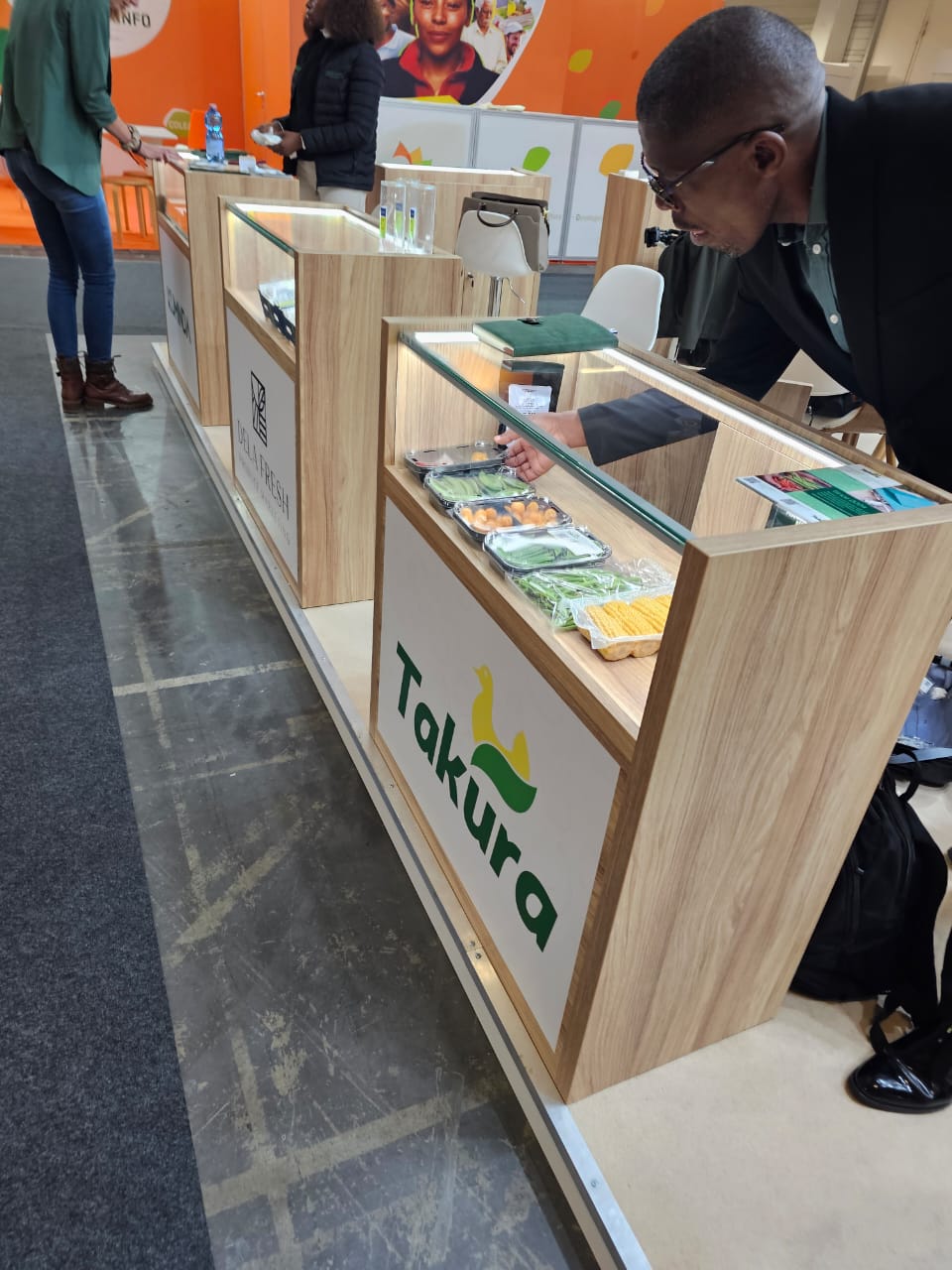
The enthusiastic reception of diverse products, from passion fruit and sugar snaps to the breakthrough dragon fruit, underscores a successful export diversification strategy.
Mr Heinrich von Pezold of Forrester Estate highlighted the value of the collective national pavilion, facilitated by ZimTrade with development partner support.
“It really gives a good story of Zimbabwe to the industry,” he said, noting the stand made engagement “so much easier.”
With a pipeline of advanced enquiries now secured and a clear strategy for market expansion and farmer support, Zimbabwe’s horticulture sector appears poised to convert the unprecedented optimism of Berlin into sustained export growth and tangible progress towards its 2030 economic ambitions.
Zimbabwe’s horticulture sector has achieved its most successful international showcasing to date at the Fruit Logistica trade fair in Berlin, Germany, with organisers reporting record-breaking engagements.
Participants confirmed a surge in export enquiries that far exceeds Zimbabwe’s current production capacity for some niche fruits.
The performance marks a significant leap towards the Government’s ambitious target of building a US$14 billion export economy by 2030.
On the final day of the world’s premier fresh produce expo on Friday, ZimTrade, the national trade development body, declared the 2026 participation an unequivocal success.
Director of operations at ZimTrade Mr Similo Nkala said the Zimbabwe pavilion attracted more visitors than in any of the past six years.
“Fruit Logistica 2026 has managed to meet our expectations. We have received more visitors to our stand than in any other year,” Mr Nkala said.
The scale of interest was vast.
While established products like blueberries, citrus and avocados remain in high demand, a surprise star emerged: the dragon fruit.
“One fruit that has been a big hit . . . is the dragon fruit,” Mr Nkala said, revealing that the demand uncovered at the fair currently outstrips domestic supply.
“The production that we have as a country is not enough to meet the demand that we saw.”
In response, ZimTrade plans to engage farmers to establish new dragon fruit production clusters across the country.
This strategic pivot to meet newfound demand exemplifies ZimTrade’s core mission: to integrate Zimbabwean agriculture into lucrative global value chains by directly connecting local producers with international buyers.
The fair yielded serious business dialogue across the spectrum.
Commercial director for Cicada Ms Karen Jiri reported “a lot of good traction” and enquiries from the Middle East, the United Arab Emirates (UAE) and China, particularly for avocados.
Mr Simba Usore of Naturale Frozen Fruits said the engagement had “exceeded expectations” for placing frozen products abroad, attributing it to Zimbabwe’s “great reputation” for quality.
Beyond the fresh fruit, the event facilitated crucial logistical and certification discussions, identified as key hurdles to export growth.
Blueberry farmer and former national cricket captain Mr Alistair Campbell conducted extensive talks with freight companies, while Mrs Jiri emphasised that certifications like Global G.A.P. (Good Agricultural Practice) were “critical” for market access.
The success has immediate practical implications for Zimbabwe’s agriculture sector.
Mr Nkala revealed that participating companies received more enquiries than they can individually fulfil and are “willing to even share some of the enquiries” with farmers who could not attend the fair. This includes outgrower and irrigation schemes, promising to funnel new business to small-scale farmers.
Looking ahead, ZimTrade is launching an aggressive market diversification strategy.
With over 70 percent of current exports going to the UAE, South Africa and China, Mr Nkala announced planned market scans in Serbia and Thailand, alongside participation in trade fairs in Zambia, Botswana and Mozambique.
“There is a need for us to diversify our exports,” he said.
For domestic producers, the message is one of opportunity. Mr Nkala urged non-exporting farmers to engage with ZimTrade’s support programmes such as the forthcoming horticulture masterclass and the Youth AgriChallenge.
“For those who already have the infrastructure, we are willing to share some of the enquiries that we received,” he said.
The results in Berlin provide robust evidence of the sector’s growing resilience and competitiveness.
Blueberry exports, a primary driver, saw earnings grow by 23 percent in 2025, with production nearing 12 000 tonnes, leveraged by a strategic harvest window that supplies markets ahead of global competitors.
The enthusiastic reception of diverse products, from passion fruit and sugar snaps to the breakthrough dragon fruit, underscores a successful export diversification strategy.
Mr Heinrich von Pezold of Forrester Estate highlighted the value of the collective national pavilion, facilitated by ZimTrade with development partner support.
“It really gives a good story of Zimbabwe to the industry,” he said, noting the stand made engagement “so much easier.”
With a pipeline of advanced enquiries now secured and a clear strategy for market expansion and farmer support, Zimbabwe’s horticulture sector appears poised to convert the unprecedented optimism of Berlin into sustained export growth and tangible progress towards its 2030 economic ambitions.



