Innocent Madonko in BEIJING, China
ZIMBABWE is keen to learn from China’s model of public health governance, use of technology and big data for disease surveillance, low-cost community-centred health promotion and local production of health commodities, the Chief Director, Public Health Management in the Ministry of Health and Child Care, Dr Celestino Dhege, has said.
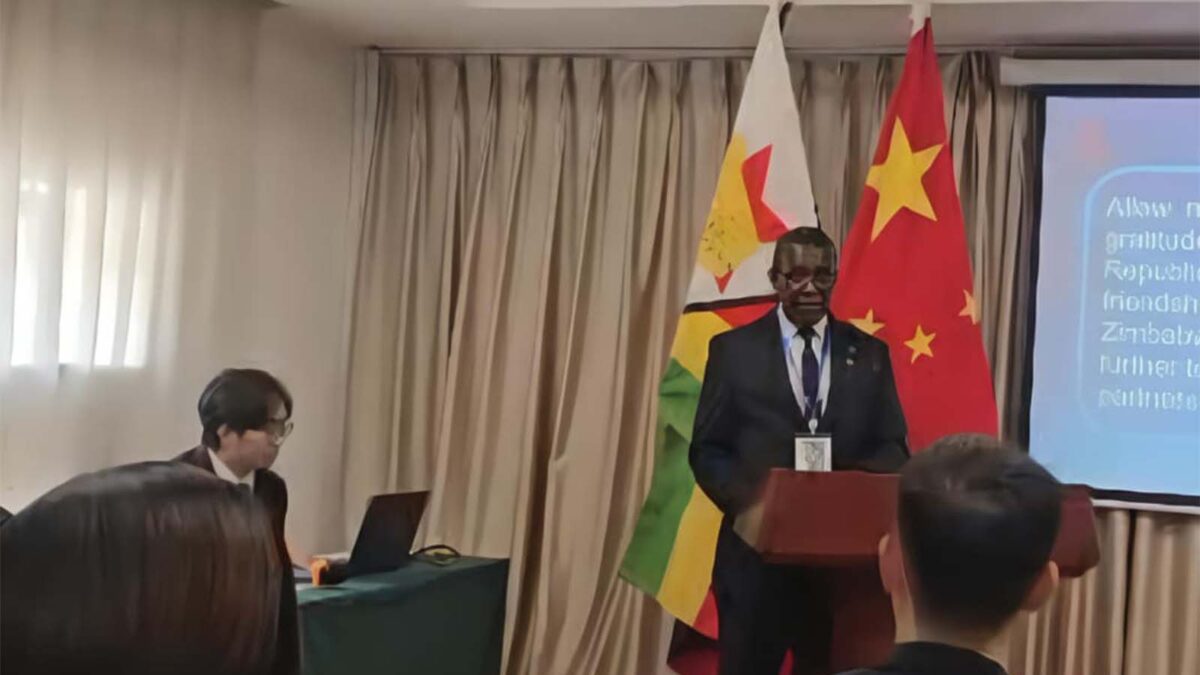
Speaking during the opening ceremony of a two-week seminar on public health management for senior health personnel from Zimbabwe here today, Dr Dhege said China’s experience in health systems strengthening, primary health care revitalisation, digital health and integrated disease control is globally recognised.
He said like many countries, Zimbabwe faces challenges that require innovative public health management and these include the double burden of communicable diseases such as cholera and Mpox and some non-communicable diseases.
“We are particularly keen to learn from China’s model of a centralized yet decentralised public health governance system,” Dr Dhege said.
More than 30 senior health personnel, who include Provincial and District Medical Officers, epidemiology, maternity and infant mortality specialists from all the country’s 10 provinces are attending the seminar which has been organized by the Academy for International Business Officials (AIBO) under China’s Ministry of Commerce.
As part of the programme, the officers will receive on-site training on exploration and practice in Building a Smart Health Care system at Beijing Tsinghua Changgung Hospital; Scenario-based Application of Emergency Medical Rescue Equipment at Beijing ESH Electronic Technology; lectures on China’s Immunisation Rules and Vaccination and Surveillance and early Warning of infectious Diseases in Chinese Medical Institutions.
There will also be visits to the cities of Hangzhou and Shaoxing in Zhejiang Province.
In Hangzhou, the capital of one of China’s richest and most industrialized provinces, Zimbabwe’s medical team will learn about International Management Experience of China’s pharmaceutical Supply Chain at Zhejiang Medicines and the Development and Promotion of Point-of-care Testing Technologies at the Primary Care level at Hangzhou Ustar.
Another site visit to Hangzhou AllTest Biotech Company will expose the medical personnel to Experience in Building a Product Line for Rapid Screening of Multiple Diseases.
In Shaoxing, the team will visit Shaoxing Fuqing Sanitary products to get an insight into the management of public health emergency supplies.
Dr Dhege said he was confident that the knowledge and experiences gained by the team will be directly applied to their stations when they return home.
“We are confident that the programme will further strengthen bilateral cooperation and contribute to enhancing public health management in Zimbabwe,” he said.
Dr Dhege expressed gratitude to the Chinese Government for the long-standing friendship and unwavering support to Zimbabwe’s health sector, saying the seminar was further testament to the comprehensive strategic partnership between the two nations.
“The training comes at a pivotal time for Zimbabwe. As you may be aware, Zimbabwe is implementing the National Health Strategy (2026-2030), whose core thrust is to build a resilient, equitable and high-performing health system.
“We come to China to learn, but also to share. Zimbabwe has made notable progress. We have strengthened our surveillance and emergency preparedness; our Public Health Emergency Operations Centre recently led a multisectoral simulation on Viral Haemorrhagic Fevers.
“We were honoured to be recognised as a Social and Behaviour Change Champion in Africa for our work in Behavioural Intelligence and Infodemic Management. Our National Institute of Health Research, established in 1939 as the Blair Research Institute, continues to be the backbone of health research and vector surveillance,” he said.
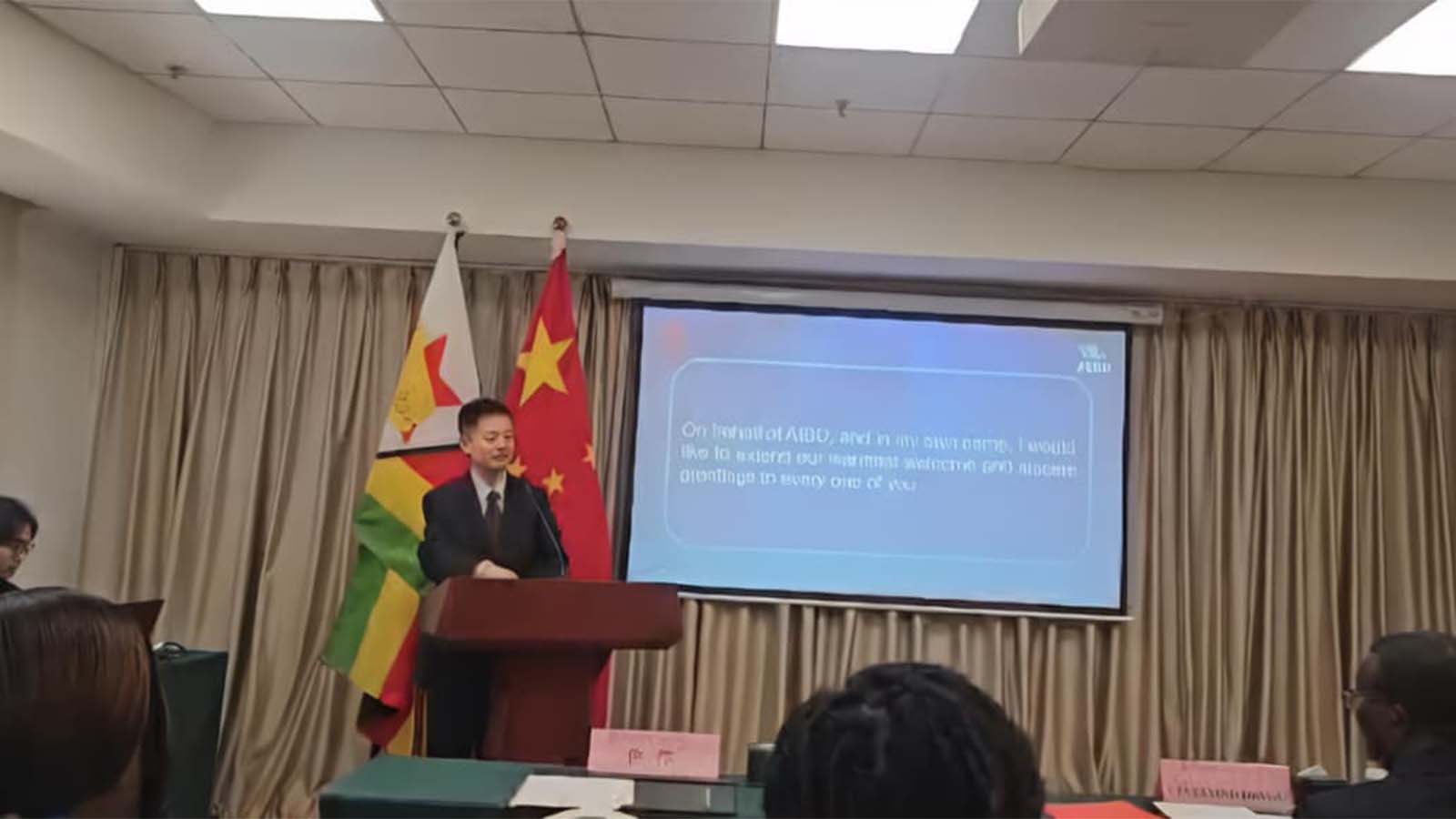
In his welcome remarks, AIBO Director, Mr Wu Wei, said China and Zimbabwe have always stood together as trusted partners, bonded by mutual respect and benefit.
He said Sino-Zim relations have become a fine example of South-South cooperation, with ties between the two countries dating back to the liberation struggle.
Over the years, China has sent medical teams to Zimbabwe, including a team of corps who built and equipped Mahusekwa Hospital in Mashonaland East Province.
“In March 2026, a Chinese medical team arrived in Zimbabwe to continue this long-standing commitment. What started as on-site clinic assistance has now evolved into a comprehensive partnership (China-Zim Friendship) covering clinical services, health care developments, medical equipment supplies, personnel training and technical exchange,” said Mr Wu.
“This seminar aims to help Zimbabwe improve its level of medical and health care, enhance disease prevention and clinical capacity, refine the monitoring of early warning mechanisms, strengthen the emergency response system and enhance your ability to deal with major public health emergencies, thus building Zimbabwe’s health system, promoting a global community of health for all and generally safeguarding human well-being as well as local public health security”.