Online Reporter
Vusumuzi Dube, Deputy Radar Editor
ZIMBABWE has emerged as the leading source of foreign qualification evaluation applications received by the South African Qualifications Authority (SAQA), accounting for more than 40 percent of all enquiries, officials have revealed.
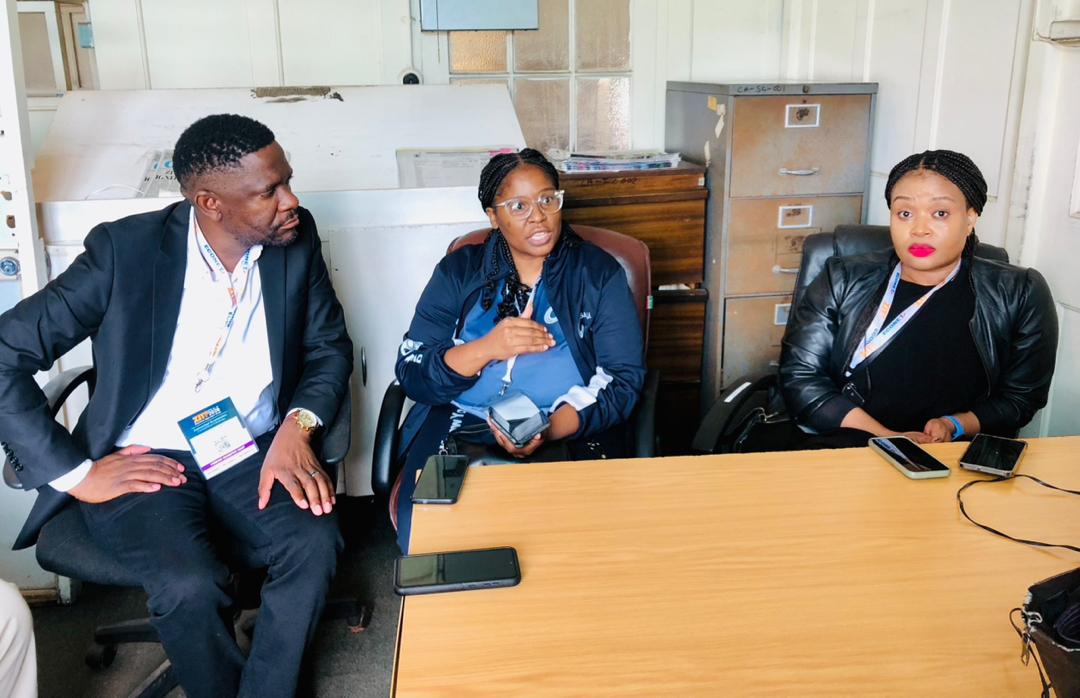
SAQA officials made the remarks on the sidelines of the ongoing Zimbabwe International Trade Fair, where the authority is exhibiting for the first time as part of efforts to strengthen collaboration with Zimbabwean institutions and streamline qualification verification processes.
Speaking in an interview, SAQA Manager for Authentication Services, Phumzile Mtsweni said Zimbabwe tops the list of the top ten countries from which the authority receives applications for qualification evaluations.
“So far, we have received over 20 000 applications. Zimbabwe is actually number one among the top ten countries from which we receive applications. India is second, but Zimbabwe leads by a wide margin,” said Tsweni.
She said preliminary figures show that Zimbabwe accounts for just over 40 percent of SAQA’s total applications.
“I estimate that Zimbabwe accounts for more than 40 percent of the applications, although I still need to confirm the exact figure,” she said.
The SAQA officials said the majority of enquiries come from Zimbabweans seeking to further their studies in South Africa, often through scholarships offered by South African institutions.
Senior Specialist for Communications and Advocacy, Nkosingiphile Nyalungu, said South African institutions are expected to recruit international students as part of their internationalisation strategies.
“Most of the enquiries we receive are from people who want to study in South Africa. Many mention that they have scholarships from South African institutions. Institutions in our country have memorandums of understanding with institutions in Zimbabwe, as well as with South Africa’s Department of Higher Education and Training. Each institution in South Africa is expected to recruit at least five percent international students,” said Nyalungu.
She said SAQA’s participation at the trade fair was aimed at helping prospective students understand the country’s qualifications framework and how their academic credentials can be evaluated.
“Our main objective is for people to understand that we are the regulator of qualifications in the country. We ensure that qualifications are of good quality and aligned with global standards so that graduates can move easily and access opportunities internationally without unnecessary challenges,” she said.
SAQA Head of Communications and Advocacy, Dr Rakgwatha Mokou noted that many Zimbabweans approaching their stand were already highly qualified and seeking to pursue postgraduate studies.
He said Zimbabwean applicants were increasingly pursuing qualifications in specialised fields where South Africa faces skills shortages.
“Most Zimbabweans who visit our stand are already highly educated. Many are interested in pursuing master’s degrees or doctoral studies. The level of interest is very high, and many of these applicants possess scarce and critical skills that are in demand in our country,” said Mtsweni.
He said SAQA was also using the trade fair to build stronger institutional ties with Zimbabwean universities and regulatory bodies in order to reduce delays in evaluating qualifications.
“That is why we are here, to engage with our quality assurance partners and strengthen cross-border collaborations. We want to remove any barriers in the verification and evaluation of qualifications,” Dr Mokou.
As part of this engagement, SAQA has already held meetings with several Zimbabwean universities and is set to meet more institutions and regulators.
“On Wednesday, we met with Solusi University and Lupane State University, and on Thursday morning we were with the University of Zimbabwe. On Friday we are meeting with ZIMCHE, NUST, and Gwanda State University,” said Dr Mokou.
The officials revealed that the engagements are aimed at improving communication among institutions involved in qualification verification and ensuring smooth student mobility between Zimbabwe and South Africa.
“The goal is to build strong collaboration and maintain open communication among all institutions involved. Since we evaluate qualifications, it is important that we work closely with the universities and with ZIMCHE. It is a three-way partnership, and there must be continuous engagement,” said Nyalungu.
SAQA also urged Zimbabweans seeking study and work opportunities in South Africa to focus on fields where skills are urgently needed.
“We advise Zimbabweans not to pursue qualifications that are not in demand in South Africa, as that may lead to frustration. Instead, they should focus on scarce and critical skills, because applicants with those qualifications are more likely to receive visas and work permits quickly, as they are filling a national need,” said Mtsweni.
Among the key sectors currently in demand are engineering, information communication technology, health sciences, as well as technical and vocational education and training.
The authority said its participation at the trade fair reflects South Africa’s commitment to strengthening regional education systems while ensuring that students and skilled professionals are equipped to move seamlessly across borders.