

 admin
admin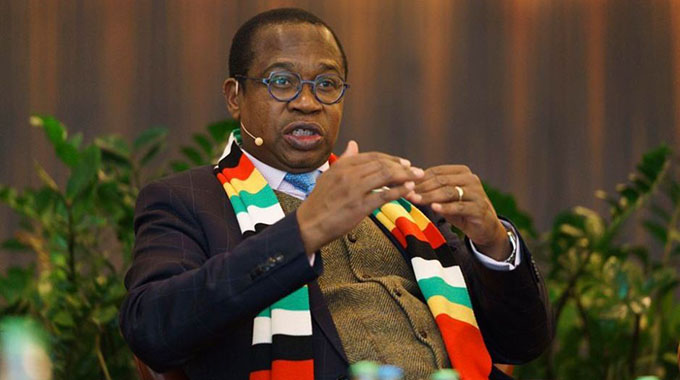
Tawanda Musarurwa
Zimbabwe is continuing to meet its external debt obligations despite present fiscal constraints and the devastating impact of the Covid-19 pandemic, Finance and Economic Development Minister Mthuli Ncube has said.
External debts are owed to multilateral institutions namely, the World Bank, African Development Bank and the European Investment Bank and bilateral creditors.
Official figures from Treasury show that multilateral development banks are owed a total of US$2,6 billion (accounting for 32 percent of the total public and publicly guaranteed external debt), of which the World Bank Group is owed US$1,5 billion, the African Development Bank US$705 million, European Investment Bank US$330 million and other multilaterals US$66 million.
And the total bilateral external debt amounted to US$5,48 billion (accounting for 68 percent of the total public and publicly guaranteed external debt), of which Paris Club creditors accounted for US$3,39 billion, and non-Paris Club, US$1,58 billion.
Around 70 percent of that debt consists of arrears and penalties for non-payment.
“In terms of public debt, we have just over $12 billion in domestic debt, and then our foreign debt still remains at US$8,1 billion.
“We are continuing to make our payments in terms of token payments to the World Bank, African Development Bank, European Investment Bank and to the China Exim Bank. We are staying within our commitments on that,” said Minister Ncube during an online post-mortem mid-term fiscal policy meeting yesterday.
He highlighted that although payments to other lenders were on-going, China had granted Zimbabwe a postponement in payments.
“For China we have received a moratorium, which is actually complying with the G-20 resolutions, that between now and December they can give us a stay of execution in terms of those payments. But we will resume payments again once we are supposed to resume.”
Earlier this year, the G-20 requested multi-lateral lenders to explore options for suspending debt service payments while maintaining the International Bank for Reconstruction and Development (IBRD)’s and the International Development Association (IDA)’s financial capacity, ratings, and low cost of funding.
The Covid-19 pandemic has affected most economies and has significantly affected many countries’ ability to service external debts, which may have a cyclical effect on the long-term performance of these economies.
“The impact (of Covid-19) globally has been devastating economies. We have seen the growth rate initially set at around 3 percent having been reviewed to around -8 percent for developing economies. But we are optimistic that this will be a V-type growth scenario, that means there might be a big deep this year and then we can expect a recovery next year. And for Zimbabwe we expect the same,” said the Treasury boss.
Experts say unsustainable public debt levels can have a negative impact on capital accumulation and growth through higher longer-term interest rates, inflation and greater uncertainty about economic and fiscal policies, among other factors.


 Online Reporter