

 Chronicle Editor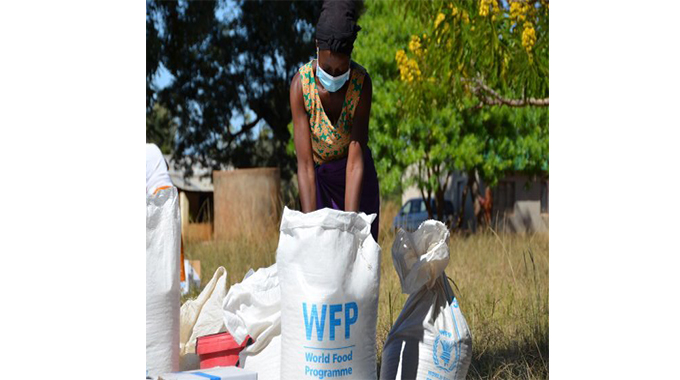
Peter Matika – [email protected]
GOVERNMENT contributed 4 400 tonnes of maize to the United Nations World Food Programme (WFP) on Monday as part of its obligation of ensuring that refugees living at Tongogara Refugee Camp in Chipinge are food secure.
The contribution is in response to the United Nations Secretary-General Antonio Guterres’ call for member countries to pledge humanitarian assistance.
In a statement, Permanent Secretary in the Ministry of Public Service, Labour and Social Welfare Mr Simon Masanga said Zimbabwe is committed to fulfilling’s its international obligation to protect refugees and asylum seekers.
“This contribution is a clear sign that the country walks the talk. The Government appreciates the partnership with the World Food Programme in ensuring that refugees and asylum seekers domiciled in Zimbabwe are food secure,” he said.
“Under the partnership, WFP will cover the costs of transport, storage, handling, milling and fortification of the maize with funds from international donors. A first batch of 2 170 metric tons will be uplifted in the coming weeks,” he said.
Permanent Secretary for Lands, Agriculture, Fisheries, Water and Rural Development Dr John Basera recently said the country is now food secure after achieving bumper maize and wheat harvests in the last few cropping seasons.
The country achieved a milestone in wheat production, after attaining a record-breaking 375 000 tonnes of wheat and 1,5 million tonnes of maize last season.
WFP representative and country director in Zimbabwe, Ms Francesca Erdelmann said no matter the circumstances that may have pushed refugees to seek asylum elsewhere, the UN agency would continue working and assisting Zimbabwe.
“Around the world, refugees are living longer away from home, more than ever before, so we are heartened to see that countries like Zimbabwe are putting forward solutions and working to ensure that refugees have a better life,” she said.
Zimbabwe has shown continued solidarity towards refugees, hosting families who have been forced to leave their countries since 1984.
Tongogara Refugee Camp was established to serve refugees fleeing from the Mozambican civil war, which erupted in 1977.
The refugee camp now caters to people of different ethnicities affected by conflict, especially those from Democratic Republic of the Congo and Mozambique.
Ms Erdelmann said WFP provides food assistance to 12 000 refugees living at the camp every month.
“Refugees will receive hybrid rations and cash, designed to meet the daily nutrient requirements. WFP has been present in Zimbabwe since 1982 and started food distribution activities in the country in 2002, during the southern Africa drought,” she said.
“WFP’s activities are aligned to Zimbabwe’s national priorities in areas of food and nutrition security.”
Government has initiated public-private sector engagements to ensure its projections of a harvest of about 3 million tonnes of maize from the current season are realised.
The country has recorded an improvement in food security over the past few years, a development which dovetails with Vision 2030 which seeks to ensure the country becomes a middle-income economy.
According to the Zimbabwe Statistics Agency (ZimStat), the percentage of households with improved drinking water sources at national level stands at 84,4 percent.
This follows reports that crop conditions have significantly improved following favourable rainfall patterns in many parts of the country, a development which will see an improvement in access to food.
Food security occurs when all people, at all times, have physical and economic access to sufficient, safe and nutritious food that meets their dietary needs and food preferences for an active and healthy life.
Last month President Mnangagwa said despite the negative effects of climate change that are worsening and intensifying water-related disasters, creating complex challenges and threatening lives and livelihoods, particularly for the vulnerable globally, Zimbabwe has developed various strategies to ensure water availability and build resilient agricultural systems.
The strategies have now enabled the country to become food secure again after decades of perennial food insecurity.



 Online Reporter