admin
admin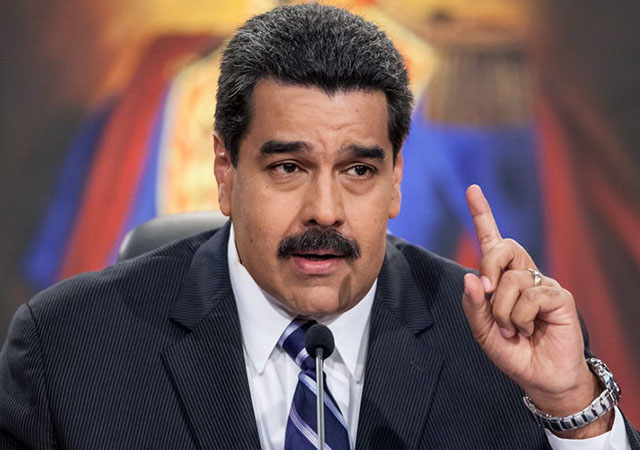
@JAMWANDA2 ON SATURDAY
Re-reading El LIBERTADOR
In the wake of the just-ended elections in Venezuela, which elections confirmed the supremacy of the Bolivarian Revolution, I instinctively found myself re-reading EL LIBERTADOR: The Writings of Simon Bolivar.
It is not a staple reading for most Zimbabweans, inured as most are to western thinking and writings. But that is me: a restless soul always seeking to break the integument of prejudice, custom and colonially cultivated reading habit, in search of new horizons, thoughts and sensibilities.
The high priests of revolutions in the Americas
Simon Bolivar occupies a proud pedestal in the history of the Americas. Alongside Jose Marti, the iconic revolutionary so revered by most Cubans, and Sandino, another great revolutionary from the Americas who inspired the Sandinistas of Nicaragua. Together, these three iconic figures are credited with founding and fostering the spirit of resistance to Spanish settler colonialism, thereby inspiring the militant quest for freedom and Independence for that effervescent Hemisphere.
Bolivar surpasses Marti and Sandino in that he straddles a whole subcontinent of South America, giving him a certain transcendentalism rarely witnessed or enjoyed in history. His writings are just as expansive, even addressing situations found in the Caribbeas during those early, dark days of the 19th Century. It is a wonder that with the state of technology then, Bolivar’s writings routinely included questions he fielded from as far afield as Jamaica, even though his base was the rugged hills and jungles of faraway Caracas, in Venezuela.
Challenging Venezuelan sovereignty
As I write this piece, Venezuela is going through the last motions of warding off a concerted and determined onslaught from western imperialism, as usual led by the United States of America, which sees South America as its backyard. Venezuela is very rich in oil and other minerals. The vehicle and justification for this latest assault on this land of Bolivar and Chavez, is the just-ended polls which, to the chagrin of American imperial interests, went against their protege, one Edmundo Gonzalez Urrutia, backed by a disqualified woman opposition candidate called Maria Corina Machado.

Maria Corina Machado
That result which was announced by the country’s electoral body, detonated a wave of opposition supporters who poured into the streets of major cities of Venezuela, including the capital Caracas, even threatening to storm the Presidential palace. For a few days, Venezuela seemed on edge, with claims that the Venezuelan Army had abandoned the President for the opposition.
Of course that was not true; the Military remained loyal, demonstrations were in fact sporadic and short lived. But such lies and exaggerations have always been an integral part of the onslaught.
Installing a second Guido
As I write, the American Government has recognized Edmundo Gonzalez Urrutia as the “President” of Venezuela. This is the second time America has done so in the same country and for the same reasons and pretexts. The first time was a few years back when America “installed” their puppet called Guido, hoping a putsch against President Maduro, the winner of the latest polls, would be pushed out from the streets. The so-called Color Revolution, preferably aided and abetted by the Military, has been America’s strategy against Venezuela, including during the heady days of late Chavez.
America’s rich comprador
Certain features make the situation in Venezuela particularly resonant, especially with us here in Southern Africa. The threat of street action — demonstrations in our lingo — always looms large with every election in that subregion, as in every country here in our Southern African Region. More so here in Zimbabwe, where imperialism looks at means beyond the ballot box to achieve change, their kind of change.
That unlawful avenue forges some kindred spirit between us and the equally besieged Americas. More pronounced this time as before has been the role of corporate interests in Venezuelan politics. Historically Venezuela has always been a playground of western and American capitalist magnates, starting with Spanish conquistadors. These interests have straddled across sectors, principally in the energy sector for which Venezuela is especially renowned.

Simon Bolivar
To that end, they have created a strong comprador class inside Venezuela and elsewhere in South America. A rich comprador bourgeois class silhouetted by a vast underclass surviving in abject poverty, lichen-like clinging on mountain slopes of Caracas. They are denizens of Caracas’ sprawling eyesores, better known as favelas. The Bolivarian Revolution has begun tackling these, returning these long forgotten humans to some modicum of decency. These are Venezuela’s teeming millions, themselves the backbone of Maduro’s party, and defenders of Simon Bolivar’s vision for the Americas.
Heart of the Americas
That rich local intermediary comprador class, whose masters are in US heartland principally Chicago, provoked radical left-wing politics in Venezuela. But it is also the same class which has produced right-wing political opposition to the Bolivarian movement, always getting financed and politically backed by America’s rich absentee magnates, and of course by the American Government itself. Venezuela, as Simon Bolivar always stressed, is the heart-chamber of the Americas and the intrusive politics which have disfigured that subcontinent.
A vast cast against the Bolivarian Revolution
Here in SADC, we have just seen how corporatized politics in South Africa can easily buy off or defeat a revolution through the ballot. The Oppenheimers, supported by a concatenation of myriad overseas interests, divided and dismantled the ANC and its traditional power base, to force it into a diluting coalition with right-wing Boer political formations created for the purpose. Today South Africa seems set to be another country.
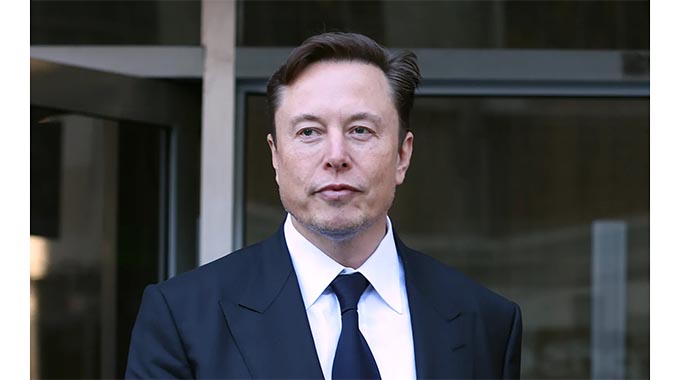
Elon Musk
In Venezuela itself, it was interesting to see the owner of X, Elon Musk take an irrational activist role in the politics of that country, including threatening to overthrow its government. Musk’s origins are South African. We saw more. We witnessed a sleek use of sports celebrities-turned-activists into some formidable anti-Bolivarian, pro-putschist movement against President Maduro.
We also saw CIA-operatives casting aside any pretenses to cover and subtlety, to openly use social media to contrive and engineer a tipping point in Venezuela.
Tri-continental linkages
Above all, we saw the vast tri-continental linkages and networks co-joining Venezuela in the Americas, Ukraine in Eastern Europe and Israel in the Middle East, all to suggest a cross-hemispheric strategy and struggle which harkens to Cold War days. This does suggest resurrection of old geographies in support of new struggles for global hegemony in the wake of a multipolar world order which de-centers the US. An overstretched United States of America today uses proxy wars and proxy color revolutions across continents to defend its hegemony.
Again South Africa docks this into our Southern Africa: the Struggle of Palestinians and South Africa’s role in using international law to aid and abet that Struggle, coupled with her memberships to BRICS, made its electoral process a cynosure and perfect storm for global struggles for hegemony.
Sub-Regional treachery
In Venezuela too, we saw the infamous and shameful role played by the subregional organisation, OAS, in seeking to provide a stool and parapet to politics of foreign intrusion in that country. The OAS decided against the sitting Bolivarian government, in the process providing a plausible beachhead to United States of America’s long-held wish and urge to intrude. It took the President of Columbia – until now a very conservative, pro-American country – to challenge and denounce OAS’s falsely censorious indictment of Venezuelan polls.

President Putin
Backed of course by President Putin who quickly recognized the winning Maduro governing party. Following which American propaganda swung into full action, including claiming Maduro was backed by Wagner, itself a preferred bogey summarizing the ogre of Putin’s so-called world-wide military deployment, “in support of authoritarian regimes”, to use US favorite shorthand and lingo. I don’t need to remind you of how that parallels what happened here during our August 2023 polls.
Of course the bulk of SADC opposed the intended machinations which the Mumba report was meant to set in train, thus frustrating the budgeted goal.
Imperialism, the only constant
As with Zimbabwe, the Carter Centre sat at the core of American propaganda against the Maduro party and government. Yes, the same Carter Centre we invited here in a sign or gesture of goodwill, but which ended up creating a whole digital network for subverting our electoral process.
Thankfully, here our security apparatus delivered, frustrating the intended subversion. Buoyed by previous goodwill, the Maduro Government had naively invited the Carter Centre, without realizing imperialism is the only constant; alongside its proxies, it waxes and wanes depending on extant interests.
Learning from Kenya
As SADC congregates in Harare, Zimbabwe, in less than two weeks’ time, our subregional body, does so against a fraught backdrop, and has many lessons to draw. To its north are salutary lessons from East Africa Community and ECOWAS. In East Africa, Kenya which is the largest economy in the subregion, was recently convulsed by some multi-dimensional internal and external disequilibria.
All this in spite of leaning on the world’s sole superpower. Except that halo failed to mesmerise angry, young Kenyans who still felt misgoverned and run from abroad. Kenya also showed the risks of hoping to placate angry demos through concessions to demands and pressures made and loaded from the streets.
The authority of the State is never negotiable, divisible; it cannot and should never be trammeled by yells and hubbub from alleys. Once in such a situation, a challenged State must show resolve and appetite to govern firmly through enforcement of law and order.
The alternative is a bloodfest we witnessed in that sisterly country. And to good measure, Uganda showed exactly how to behave when confronted by such mayhem. Again as we saw in Kenya, erstwhile western friends do not take long to perform a summersault in favour of any winning side. Like already said, imperialism and imperialist interests are the only constant.
The bane of ethnic nationalism
In West Africa SADC faces two salutary lessons: one in-country, another sub-regional. Nigeria is on the brink, with fatal clashes recorded across regions severed by sectarian, tribal interests. Left unattended, Nigeria risks dissolving before fissiparous tensions.
The country has a bad past on that score, something we in SADC need to take particular note of. We are a region of cross-border, interlocking tribal affinities. Where colonial history bequeathes such a potentially divisive, anti-nation tribal mosaic, it is prudent to evolve a collective, subregional form of nationalism and political arrangement where all roam, mix and mingle without any sense of let or hindrance.
This is what a Community is all about: a broader polity in which base, antediluvian instincts of xenophobia give way to larger human vistas. Where this fails – Congo is an example – we all get embroiled in politics of ethnic nationalism.
A new sub-regional compact
At a sub-regional level, ECOWAS faces the grim prospect of reversing its very building blocks as envisaged under the Lagos Plan of Action. Three Francophone States – Mali, Burkina Faso and Niger – have now formed a bloc-within-a-bloc, at least for now. These three post-coup, young and radically-led States have threatened to leave ECOWAS altogether.
Significantly, this is not just the coming together-and-apart of mere black sheep; it is the coming together of countries espousing a strong anti-colonial, anti-French imperialism credo which resonates with many in Africa. Which is electable as we saw subsequently in Senegal.
The lesson to ECOWAS, and to the rest of Africa, SADC included, is clear: while a shared colonial experience created a basis for common struggles against colonial dominance, a new post-colonial pact and compact is now needed to keep disparate Africa glued, a compact wholly founded on a credo of a new, sovereign Africa which no longer dangles on colonial coattails.
Which determines its own trajectory through sovereign self-rule. This is a fraught governing credo, but clearly one with potent appeal to Africa’s frustrated younger generation long hard done-by because of neo-colonial rule. A new sub-regional compact: political economic, juristic, social and cultural. This is a far cry from donor-driven visions and values.
Recalling the Cartagena Manifesto
Back to Simon Bolivar. In 1812 Bolivar made an address we now know as “The Cartagena Manifesto”. It was a diatribe against the then rulers of Venezuela whom he saw as enfeebled by starry foreign ideals quite alien and inimical to the needs and temperament of the Americas.
Ideas which whilst beautiful, could not ward off aggressive Spanish colonial conquest and expansionism. Founded on Western liberalism, the reigning governing philosophy apotheosized individual liberties, and a loose, city-centric federation at a time when the subcontinent faced implosive, internal centrifugal politics which militated against common mobilization and resistance to Spanish colonial conquest.
Both threats required a strong, centralized State backed by a strong, standing army which neither Venezuela nor the Americas had, or were prepared to found. Resultantly, the Spanish armada just sailed through, unopposed. This made Simon Bolivar livid, leading him to a painful conclusion that: “Our division, not the Spanish forces, reduced us to slavery.” He added, in obvious anger: “By stipulating that each man should rule himself, this idea [of liberalism] undermines social pacts and constitutes nations in a state of anarchy . . . Each province governed itself independently, and following this example, each city claimed equal privilege, citing the practice of the provinces and the theory that all men and all peoples have the right to institute whatever form of government they choose.”
Under that order the obligations of citizenry, including the key obligation to raise defences against foreign occupation, got lost. The Americas fell to Spain, by any measure a small, poor and weak country. He added: “The party spirit prevailed in all matters, causing more chaos than the events [of Spanish invasion] themselves.”
Constitutional Clause 59
Gentle reader, I write this piece amidst threats of opposition-led insurrection which is meant to spoil Zimbabwe’s delivery of a peaceful 44th SADC Summit slotted for mid-August. To justify this insurrection which the opposition couches in the name and language of our 2013 Constitution, the opposition draws authority from our Bill of Rights, specifically Section 59 which they avow grants them the right to demonstrate and petition!
Which it does, by the way, the same way liberal laws of Bolivar’s Venezuela guaranteed timeless civil liberties, even as Spain threatened that very Constitution. To claim rights under Section 59 of our Constitution, these opposition elements who fondly address themselves as “the Nation”, and as “the Citizens”, have enlisted the financial support of USAID and Brenthurst Foundation presumably to reward all those ready to claim their rights under Section 59!
They have already got the backing and automatic sympathies of United States of America, United Kingdom, the European Union, and an arm of the United Nations to do with human rights. All this evolving ethos of support does not bother them; in fact it emboldens them.
Claiming this one right only during SADC Summit
A precursor to claiming those hallowed rights under Section 59 of our Constitution was a campaign throughout SADC and beyond to stop President Mnangagwa from taking over the chairmanship of SADC – which is rotational. By extension, this means stopping Zimbabwe from hosting SADC, itself an inherent right and obligation of any member-state.
From their reasoning, there is, it seems, a causal link between Zimbabwe’s assumption of SADC Chairmanship – which they deem illegitimate – and derogation from, or to put it positively, their urge to claim their rights under Section 59! This is why these inherent rights become only claimable about the same time SADC Summit convenes, and not any time before or any time after.
This connection and timing for claiming rights is made with the vehemence which borders outright fundamentalism: it is either now during SADC Summit or never!
Sonorous title of Human Rights Defenders
Some go as far as to piously avow their readiness to lay down their lives during the Summit period, itself only lasting about two days at most, unless their right to demonstrate is granted. So, Section 59 of our Constitution has become the clause of seduction, fanatical courage and sacrifice!
Those ready to die for Section 59 relish bedecking themselves with the sonorous and ostentatious title of HRD! Not Human Resources Department in the language of the science of Administration; rather HRD means Human Rights Defenders, apparently a title only claimable and appropriate when Zimbabwe is about to assume chairmanship of SADC!
Behold a classless society!
I am reminded of a paean which Dr Nkosazana Zuma once showered Zimbabwe under the First Republic, and in the wake of our early transition to the United States Dollar currency regimen. She was still foreign minister of South Africa. Speaking with great aplomb and a big tongue in cheek at a SADC Summit hosted by South Africa, her country, she introduced Zimbabwe as the first ever country since Karl Marx, Frederick Engels and Vladimir Lenin’s revolutionary treaties which included the Communist Manifesto and Lenin’s What is to be done, first ever country to achieve “a classless society!” How so, the stunned Summit wondered.
“Well, in Zimbabwe,” she continued, “I am properly advised, everyone: from the President down to the waged peasant, now monthly earns USD100!” The whole Summit, late President Mugabe included, burst into a lasting cacophony. She was making reference to Zimbabwe’s uniformly frozen wage level of USD100 for everyone in waged employment, at the start of our dollarisation in 2008/9.
Eureka!
On the eve of another SADC Summit, the 44th one this time, Zimbabwe is about to register another wonder and first since the birth of the first Constitution to govern human affairs: we have invented, and with piety placed ourselves under a One-Clause Constitution by which we pledge to govern ourselves for all time! Section 59, Eureka!


 Online Reporter