Online Reporter
Nqobile Bhebhe, Senior Reporter
AS the lights dim on the 66th edition of the Zimbabwe International Trade Fair (ZITF), it is the people, not just the deals, who define the fair’s final chapter
The last footsteps out of the exhibition gates told their own story.
As the country’s premier trade showcase drew to a close yesterday, the exhibition stands began to fall silent, banners fluttered a little less boldly in the late afternoon breeze and the hum of deal-making slowly gave way to something more reflective, the noiseless satisfaction of a week that had meant different things to different people.
For six days, the grounds in Bulawayo had been a meeting point of ambition, culture and commerce. But as the curtain came down, it was the human stories, the handshakes, the hopes, the small wins and big dreams, which lingered longest.Throughout the week, the ZITF had pulsed with life under the theme “Connected Economies, Competitive
Industries.” Yet beyond the polished exhibition stands and high-level engagements, it was the lived experience on the ground that gave the event its soul.
On the final day, that spirit was unmistakable. Families moved leisurely between pavilions, reluctant to let go of the experience. Children with brightly painted faces clutched balloons and sugary treats, their laughter cutting through the thinning crowds. Nearby, vendors called out to passing visitors, squeezing in last-minute sales as the clock edged closer to closing time.
For many exhibitors, the end of the fair was not an ending at all, but a beginning. Inside one of the manufacturing halls, conversations that started as casual introductions had matured into firm prospects. Business cards exchanged earlier in the week were now accompanied by promises of follow-up meetings, factory visits and signed contracts.
In the ICT pavilion, where innovation had drawn constant crowds throughout the week, Ms Susan Mathuthu reflected on a fair that had stretched her company’s horizons beyond Zimbabwe’s borders.
“We connected with buyers from the region and beyond. The discussions we had here are promising and could significantly grow our export footprint,” she said.
For small business owners like Mr Gilbert Moyo, the fair was less about immediate deals and more about visibility and stepping onto a bigger stage.
“For us, it is about visibility and connections. We have managed to meet potential partners and distributors, which is a big step for our growth,” he said.
Across the grounds, foreign exhibitors were arriving at similar conclusions. For many, Zimbabwe had revealed itself not just as a market, but as a potential partner.
“The organisation was excellent and the turnout was strong. We have had constructive engagements with local companies and are exploring possible collaborations,” said an exhibitor from Botswana, Ms Keletso Moetsi.
Even visitors who are often overlooked in the narrative of trade fairs, played a central role in shaping the atmosphere.
For Ms Nomsa Ndlovu, who was attending the ZITF for the first time, the experience had shifted perceptions.
“There is a lot of innovation happening in Zimbabwe. The exhibits show that our industries are modernising and adapting to global standards, which is important for exports,” she said. Ms Ndlovu noted that the overall presentation of the fair sent a strong signal to the international community. “I am impressed by the level of organisation and the quality of products.
It sends a strong message that Zimbabwe is open for business and capable of producing for international markets,” she said. From value-added agricultural products to sleek manufactured goods, many exhibits pointed to an economy gradually redefining itself by moving beyond raw exports towards finished, competitive products. Entrepreneur, Ms Chipo Mlambo, saw that shift clearly.
“You can see a shift from raw exports to finished products. This is what will make Zimbabwe more competitive and create jobs,” she said.
Mr Tawanda Moyo, an exhibitor from Harare, said the diversity and standard of products on display were impressive.
“What we are seeing here shows that Zimbabwean companies can compete with the best in the region. The packaging, innovation and quality of products are at a very high level,” he said.
The International Business Conference (IBC), in particular, stood out as a key highlight, drawing policymakers, captains of industry and investors who deliberated on issues ranging from industrialisation and value addition to regional integration and competitiveness.
These engagements enriched the fair by providing context to the innovations on display, while also shaping the direction of future investments.
Observers noted that the strong participation and positive outcomes from this year’s edition signal growing confidence in Zimbabwe’s economic prospects and its capacity to attract investment.
Beyond the exhibition halls, the fair unfolded as a cultural tapestry. Music spilled from various stands, drawing crowds into spontaneous moments of dance and celebration. Traditional performers shared space with contemporary artists, blending heritage with modern expression.
The result was an atmosphere that felt less like a conventional trade fair and more like a living, breathing marketplace of ideas and identity.
At the Zimbabwe Tourism Authority (ZTA) stand, the story was told through taste and experience. Visitors sampled local dishes, explored destinations and immersed themselves in the country’s rich cultural offering.
The ZTA stand, which showcased Zimbabwe’s rich culinary heritage alongside its tourism products, attracted huge crowds of visitors who showed keen interest in the country’s gastronomy offerings.
Notably, some firms used the platform to showcase their pipeline projects, giving potential investors and partners a glimpse into upcoming developments across sectors such as manufacturing, energy, infrastructure and technology.
Meanwhile, just outside the main exhibition zones, another economy was thriving. Food vendors, informal traders and small-scale entrepreneurs rode the wave of human traffic, turning footfall into income. For many, the week had delivered rare and vital earnings.
From food stalls and beverages, accessories and handcrafted items, informal traders said the high visitor turnout created a rare commercial boom, with some describing the period as one of their most profitable trading windows of the year.
The food courts and informal vending bays were particularly active, with vendors selling traditional meals, fast foods and refreshments to continuous streams of visitors moving between exhibition halls.
Many traders said the combination of corporate delegates and families created a consistent demand cycle from morning to evening, ensuring uninterrupted sales momentum throughout the fair’s duration.
Vibrant colours and creative designs turned the exhibition grounds into a lively, family-friendly space, with vendors noting that the activity not only entertained children but also kept parents engaged longer at the fair, indirectly boosting overall spending across surrounding stalls.
The ZITF official opening by Botswana President Duma Gideon Boko had set the tone earlier in the week, highlighting the importance of regional cooperation and trade integration. His message of a rising Zimbabwe inspiring confidence across Southern Africa, seemed to find quiet affirmation in the activity that followed.
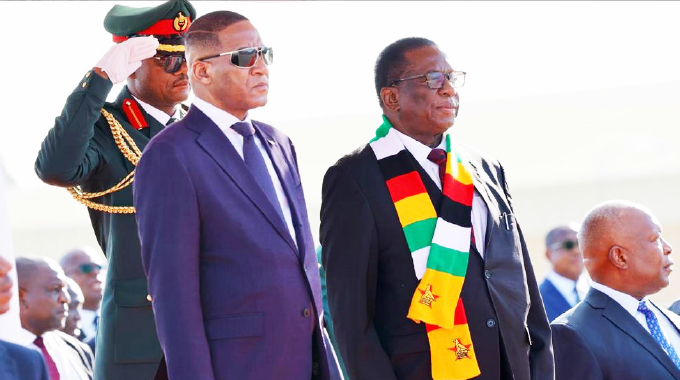
In his keynote address, President Boko hailed Zimbabwe’s economic resurgence, saying the country is a rising regional force whose growth is inspiring confidence across Southern Africa and the continent.
He commended Zimbabwe’s economy, which recorded a growth rate of 6,6 percent in 2025, marking a strong macroeconomic recovery and renewed investor confidence.
“We appreciate that Zimbabwe is rising. The Zimbabwean economy is now buoyant and this phenomenal growth inspires confidence not just in your country, but in the region and ultimately across Africa,” he said
Even the unveiling of ZITF Company’s proposed multi-million dollar retail project development is a step towards
transforming the grounds into a modern commercial hub, complementing ongoing efforts to develop the Zimbabwe International Conference and Exhibition Smart City (ZICES) and enhancing the long-term value of the fairgrounds.
Yet, in the end, the true measure of this year’s ZITF may not lie in statistics or signed agreements alone.
It lies in the teacher who discovered a new supplier, the entrepreneur who found a market, the child who left inspired and the vendor who earned enough to keep going.
As the gates finally closed and the last vehicles pulled away, what remained was not just the memory of an event, but the imprint of countless human connections, each one a small thread in the larger fabric of Zimbabwe’s economic story.
And in that sense, the fair never really ends.