Online Reporter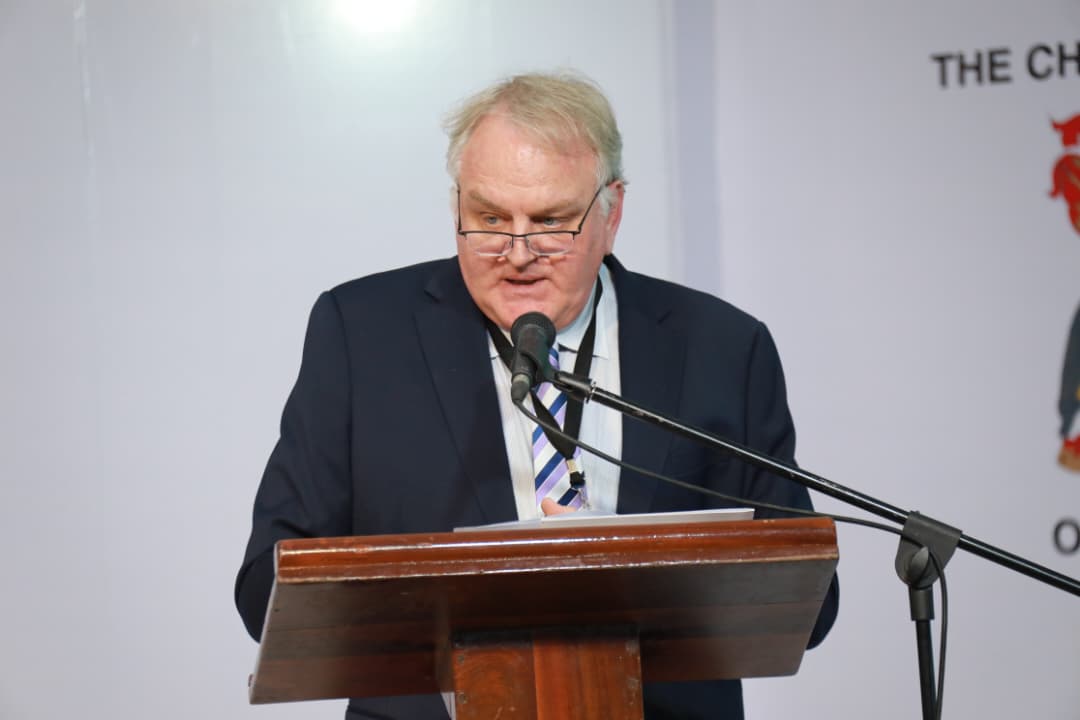
Sikhulekelani Moyo
Zimbabwe should position itself to attract a greater share of the US$12.4 billion invested globally in non-ferrous mineral exploration in 2025 if it is to unlock its vast geological potential and build the next generation of mines, exploration expert and Capella Minerals chief executive officer Mr Eric Roth has said.
Addressing delegates at the Mine Entra Exploration Symposium on Thursday, Mr Roth, a geologist with more than 35 years of international experience spanning Australia, Argentina, Turkey and Africa, said sustained exploration was the only way to replace depleting mines and secure future supplies of critical minerals.
“If we don’t make these new discoveries, where are the new metals going to come from? Where are the deposits of gold, lithium and copper going to come from if we don’t do this exploration,” said Mr Roth.
He said the responsibility for discovering new mineral deposits had increasingly shifted from major mining companies to junior exploration firms, which are prepared to undertake the high-risk, high-reward work of greenfields exploration.
“Junior companies today play a very important role because a lot of the major companies simply do not do this early-stage exploration anymore. It is obviously very high risk, but it’s also high reward,” he said.
Quoting data from S&P Global, Mr Roth said global non-ferrous exploration expenditure reached US$12.4 billion last year, excluding iron ore, with gold, copper and lithium accounting for the largest share of investment.
He said approximately US$4.5 billion of that total was invested by junior exploration companies, while Canada, Australia, the United States, Chile and Peru remained the world’s leading destinations for exploration capital due to their favourable geology and stable investment environments.
“The question is, out of all of this, how much should Zimbabwe be getting of this?” he said.
“There’s a very large pie of funds that are being invested in exploration. Of course, every country wants to do its best to attract investment.”
To illustrate the value of greenfields exploration, Mr Roth cited several internationally successful discoveries that have since become profitable mines.
These include Tropicana Gold Mine in Australia, which progressed from discovery to production in just eight years and now produces between 300 000 and 400 000 ounces of gold annually; Cerro Moro in Argentina, which reached production within nine years; and Hot Maden in Turkey, discovered in 2015 and now under development.
He explained that such projects are typically financed through equity investment because of the high risks associated with mineral exploration, noting that Cerro Moro alone required approximately US$30 million in drilling expenditure to define its maiden mineral resource before attracting about US$450 million to develop the mine.
Beyond generating returns for investors, Mr Roth said exploration delivers broad socio-economic benefits, including employment creation, infrastructure development, community empowerment and increased government revenue.
He highlighted Côte d’Ivoire as an example of a country that has successfully aligned investor and national interests through a partnership model in which the State automatically receives a 10 percent free carried interest, with the option to increase its stake to 25 percent.
“This creates partnership rather than simply relying on royalties,” he said.
Mr Roth said successful mineral exploration depends on three critical ingredients: favourable geology, a technically competent exploration team and a stable, supportive regulatory and community environment.
He noted that Zimbabwe already possesses world-class geological potential but stressed that policy consistency and investor confidence would be essential in attracting international exploration funding.
“There’s no country that’s perfect. Everywhere has its issues,” he said.
“We need to be thinking about what the conditions are going to be in 20 or 30 years’ time because that’s the timeline that we have to follow.”
Mr Roth said with the right policy framework, competitive investment conditions and sustained commitment to exploration, Zimbabwe has the potential to attract significantly more international exploration capital, transform its geological wealth into productive mines and secure long-term economic growth.