Online Reporter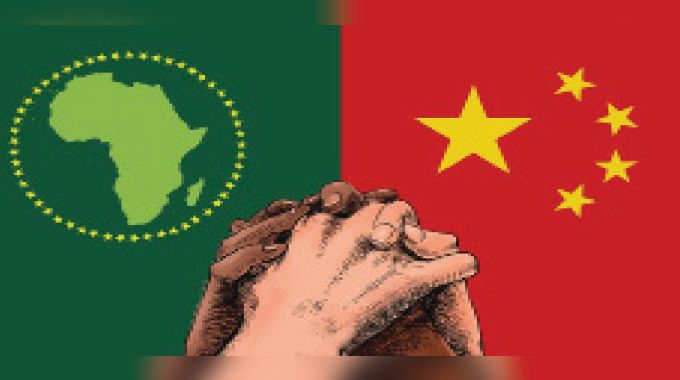
Mafa Kwanisai Mafa
IN recent years, Zimbabwe has increasingly become a battleground of ideas in a wider global struggle that has little to do with human rights or media freedom, and everything to do with power.
Under the banner of “exposing propaganda,” Western governments, NGOs, and donor-funded media networks are intensifying efforts to discredit China’s presence and influence across Africa. Zimbabwe, because of its long-standing relations with China and its resistance to Western domination, is firmly in their sights.
What is presented as concern about “information integrity” is, in reality, a co-ordinated attempt to weaken China-Africa relations and to reclaim Western ideological dominance over African societies.
Zimbabweans must approach these narratives with caution, informed by our own history of propaganda, sanctions, and regime-change operations.
Zimbabwe knows propaganda well. During the land reform programme, Western media portrayed the country as lawless and collapsing, while deliberately ignoring the historical injustice of land dispossession.
Sanctions were justified using the language of democracy and human rights, yet their real objective was to punish Zimbabwe for defying Western economic and political control. Today, the same playbook is being deployed against China, and by extension, against countries like Zimbabwe that refuse to submit to Western hegemony.
The loud calls to “strengthen independent media” to investigate China conveniently ignore the fact that much of Africa’s so-called independent media survives on funding from Western governments and foundations.
These funders do not finance journalism out of charity; they finance narratives that serve their geopolitical interests. Media outlets funded by USAid, the National Endowment for Democracy, or European state agencies are no more neutral than Chinese state media. The difference is that Western media power has been normalised, while China’s voice is deliberately framed as illegitimate.
Zimbabweans should ask a simple question: why is scrutiny only directed at Chinese loans and technology, while Western institutions like the IMF and World Bank escape similar examination? Structural adjustment programmes destroyed Zimbabwe’s industrial base, weakened public services, and entrenched poverty, yet they are rarely described as “economic coercion.”
When China builds roads, power stations, and airports, it is labelled a “debt trap.” When the West imposes sanctions that cripple livelihoods, it is called “democracy promotion.”
The attack on Chinese technology, particularly companies like Huawei, also deserves sober reflection. Zimbabwe has benefited from expanded telecommunications infrastructure, improved connectivity, and skills transfer through Chinese partnerships.
Western alternatives often come with hidden costs: data extraction, surveillance capitalism, and dependence on foreign digital monopolies. It was not China that spied on African leaders through mass surveillance, as revealed by Edward Snowden. It was the United States and its allies.
Equally troubling is the selective use of Muslim solidarity to demonise China over Xinjiang, while the same voices remain silent on the genocide in Gaza, the occupation of Palestine, and Islamophobia in Europe. Zimbabweans understand selective outrage. We know that human rights are often weaponised, not defended.
No African country has been bombed, sanctioned, or invaded in the name of protecting Uyghurs. But Iraq, Libya, and Afghanistan were destroyed using similar moral language. Zimbabwe must not fall for recycled justifications of imperial intervention.
Calls to label Chinese media as “state propaganda” also expose Western double standards. BBC, Voice of America, France24, and Deutsche Welle are all funded by Western governments and advance Western foreign policy interests. Yet they are presented as objective truth-tellers. Zimbabweans consume these platforms daily without warning labels. The issue is not state media versus independent media; it is whose state is allowed to speak and whose is silenced.
China’s engagement with Zimbabwe has been guided by principles that resonate deeply with our liberation history: non-interference, respect for sovereignty, and mutual benefit. Unlike Western partners, China does not dictate political reforms, sponsor opposition groups, or impose sanctions. It engages Zimbabwe as a partner, not as a subject. That alone explains why China is targeted so aggressively.
For Zimbabwe, the way forward is clear. We must defend our information sovereignty just as fiercely as we defend our political and economic sovereignty. This means supporting local scholarship, local media, and local narratives that reflect Zimbabwean realities, not donor expectations. It also means strengthening South-South co-operation in media, education, and research so that Africa is not intellectually dependent on Western validation.
China, for its part, should deepen its engagement with Zimbabwean institutions beyond infrastructure. Public lectures, university exchanges, joint research projects, and open dialogue on global issues will build trust and understanding. Most importantly, China should empower Zimbabweans to tell their own stories, rather than simply broadcasting Chinese ones.
The struggle against Western narrative dominance is not new. It is part of the unfinished business of decolonisation. Today, the target may be China, but tomorrow it will be any country that dares to choose an independent path.
Zimbabwe must stand firm, informed by history, guided by principle, and confident that a multipolar world offers more dignity and opportunity than a return to Western tutelage. This is not about choosing China over the West. It is about choosing Zimbabwe over imperial manipulation.