Rutendo Nyeve, [email protected]
THE Zimbabwe National Army (ZNA) has reaffirmed its commitment to strengthening ties with traditional leaders through community development initiatives aimed at promoting peace, preserving cultural heritage and improving livelihoods.
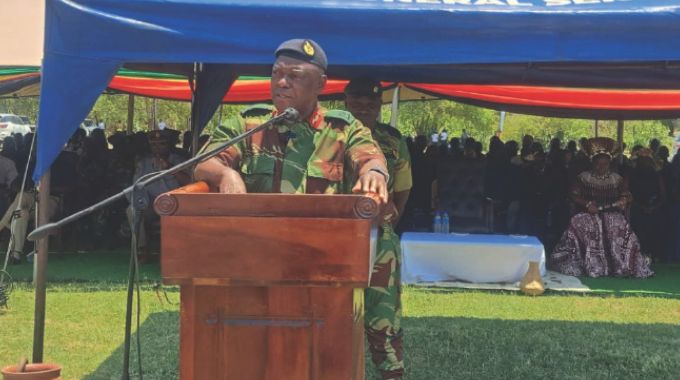
The commitment was reiterated by ZNA Chief of Staff Quartermaster Staff, Major-General Simo Maseko, during the Traditional Leaders Day commemorations for Matabeleland North Province held at Chief Mvuthu’s homestead in Hwange District yesterday.
Maj-Gen Maseko said the annual gathering, a ZNA initiative, provided an important platform for the military and traditional leaders to discuss development priorities, strengthen cooperation and reflect on their shared responsibilities in building peaceful communities.
“This day is very significant in the calendar of 1 Infantry Brigade. It is the day when all traditional leaders from the province and the ZNA interact and discuss issues that bring development to the province,” he said.
Maj-Gen Maseko said the army recognised the central role chiefs played in preserving cultural values, resolving community disputes and promoting social cohesion.
A total of 30 chiefs from Matabeleland North attended the event, which was held under the theme, “Preserving Our Cultural Heritage for Nation Building Towards Sustainable Development”.
He said the theme underscored the importance of drawing lessons from traditional values while pursuing economic and social development.
“As our traditional leaders, you are inclined to inspire these developments since you are the custodians of our culture,” he said.
Maj-Gen Maseko warned that globalisation and technological advancements could undermine cultural norms and values if communities failed to protect their heritage.
He commended traditional leaders for resolving disputes through their courts, saying their work was essential in maintaining harmony within communities.
“You settle these issues in a humorous, fair and just manner, something that we always appreciate.
The chief’s court is not meant to punish but, in the end, to make the community live in harmony.
You need each other,” said Maj-Gen Maseko.
He also highlighted the importance of land as a source of livelihood and a key component of Zimbabwe’s cultural heritage, urging traditional leaders to promote responsible land use and conservation in line with the Traditional Leaders Act (Chapter 29:17).
Maj-Gen Maseko said cooperation between the ZNA and traditional leaders was equally important in safeguarding the country’s sovereignty, values and people.
He said traditional leaders had played a critical role during the liberation struggle by guiding freedom fighters and providing information about local conditions.
“During the operation, the first port of call in any area was the chief’s village. You gave guidance on how liberation fighters were to behave, the do’s and don’ts, places frequented by whites,” he said.
Maj-Gen Maseko, who identified himself as a liberation war veteran, credited traditional leaders with providing guidance and inspiration to those fighting for independence.
He said the relationship between the military and traditional leadership remained important because the army recruited from communities and relied on cooperation with local leaders.The
ZNA was also concerned about drug and alcohol abuse among young people, Maj-Gen Maseko said, underscoring the need for communities and their leaders to work together to address challenges affecting the youth.
He said the army continued to support communities through development projects, including the handover of a classroom block at JMN Nkomo Primary School in Bubi District on September 12 and the opening of new veterinary offices in Binga last year.
“These programmes remain ongoing and as the defence forces, we are at your disposal to assist. Put together your resources and we will come in to help,” he said.
Speaking at the same event, Matabeleland North Provincial Chiefs’ Council chairperson Chief Siansali said traditional leaders and the military shared a longstanding relationship.
He said chiefs welcomed the army’s continued engagement with communities and its contribution to local development.